



- 1.1k Views
- 17 Min Read
- (32) Comments
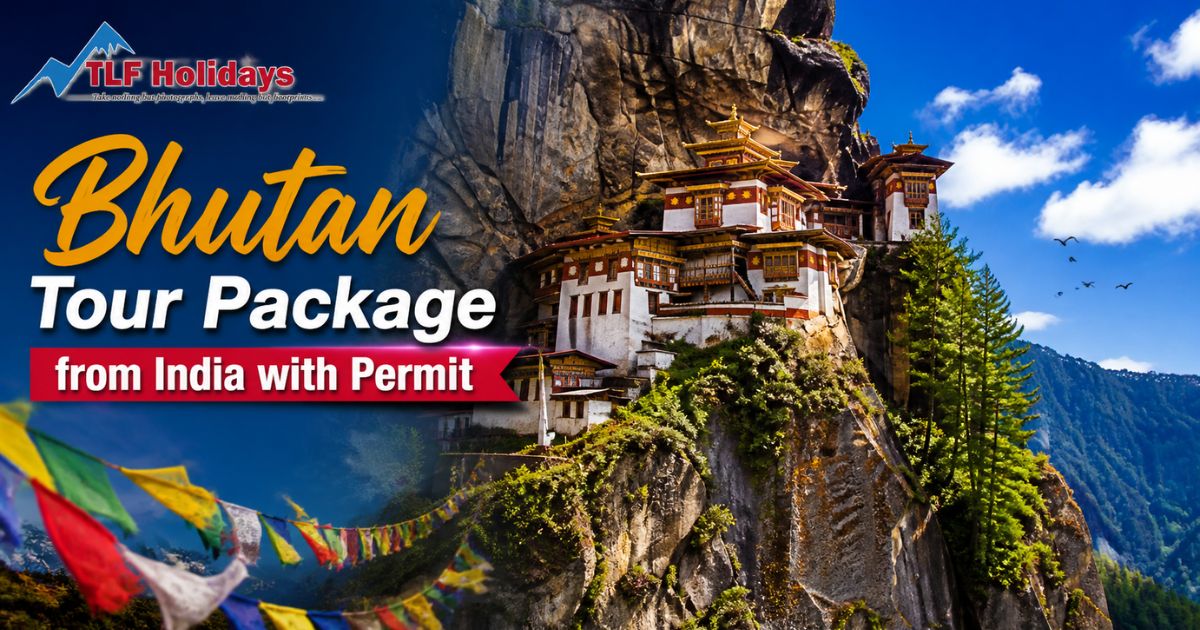
India and Bhutan share more than just a border — they share centuries of cultural kinship, a spiritual connection, and a unique travel relationship that makes Bhutan one of the most accessible Himalayan kingdoms for Indian travelers. Yet, for all its accessibility, Bhutan remains one of the world’s most exclusive, unspoiled, and deeply spiritual destinations. If you’re an Indian traveler dreaming of prayer flags fluttering over mountain passes, ancient dzongs rising above river valleys, and monasteries clinging to cliff faces — this guide is your definitive starting point.
Planning a Bhutan tour package from India with permit involves understanding a few important rules, navigating the visa and permit process, choosing the right entry point, picking the best time to travel, and — most importantly — partnering with a licensed Bhutan tour operator who knows the country inside out. This comprehensive guide covers everything you need to know before you book your bags for the Land of the Thunder Dragon.
Why India to Bhutan is One of the World’s Greatest Journeys
Bhutan sits nestled in the Eastern Himalayas, sharing its southern border with India across the states of West Bengal, Sikkim, Assam, and Arunachal Pradesh. For Indian travelers, this proximity is a significant advantage — Bhutan is reachable both by air and overland, making it one of the few Himalayan destinations where you can choose your preferred mode of entry.
But the appeal of Bhutan goes far beyond convenience. This is a country that measures its success not in GDP but in Gross National Happiness (GNH) — a philosophy that prioritizes the well-being of its citizens, cultural preservation, environmental sustainability, and good governance. It is also one of the world’s only carbon-negative countries, absorbing more carbon than it emits, thanks to its vast forests, which cover over 70% of the land.
For Indian travelers, Bhutan offers:
- Visa-free entry (Indians do not require a visa — only a permit)
- Affordable SDF (Sustainable Development Fee) of just ₹1,200 per night (vs. USD 100 for international tourists)
- Direct flight connections from multiple Indian cities
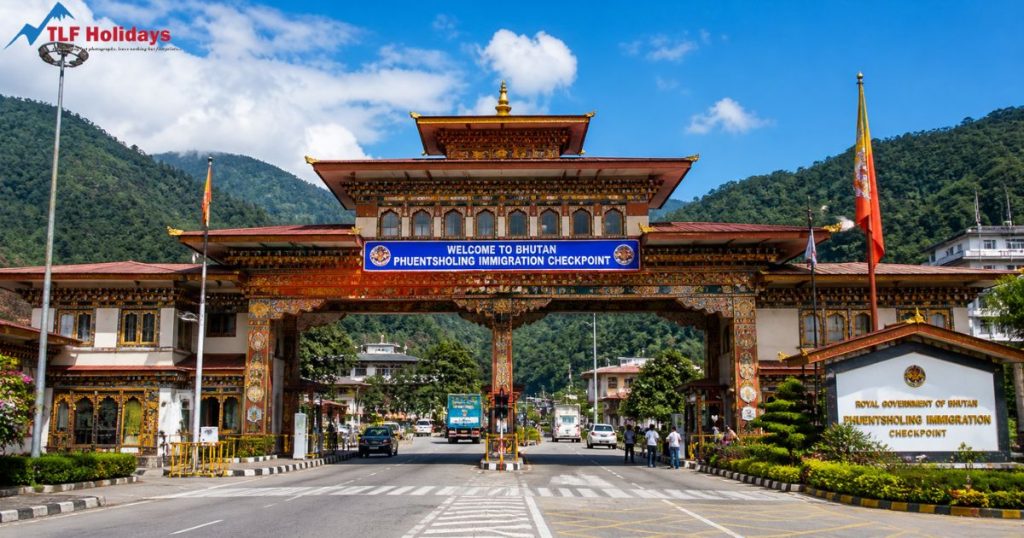
- Multiple overland entry points via West Bengal and Assam
- Shared cultural, religious, and linguistic connections that make the experience feel both familiar and wonderfully foreign
Bhutan Entry Requirements for Indian Nationals: Permit vs. Visa Explained
One of the most common questions Indian travelers ask is: “Do I need a visa for Bhutan?” The answer is no — but you do need a permit, and the process is slightly different depending on whether you’re entering by air or overland.
For Indian Nationals: No Visa Required
Indian citizens do NOT require a Bhutan visa. Instead, they need:
- Bhutan Entry Permit (also called an Entry Permit or Tourist Permit)
- Route Permit — required to travel beyond Thimphu and Paro
- Area Permit — required for restricted areas like Haa Valley, Bumthang, Phobjikha, etc.
Documents Required
- Valid Indian passport (minimum 6 months validity) OR Voter ID card
- Two passport-size photographs
- Confirmed tour booking with a licensed Bhutan tour operator
Important: Aadhar Card alone is NOT accepted as a travel document for Bhutan. You must carry either a valid Indian Passport or Voter ID.
Bhutan Permit & Fee Overview for Indian Travelers
| Permit Type | Who Needs It | How to Get It | Cost |
| Entry Permit | All Indian tourists | Through licensed tour operator or at entry point | Free (included in package) |
| Route Permit | Traveling beyond Paro/Thimphu | Tour operator arranges at immigration checkpoints | Free |
| Area Permit | Haa, Bumthang, Punakha, Phobjikha, etc. | Tour operator arranges | Free |
| Sustainable Development Fee (SDF) | All tourists including Indians | Paid via licensed tour operator | ₹1,200 per person per night |
| Bhutan Visa | International tourists (non-Indian) | E-Visa via licensed operator | USD 40 processing fee |
Note: Indian nationals benefit from a significantly reduced SDF compared to international tourists who pay USD 100 per night.
How to Get the Bhutan Entry Permit: Step-by-Step Process
Getting your Bhutan entry permit as an Indian traveler is straightforward, especially when you book through a licensed tour operator like TLF Holidays. Here’s how the process works:
Step 1 — Choose a Licensed Tour Operator Book your trip through a tour operator licensed by the Department of Tourism, Bhutan. TLF Holidays is a government-licensed Destination Management Company (DMC) based in Thimphu, established since 2003 and a certified member of ABTO (Association of Bhutanese Tour Operators).
Step 2 — Submit Your Documents Share a scanned copy of your passport (or Voter ID) along with passport-size photographs and your confirmed travel dates with your operator.
Step 3 — Pay the SDF The Sustainable Development Fee of ₹1,200 per person per night is paid to the Department of Immigration, Bhutan, through your licensed operator. This fee funds healthcare, education, and free electricity for Bhutanese citizens.
Step 4 — Receive Your Entry Clearance Your operator will obtain your Entry Permit clearance letter, typically within 3–5 working days after payment and document submission.
Step 5 — Collect Your Physical Permit Upon arrival at Paro Airport or the land border (Phuentsholing/Gelephu/Samdrup Jongkhar), you collect your physical entry permit after immigration verification.
Step 6 — Route & Area Permits Your tour guide and operator will arrange all additional route permits and area permits as you travel across the country.
How to Reach Bhutan from India: By Air & Overland
By Air
The only international airport in Bhutan is Paro International Airport (PBH), considered one of the world’s most challenging airports to land at due to its location in a steep river valley surrounded by mountains. Only specially certified pilots are permitted to fly into Paro.
Direct flights to Paro operate from the following Indian cities:
- Delhi (DEL) — Druk Air / Bhutan Airlines
- Kolkata (CCU) — Druk Air / Bhutan Airlines
- Bagdogra (IXB) — Druk Air / Bhutan Airlines
- Guwahati (GAU) — Druk Air / Bhutan Airlines
- Gaya (GAY) — Seasonal / Charter Flights
Flying from India is the fastest and most scenic way to enter Bhutan — the aerial views of the Himalayas on the approach to Paro are simply breathtaking.
By Road
Indian travelers can also enter Bhutan overland through three official land border checkpoints:
| Border Crossing | Indian State | Nearest Indian City | Entry to Bhutan |
| Phuentsholing | West Bengal | Siliguri / NJP | Most popular, well-connected |
| Gelephu | Assam | Guwahati | Gateway to Bumthang |
| Samdrup Jongkhar | Assam | Guwahati | Eastern Bhutan entry |
Phuentsholing is the most popular overland entry point. It is well-connected by road and rail from Siliguri, New Jalpaiguri (NJP), and Kolkata. From Phuentsholing, it is approximately a 4–5 hour drive to Thimphu.
India to Bhutan Overland Travel Times & Distances
| Starting Point in India | Entry Point into Bhutan | Distance | Travel Time (Approx.) |
| Siliguri, West Bengal | Phuentsholing | ~170 km | 3–4 hours by road |
| New Jalpaiguri (NJP) | Phuentsholing | ~155 km | 3–3.5 hours by road |
| Bagdogra Airport | Phuentsholing | ~155 km | 3–3.5 hours by road |
| Guwahati | Samdrup Jongkhar | ~250 km | 5–6 hours by road |
| Guwahati | Gelephu | ~350 km | 6–7 hours by road |
Best Bhutan Tour Packages from India for 2026
Bhutan offers diverse travel experiences for every kind of traveler — from cultural explorers and adventure seekers to luxury travelers and spiritual pilgrims. Here is an overview of the most popular Bhutan tour packages from India in 2026:
1. Bhutan Cultural Tour Package — 7 Days / 6 Nights
This is the most popular package among Indian travelers and covers the crown jewels of Bhutan. The itinerary takes you through Paro, Thimphu, Punakha, and Wangdue, covering iconic landmarks like the Tiger’s Nest Monastery (Paro Taktsang), Punakha Dzong, the National Memorial Chorten, and the Buddha Dordenma statue.
Highlights:
- Tiger’s Nest Monastery hike
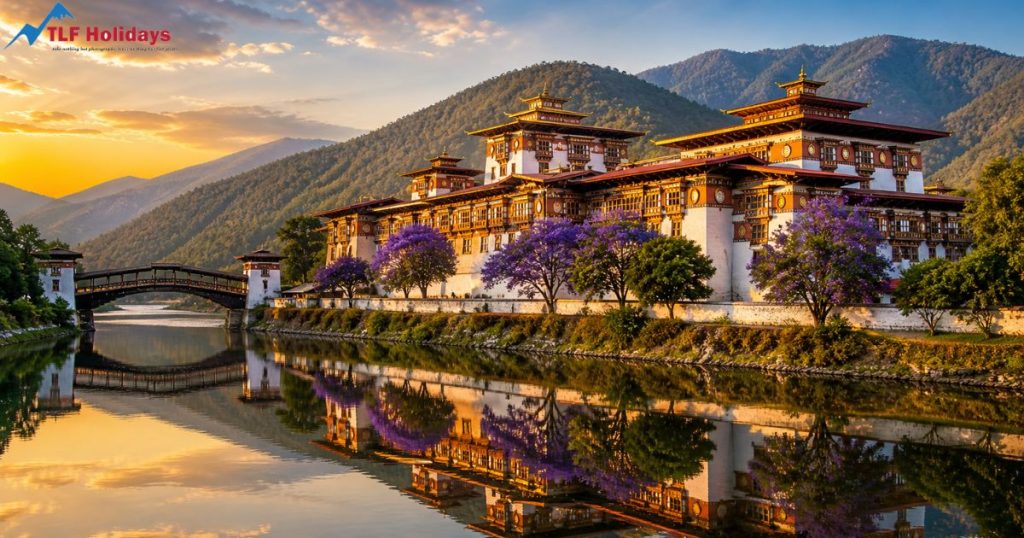
- Punakha Dzong and suspension bridge
- Thimphu city tour including Tashichho Dzong
- Traditional Bhutanese farm lunch
- Dochula Pass with 108 memorial chortens
2. Bhutan Luxury Tour — 7 Days / 6 Nights (Luxury Triangle)
For travelers who want to experience Bhutan in ultimate comfort, the Luxury Triangle package combines the best cultural experiences with premium accommodation at world-class resorts. Bhutan is home to some of Asia’s finest luxury properties, many of which blend traditional Bhutanese architecture with five-star amenities.
Highlights:
- Stay at award-winning luxury properties
- Private guided monastery and dzong tours
- Exclusive farm-to-table dining experiences
- Hot stone bath (Bhutanese traditional wellness therapy)
- Private transfers and expert local guides
3. Bhutan Luxury Tour with Amankora — 8 Days / 7 Nights
Amankora is arguably the most iconic luxury resort brand in Bhutan, with five lodges spread across Paro, Thimphu, Punakha, Gangtey, and Bumthang. An Amankora journey offers an unparalleled deep dive into Bhutanese culture, landscape, and wellness — perfect for high-end travelers from India.
4. Bhutan Trekking Packages — Jumolhari Trek (13 Days / 12 Nights)
For adventure enthusiasts, Bhutan offers world-class trekking routes through pristine Himalayan wilderness. The Jomolhari Trek is one of the most spectacular, passing through high-altitude valleys, ancient monasteries, and remote mountain communities, with views of Mt. Jomolhari (7,326m).
Other popular treks include:
- Druk Path Trek (5–6 days, moderate)
- Laya-Gasa Trek (14 days, challenging)
- Bumthang Cultural Trek (10 days, moderate)
5. Bhutan Festival Tour Packages
Bhutan’s festivals (Tsechus) are among the most vivid and authentic cultural celebrations in Asia. These sacred mask dance festivals are held throughout the year at different dzongs and monasteries. Planning your visit around a Tsechu is an unforgettable experience.
Major festivals in 2026:
- Paro Tsechu — March/April
- Punakha Drubchen — February/March
- Thimphu Tsechu — September/October
- Jambay Lhakhang Drup — October/November
- Gangtey Tshechu — October/November
Popular Bhutan Tour Packages from India — Duration, Highlights & Inclusions
| Package Name | Duration | Best For | Key Destinations | Inclusions |
| Bhutan Cultural Tour | 7D/6N | First-time visitors | Paro, Thimphu, Punakha | Hotel, meals, guide, transport, permits |
| Bhutan Luxury Triangle | 7D/6N | Luxury travelers | Paro, Thimphu, Punakha | 5-star hotel, all meals, exclusive experiences |
| Amankora Luxury Tour | 8D/7N | Ultra-luxury seekers | Paro, Thimphu, Punakha, Gangtey, Bumthang | Amankora lodges, private guides, all inclusive |
| Jomolhari Trek | 13D/12N | Trekkers & adventurers | Paro, Jomolhari Base Camp | Camping gear, trek guide, meals, permits |
| Bhutan Festival Tour | 5D–10D | Culture & heritage lovers | Varies by festival | Hotel, guide, festival access, transport |
| Bhutan & Sikkim Combo | 10D–14D | Extended itinerary seekers | Gangtok, Paro, Thimphu, Punakha | Both destinations, all ground arrangements |
Best Time to Visit Bhutan from India
Bhutan is a year-round destination, but each season offers a different experience. Here’s a guide to help Indian travelers pick the best time:
Spring (March – May): This is one of the best times to visit Bhutan. The rhododendron forests are in full bloom, painting the hillsides in vibrant pinks, reds, and whites. Skies are generally clear, temperatures are pleasant, and major festivals like Paro Tsechu take place during this period. Trekking conditions are excellent.
Autumn (September – November): Equally popular, autumn brings crisp, clear weather and stunning mountain visibility. The festival season is in full swing with Thimphu Tsechu, Gangtey Tshechu, and Jambay Lhakhang Drup. This is peak tourist season, so early booking is strongly advised.
Winter (December – February): A quieter, more intimate time to visit Bhutan. While higher passes may be snowbound, western valleys like Paro and Thimphu are accessible. This is an excellent time for birdwatching (the rare Black-Necked Crane winters in Phobjikha Valley) and for experiencing Bhutan without crowds.
Summer (June – August): The monsoon season brings lush green landscapes and dramatic valley views. Some mountain roads may be affected by landslides, but this is also a wonderfully atmospheric time to experience Bhutan, and prices tend to be lower.
Top Must-Visit Destinations in Bhutan for Indian Travelers
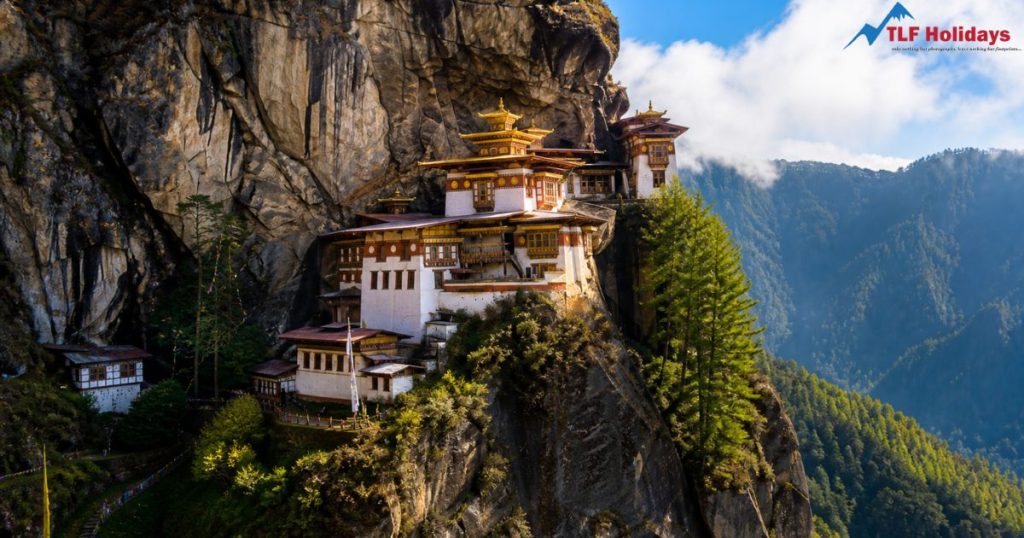
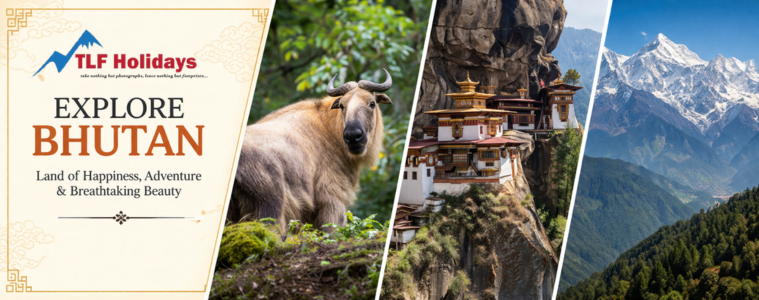
Paro — The cultural heart of Bhutan and home to the country’s only international airport. Must-see: Tiger’s Nest Monastery (Paro Taktsang), Rinpung Dzong, Paro National Museum, and the Drukgyel Dzong ruins.
Thimphu — The world’s only capital city without traffic lights. Must-see: Buddha Dordenma statue (one of the world’s largest Buddha statues), Tashichho Dzong, National Memorial Chorten, Takin Wildlife Preserve, and the weekend market.
Punakha — A warm, fertile valley that was Bhutan’s ancient capital. Must-see: Punakha Dzong (the most beautiful dzong in Bhutan), Chimi Lhakhang temple, Punakha suspension bridge, and rafting on the Mo Chhu River.
Wangdue Phodrang — Gateway to central Bhutan. Must-see: Gangtey Monastery in Phobjikha Valley (winter home of Black-Necked Cranes), Rinchengang village, and local handicraft centers.
Bumthang — Known as the “spiritual heartland” of Bhutan. Must-see: Jakar Dzong, Jambay Lhakhang (one of Bhutan’s oldest temples), Kurjey Lhakhang, and the Bumthang Cultural Trek.
Haa Valley — A hidden gem opened to tourists relatively recently. Must-see: White and Black Lhakhang temples, Katsho village, and the pristine Himalayan landscape relatively untouched by tourism.
Connecting Travelers from Southeast Asia: Bhutan Tour Packages from Malaysia and Singapore
Bhutan’s appeal extends far beyond India’s borders. Travelers from Southeast Asia — particularly Malaysia and Singapore — are increasingly discovering Bhutan as a premier destination for cultural, spiritual, and adventure travel. Bhutan Airlines and Druk Air operate direct flights from both Kuala Lumpur (Malaysia) and Singapore to Paro, making international access seamless.
If you’re planning a trip to Bhutan from Southeast Asia, TLF Holidays offers specialized packages tailored to travelers from the region. For Malaysian travelers, explore our dedicated Bhutan Tour Packages From Malaysia With Visa Assistance — featuring complete visa support, curated cultural itineraries, and expert local guidance from our Thimphu-based team.
For travelers flying in from Singapore, our team has designed comprehensive itineraries that cover the best of Bhutan in 7 days, with complete flight, visa, and permit assistance. Check out our Bhutan Tour from Singapore 2026: Flights, Visa & 7-Day Packages for the most up-to-date package options, pricing, and travel information.
What to Expect on a Typical 7-Day Bhutan Tour from India
Here’s a general outline of what a well-planned 7-day Bhutan cultural tour from India looks like:
Day 1 — Arrival in Paro / Transfer to Thimphu Arrive at Paro International Airport (or enter via Phuentsholing). After immigration and permit collection, transfer to Thimphu (approximately 1.5 hours). Evening orientation walk in Thimphu city center.
Day 2 — Thimphu Sightseeing Full day exploring Bhutan’s capital: Buddha Dordenma statue, National Memorial Chorten, Tashichho Dzong, Takin Preserve, Folk Heritage Museum, and the traditional handicraft bazaar.
Day 3 — Thimphu to Punakha via Dochula Pass Morning drive over the scenic Dochula Pass (3,100m) with views of 108 memorial chortens and — on a clear day — panoramic views of the Himalayan peaks. Afternoon visit to the magnificent Punakha Dzong and the Chimi Lhakhang temple.
Day 4 — Punakha / Wangdue Morning nature walk or optional river rafting on the Punakha River. Visit Sangchhen Dorji Lhuendrup Lhakhang nunnery. Afternoon leisure time in the valley.
Day 5 — Punakha to Paro Drive back to Paro through Thimphu. Visit Rinpung Dzong (Paro Dzong) and the National Museum of Bhutan. Evening free for Paro town exploration.
Day 6 — Tiger’s Nest Monastery Hike (Paro Taktsang) The highlight of any Bhutan trip — a 3–4 hour round-trip hike to the Tiger’s Nest Monastery, perched 900 meters above the Paro Valley on a sheer cliff face. Awe-inspiring views and deeply spiritual atmosphere.
Day 7 — Departure from Paro Morning at leisure. Transfer to Paro Airport for your return flight to India. Farewell to the Land of the Thunder Dragon.
Cost Breakdown: Bhutan Tour Package from India — What Are You Paying For?
Understanding the cost structure of a Bhutan tour package helps you plan better and avoid surprises. Here is a breakdown of typical inclusions and what they mean:
What’s Typically Included in a TLF Holidays Package:
- Hotel accommodation (3-star, 4-star, or 5-star options)
- All meals (breakfast, lunch, and dinner)
- Private transportation throughout Bhutan
- Licensed English-speaking local guide
- Airport transfers
- Entry permits and route permits
- Bhutan Visa assistance (for international tourists)
- Festival access where applicable
- Trekking and hiking guides (for trek packages)
What’s Additional:
- Sustainable Development Fee (SDF): ₹1,200 per person per night for Indians
- International airfare to and from Paro
- Personal expenses, shopping, tips
- Travel insurance (strongly recommended)
- Optional activities (archery, cooking classes, hot stone bath upgrades)
Estimated Total Cost of a 7-Night Bhutan Tour from India (Per Person)
| Cost Component | Budget Option | Mid-Range Option | Luxury Option |
| Sustainable Development Fee (SDF) | ₹8,400 (7 nights) | ₹8,400 (7 nights) | ₹8,400 (7 nights) |
| Package Cost (Hotel + Meals + Guide + Transport) | ₹25,000–35,000 | ₹45,000–70,000 | ₹1,20,000–3,00,000+ |
| International Airfare (Delhi–Paro return, approx.) | ₹15,000–25,000 | ₹15,000–25,000 | ₹20,000–40,000 |
| Personal Expenses | ₹5,000–8,000 | ₹8,000–15,000 | ₹15,000–30,000+ |
| Estimated Total (per person) | ₹53,000–76,000 | ₹76,000–1,18,000 | ₹1,63,000–3,78,000+ |
Note: Costs are approximate and subject to change based on season, group size, and specific package. Luxury packages with Amankora or Six Senses resorts will be priced separately. Contact TLF Holidays for a customized quote.
Why Book Your Bhutan Tour with TLF Holidays?
When it comes to booking a Bhutan tour package from India, the choice of your travel operator is everything. Bhutan mandates that all tourists (except Indian nationals entering overland for short trips) book through a licensed operator. But even for Indian travelers who technically have some flexibility, booking through a reputable, government-licensed operator makes the experience dramatically smoother, safer, and more memorable.
TLF Holidays has been operating in Bhutan since 2003 — that’s over two decades of deep local expertise, government trust, and thousands of happy travelers. Here is why Indian travelers consistently choose TLF Holidays:
- ✅ Government Licensed — Certified by the Department of Tourism, Bhutan and a member of ABTO
- ✅ Established in 2003 — Over 20 years of experience in Bhutanese and Eastern Himalayan tourism
- ✅ 100% Customizable Itineraries — Your trip, your pace, your style
- ✅ Expert Local Guides — Certified, English-speaking guides with deep cultural knowledge
- ✅ Visa & Permit Handling — Complete paperwork assistance for Indian and international travelers
- ✅ Carbon-Neutral Philosophy — TLF Holidays champions Bhutan’s Low Carbon Tourism Initiative
- ✅ 24/7 On-Ground Support — Our team is available round the clock during your journey
- ✅ Competitive Pricing — Best value without compromising on quality or experience
- ✅ Family-Run & Personally Invested — Every trip is planned with genuine care and attention to detail
Practical Travel Tips for Indian Travelers Visiting Bhutan
Currency: The official currency of Bhutan is the Bhutanese Ngultrum (BTN), which is pegged 1:1 with the Indian Rupee (INR). Indian Rupees (except ₹2,000 notes) are accepted across Bhutan.
Connectivity: Mobile data and Wi-Fi are available in major cities, though connectivity in remote areas may be limited. Bhutan uses B-Mobile and Tashi Cell as telecom providers. Indian SIM cards may have roaming coverage.
Health & Altitude: Most of Bhutan’s tourist destinations are between 2,200m–3,100m altitude. While serious altitude sickness is rare at these elevations, it is advisable to stay hydrated, avoid overexertion on the first day, and carry basic medication. A visit to the Tiger’s Nest at 3,120m requires moderate fitness.
Dress Code: Bhutan is a deeply conservative Buddhist kingdom. When visiting dzongs and monasteries, dress modestly — shoulders and knees should be covered. Carry a shawl or light jacket.
Photography: Photography is generally permitted at most sites, but always check for signs at religious locations. Never photograph religious ceremonies without permission.
Tipping: While not mandatory, tipping your guide and driver at the end of the trip is a kind gesture. Approximately ₹500–1,000 per day for guides and ₹300–500 per day for drivers is considered appropriate.
Plastic Bags: Plastic bags are banned in Bhutan. Carry reusable bags for shopping.
Alcohol: Bhutan has a relatively open approach to alcohol — local products like Druk 11000 beer, Bhutanese whiskey (K5), and Red Panda beer are popular and widely available.
Bhutan’s Cultural Etiquette: Respect the Land of the Thunder Dragon
Bhutan’s culture is deeply rooted in Vajrayana Buddhism, and respectful behavior is not just expected — it is deeply appreciated by the Bhutanese people. A few guidelines to keep in mind:
- Always walk clockwise around stupas, chortens, and mani wheels
- Remove shoes before entering temples and monasteries
- Do not touch or point at religious statues or paintings with your finger
- Ask permission before photographing monks, locals, or religious ceremonies
- Do not litter — Bhutan is one of the cleanest countries in Asia, and its citizens take immense pride in keeping it that way
- Dress conservatively when visiting religious sites
Conclusion
Bhutan is not merely a destination — it is a feeling. It is the sound of prayer flags whipping in the Himalayan wind, the sight of a golden dzong reflected in a turquoise river, the smell of juniper incense wafting from a centuries-old monastery, and the warmth of a Bhutanese smile welcoming you into a world that values happiness above all else.
With over 20 years of experience, a deep commitment to sustainable tourism, and a passionate local team based right in Thimphu, TLF Holidays is your most trusted partner for Bhutan tour packages from India. We also serve travelers from Singapore, Malaysia, Thailand, and across the globe — ensuring every guest receives the same exceptional, personalized service.
Ready to plan your Bhutan journey? Reach out to the TLF Holidays team today:
- 📞 +975-17112112
- 📧 tlfbhutan@gmail.com | tlfholidays@gmail.com
- 🌐 www.tlfbhutan.com
Frequently Asked Questions
Q1. Do Indian nationals need a visa for Bhutan? ‘
No, Indian nationals do not require a visa to enter Bhutan. Instead, they need a Bhutan Entry Permit, which is obtained through a licensed tour operator or at the entry point. TLF Holidays handles the full permit process on your behalf.
Q2. What documents do I need to travel from India to Bhutan?
You need a valid Indian Passport (with minimum 6 months validity) or a Voter ID Card. An Aadhaar Card alone is not accepted. You also need two passport-size photographs and a confirmed tour booking.
Q3. What is the Sustainable Development Fee (SDF) for Indians?
Indian nationals pay ₹1,200 per person per night as the SDF. This fee goes directly to the Royal Government of Bhutan and funds healthcare, education, and environmental conservation.
Q4. What are the entry points from India to Bhutan by road?
There are three official land entry points: Phuentsholing (West Bengal border), Gelephu (Assam border), and Samdrup Jongkhar (Assam border). Phuentsholing is the most popular, accessible from Siliguri and NJP.
Q5. Which Indian cities have direct flights to Paro, Bhutan?
Direct flights to Paro operate from Delhi, Kolkata, Bagdogra, and Guwahati. Druk Air and Bhutan Airlines are the primary carriers. Bagdogra is often the most convenient option for travelers in eastern India.

Comments (32)
Alanna1549,
05 May, 2026https://shorturl.fm/ZB0zj
Quentin1589,
05 May, 2026https://shorturl.fm/pAPUX
Miles4617,
05 May, 2026https://shorturl.fm/CT9D9
Pamela3758,
05 May, 2026https://shorturl.fm/8ar9k
Harry872,
05 May, 2026https://shorturl.fm/NFpr4
Mona4912,
05 May, 2026https://shorturl.fm/ZUgDk
Jason3316,
05 May, 2026https://shorturl.fm/IJIF2
Darius2424,
05 May, 2026https://shorturl.fm/Qdn73
Elijah3415,
05 May, 2026https://shorturl.fm/n98ik
Caleb3044,
05 May, 2026https://shorturl.fm/3LAWk
Bruce2121,
05 May, 2026https://shorturl.fm/6WL2T
Clarence251,
05 May, 2026https://shorturl.fm/xtGvK
Linda1498,
05 May, 2026https://shorturl.fm/kAq4f
Melanie2504,
05 May, 2026https://shorturl.fm/MkYYe
Isla3418,
05 May, 2026https://shorturl.fm/UkNmR
Abram2994,
05 May, 2026https://shorturl.fm/1HylP
Emory3019,
05 May, 2026https://shorturl.fm/nWL2z
Alana2178,
07 July, 2026https://shorturl.fm/ooxUo
Madeleine2563,
07 July, 2026https://shorturl.fm/ZZO79
Camila2389,
07 July, 2026https://shorturl.fm/6XvGe
April1142,
07 July, 2026https://shorturl.fm/xiO9U
Leland96,
07 July, 2026https://shorturl.fm/jskBc
Miranda1130,
07 July, 2026https://shorturl.fm/qj14C
Ellen2947,
07 July, 2026https://shorturl.fm/PIUpd
George859,
08 August, 2026https://shorturl.fm/JgJHY
idplanet88,
08 August, 2026Really liking the atmosphere here. Everything is well organized and the games are fair. I’ll definitely be coming back to idplanet88 frequently.
bigbunnylogin,
08 August, 2026Love the vibe of this site! It is very user friendly and the games load quickly on my phone. bigbunnylogin makes gaming so much easier.
juragan88login,
09 September, 2026Great experience overall. The rewards system is very generous and the community is active. See you all at juragan88login!
phjili988,
09 September, 2026I won a decent amount yesterday and the withdrawal was processed almost instantly. Total game changer. Visit phjili988 for the win.
betpkonlinecasino,
09 September, 2026If you are looking for a professional casino experience from home this is it. The graphics are top notch and the gameplay is fair. Visit betpkonlinecasino today.
lucky33download,
09 September, 2026Finally found a safe link to get the app running on my phone. Installation was a breeze and it works perfectly. Highly recommend lucky33download for everyone.
Arianna2904,
09 September, 2026https://addlinks.pro/gsWWw