



- 408 Views
- 18 Min Read
- (16) Comments
Nestled in the confluence of the Pho Chhu and Mo Chhu rivers, Punakha is one of the most breathtaking destinations in the Himalayan Kingdom of Bhutan. Once the nation’s capital and still home to some of its greatest spiritual and architectural treasures, Punakha is the crown jewel of every well-crafted Punakha Bhutan tour package. Whether you are a first-time traveller to Bhutan or a repeat visitor, Punakha has an almost magnetic pull its fortress-monastery (dzong) rising dramatically over the blue-green rivers, its sub-tropical climate giving life to orchards and paddy fields, and its deep-rooted Vajrayana Buddhist culture offering an experience unlike anywhere else on earth.
This comprehensive Punakha Valley travel guide covers everything you need to plan your journey from what to see and when to visit, to itineraries, costs, cultural etiquette, and how to book through a trusted operator like TLF Holidays Bhutan. Read on to discover why Punakha deserves a central place in your Bhutan travel plans.
- Elevation 1,242 m
- Climate Sub-tropical
- From Thimphu ~77 km / 2.5 hrs
- Best Months Oct–Apr
- Entry Permit Required
| Category | Details |
|---|---|
| Location | Punakha District, Western Bhutan |
| Altitude | 1,242 metres above sea level |
| Distance from Paro Airport | Approx. 130 km (3.5–4 hours by road) |
| Distance from Thimphu | Approx. 77 km (2.5 hours via Dochula Pass) |
| Best Time to Visit | October to April (Spring: Feb–Apr for jacaranda blooms) |
| Popular Attractions | Punakha Dzong, Punakha Suspension Bridge, Chimi Lhakhang, Khamsum Yulley Namgyal Chorten |
| Tour Duration | 2 to 5 nights (standalone); up to 10 nights with extended Bhutan circuit |
| Language | Dzongkha (English widely understood in tourism) |
| Currency | Bhutanese Ngultrum (BTN), equivalent to Indian Rupee |
| Recommended Operator | TLF Holidays Bhutan |
Why Choose a Punakha Bhutan Tour Package?
If Thimphu is Bhutan’s modern beating heart, Punakha is its spiritual soul. The valley served as Bhutan’s political and religious capital for centuries before the capital was shifted to Thimphu in 1955. Today, Punakha retains its royal and religious significance as the winter residence of the Central Monastic Body and home to the country’s most magnificent dzong (fortress-monastery).
Unlike higher-altitude destinations like Paro or Bumthang, Punakha sits at a warmer, lower elevation of just 1,242 metres. This makes it one of Bhutan’s most accessible and comfortable year-round destinations. The valley is blessed with a warm, sub-tropical microclimate, which allows rice and maize to grow abundantly along the riverbanks, making it one of Bhutan’s richest agricultural regions.
For Indian travellers wondering how to travel from India to Bhutan, Punakha is easily incorporated into any standard Bhutan itinerary starting from Paro International Airport the country’s only international airport. The drive from Paro to Punakha via the scenic Dochula Pass (3,100 m) is itself a highlight, offering panoramic views of the eastern Himalayas on clear days.
Insider Tip from TLF Holidays Bhutan: If you visit between February and March, you’ll find the Punakha Valley carpeted with violet-blue jacaranda blossoms and white cherry blossoms one of the most visually stunning spectacles in all of Bhutan.
Top Attractions in the Punakha Valley Travel Guide
1. Punakha Dzong (Pungthang Dechen Phodrang)
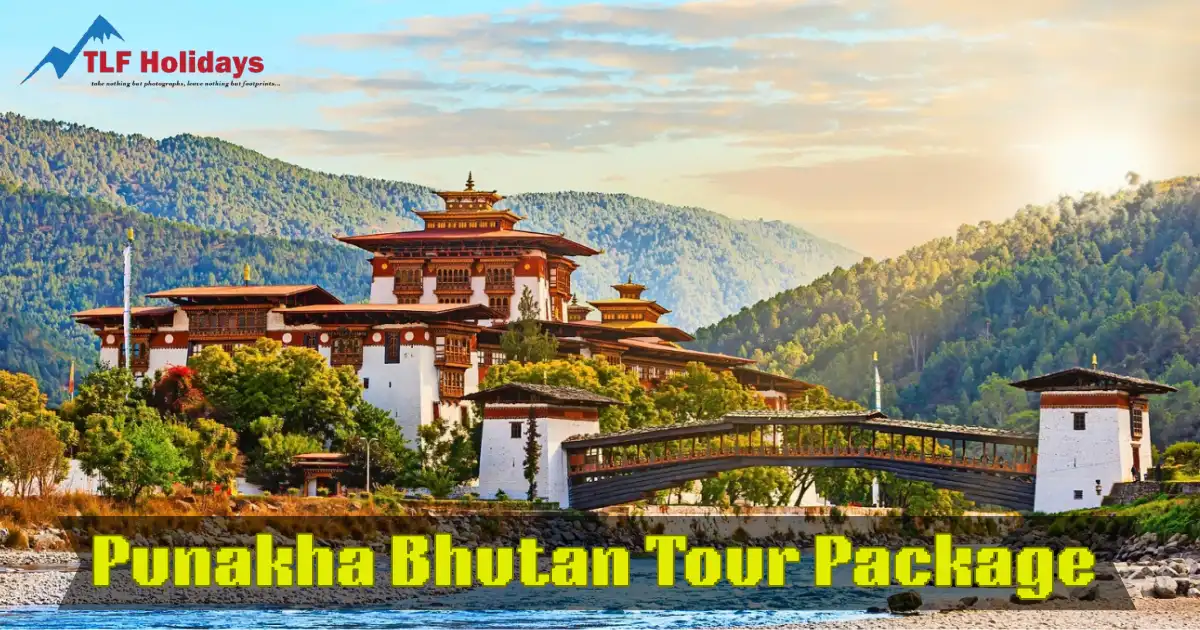
No visit to Punakha is complete without spending considerable time at the Punakha Dzong, officially known as Pungthang Dechen Phodrang, which translates as “Palace of Great Happiness.” Built in 1637 by the Zhabdrung Ngawang Namgyal — the unifier of Bhutan — this dzong sits at the confluence of the Pho Chhu (Father River) and Mo Chhu (Mother River), making it one of the most photographed and architecturally dramatic buildings in all of Asia.
The dzong served as the seat of Bhutan’s government until the 1950s and still serves as the winter headquarters of the Je Khenpo (Chief Abbot) and the Central Monastic Body. Inside, you’ll find a 600-year-old macabre tree, beautiful silk thangka paintings, a relic chamber containing the sacred remains of Zhabdrung himself, and stunning courtyard corridors where monks go about their daily routines. The dzong has been struck by floods, fires, and earthquakes several times over the centuries — yet has been faithfully restored each time, a testament to Bhutan’s deep reverence for its cultural heritage.
2. Punakha Suspension Bridge
One of the most thrilling and scenic experiences on a Punakha Bhutan tour package is crossing the famous Punakha Suspension Bridge. Spanning approximately 160 metres over the Pho Chhu river, this bridge is believed to be one of the longest suspension bridges in Bhutan. Draped with fluttering prayer flags of five colours — each representing the five elements of earth, water, fire, air, and space — the bridge offers a breathtaking view of the Punakha Dzong framed against the forested hills.
The Punakha Suspension Bridge is not just a visual delight but also a functional part of local life, connecting villages on both banks of the Pho Chhu. For visitors, it provides both an adrenaline rush and a moment of meditative beauty as the wind carries the prayers written on each flag across the valley. The wooden plank walkway sways gently above the turquoise river — an unforgettable experience for travellers of all ages.
3. Chimi Lhakhang — The Fertility Temple
Located on a hillock in the middle of Punakha’s paddy fields, Chimi Lhakhang (also called the Fertility Temple) is one of Bhutan’s most beloved and unusual pilgrimage sites. Built in 1499 by the Buddhist saint Drukpa Kunley known as the “Divine Madman” for his eccentric and unconventional teaching methods the temple is visited by couples seeking blessings for fertility and safe childbirth. The approach to the temple involves a scenic 20–30 minute walk through picture-perfect villages and bright green paddy fields, which is itself a highlight of the Punakha Valley travel guide experience.
4. Khamsum Yulley Namgyal Chorten
Perched on a ridge high above the Punakha Valley, the Khamsum Yulley Namgyal Chorten is a four-storey stupa built over 10 years (1992–2004) by the Queen Mother Ashi Tshering Yangdon Wangchuck for the protection of Bhutan and the well-being of its people. The hike to the chorten takes about 45 minutes from the roadhead and rewards trekkers with one of the finest panoramic views of the Punakha Valley, its rivers, and the terraced farmlands below. Inside the chorten are intricate religious murals, statues, and artefacts of rare craftsmanship.
5. Nalanda Buddhist Shedra
A relatively lesser-known but significant institution in the valley, the Nalanda Buddhist Shedra is a monastic college modelled after the ancient Nalanda University of India. It is home to hundreds of young monks pursuing advanced studies in Buddhist philosophy and meditation. Visitors are welcome to observe the grounds and gain a sense of Bhutan’s living intellectual Buddhist tradition.
| Attraction | Type | Time Needed | Entry Fee (Foreigners) | Best Time to Visit |
|---|---|---|---|---|
| Punakha Dzong | Fortress-Monastery | 2–3 hours | Included in SDF | Oct–Apr |
| Punakha Suspension Bridge | Landmark / Walk | 30–60 min | Free | Year-round |
| Chimi Lhakhang | Temple / Pilgrimage | 1.5–2 hours (incl. walk) | Small donation | Oct–Apr |
| Khamsum Yulley Namgyal Chorten | Stupa / Hike | 2–3 hours | Nu. 100 (approx.) | Oct–Apr, Sep |
| Nalanda Shedra | Monastery / College | 30–45 min | Free (guided) | Year-round |
| Dochula Pass (en route) | Scenic Pass / 108 Stupas | 30 min stop | Free | Oct–Feb (clear sky) |
| Mo Chhu River Rafting | Adventure Activity | Half day | Included in package | Oct–May |
Best Time to Visit Punakha Bhutan
Thanks to its lower elevation and sub-tropical climate, Punakha is one of the few places in Bhutan that is comfortably visitable almost year-round. However, some months are clearly superior to others depending on what you are looking for.
October to December is widely considered the best period for clear skies, fresh mountain air after the monsoon season, and crisp views of snow-capped Himalayan peaks. This is also when Bhutan sees its highest tourist footfall, so booking your Punakha Bhutan tour package well in advance is essential.
February to April — particularly February through March is arguably the most visually spectacular time to visit Punakha. The valley erupts in a canopy of jacaranda, cherry, and peach blossoms, painting the landscape in shades of violet, white, and pink. The famous Punakha Drubchen Festival (usually February) and the Punakha Tshechu Festival take place during this period, drawing monks, locals, and tourists alike for colourful masked dances and religious ceremonies.
June to September is Bhutan’s monsoon season. While the landscapes are lush and green, heavy rainfall can disrupt travel plans, cause road closures, and make trekking difficult. However, the Sustainable Development Fee (SDF) is waived during certain monsoon months, making it a budget-friendly option for travellers who don’t mind the rain.
January can be chilly in the evenings (though nothing like Paro or Thimphu in winter), but the days are often warm and sunny perfect for walking and sightseeing in the valley.
Suggested Punakha Bhutan Tour Package Itineraries
TLF Holidays Bhutan offers a range of customisable itineraries for Punakha, from short 2-night standalone packages to comprehensive 7–10 night Bhutan circuits. Below are two popular suggested itineraries.
Option A: 4 Nights / 5 Days Punakha-Focused Package
Day 1: Arrival at Paro International Airport. Transfer to hotel. Visit Ta Dzong (National Museum) and Rinpung Dzong. Evening stroll along Paro’s main street.
Day 2: Drive to Punakha via Dochula Pass (3,100 m). Stop at the 108 chortens and the Druk Wangyal Lhakhang for panoramic Himalayan views. Check into hotel in Punakha. Afternoon: Visit Punakha Dzong and cross the Punakha Suspension Bridge.
Day 3: Morning hike to Khamsum Yulley Namgyal Chorten. Afternoon: Walk to Chimi Lhakhang through paddy fields. Evening: Explore local Punakha village and farmhouse dinner (optional).
Day 4: Morning: Optional white-water rafting on Mo Chhu river. Afternoon: Visit Nalanda Shedra. Explore local markets. Return to Paro in the evening.
Day 5: Departure from Paro International Airport after breakfast.
Option B: 7 Nights / 8 Days Bhutan Complete Circuit (includes Punakha)
Days 1–2: Paro — Arrival, Rinpung Dzong, Tiger’s Nest Monastery (Paro Taktsang) hike.
Day 3: Paro to Thimphu — Buddha Dordenma, Tashichho Dzong, National Memorial Chorten.
Days 4–5: Thimphu to Punakha — Dochula Pass, Punakha Dzong, Suspension Bridge, Chimi Lhakhang, Khamsum Chorten, river rafting.
Days 6–7: Punakha to Bumthang — Jakar Dzong, Jambay Lhakhang, Kurjey Lhakhang.
Day 8: Bumthang to Paro (via flight or drive) — Departure.
If you’re also considering a combined Bhutan and Sikkim tour package, TLF Holidays Bhutan offers convenient multi-destination circuits that combine the majestic dzongs of Punakha and Paro with the rhododendron forests, Buddhist monasteries, and mountain views of Sikkim all in a single seamless trip from Northeast India.
| Component | Cost (USD, approx.) | Notes |
|---|---|---|
| Sustainable Development Fee (SDF) | USD 100/day | Mandatory for all international visitors; waived for Indian, Bangladeshi, Maldivian nationals since 2023 |
| Bhutan Visa Fee | USD 40 (one-time) | Processed by licensed tour operator; mandatory for all except Indian nationals |
| Licensed Tour Guide (mandatory) | Included in package | English-speaking guide required for all international tourists |
| 3-Star Hotel (per night) | USD 60–120 | Bed & Breakfast; options available in Punakha, Lobesa area |
| 4-Star / Boutique Hotel (per night) | USD 150–280 | Properties like Uma Punakha, COMO Uma available |
| Internal Transfers (by car, driver) | USD 50–80/day | Included in most packages |
| Meals (full board) | USD 30–50/day | Bhutanese, Indian, Chinese, and continental cuisine available |
| White-Water Rafting (Mo Chhu) | USD 35–60/person | Optional; Grade 2–3 rapids; seasonal |
| Paro–Punakha–Paro Total (5 days, twin sharing) | USD 450–750/person | Budget to mid-range; excludes international flights |
Many first-time travellers to Bhutan wonder: is Bhutan expensive? While the mandatory SDF and visa requirements add a unique cost structure, the sheer quality of experience, pristine nature, and the “value-for-wonder” ratio make Bhutan outstanding value for discerning travellers. For Indian nationals, the SDF is currently waived, making Bhutan an even more accessible destination.
How to Reach Punakha — Getting There
By Air
The nearest and only international airport in Bhutan is Paro International Airport (PBH), served by Druk Air (Royal Bhutan Airlines) and Bhutan Airlines. Paro has regular connections from Delhi, Kolkata, Mumbai, Kathmandu, Bangkok, Singapore, and other Asian hubs. From Paro, Punakha is approximately 130 km by road, a scenic drive of 3.5 to 4 hours.
By Road from India
Indian nationals can enter Bhutan via two main road border crossings: Phuentsholing (opposite Jaigaon in West Bengal) and Samdrup Jongkhar (opposite Darranga in Assam). From Phuentsholing, the drive to Punakha via Thimphu takes approximately 7–8 hours and offers a spectacular mountain road journey through Bhutan’s western highlands. This is a popular route for travellers driving from West Bengal, Sikkim, or Assam.
Via Dochula Pass — The Scenic Route
The most popular way to reach Punakha from Thimphu (or Paro) is via the Dochula Pass at 3,100 metres above sea level. The pass is adorned with 108 memorial chortens (stupas) built by the Queen Mother in memory of Bhutanese soldiers. On a clear day, the view from Dochula encompasses over 20 major Himalayan peaks, including Masagang (7,158 m), Tsendagang, and the sacred Gangkhar Puensum the world’s highest unclimbed mountain. Do stop here even if just for 20–30 minutes; the view is extraordinary.
Where to Stay in Punakha
Punakha offers a wide spectrum of accommodation options, from modest guesthouses in Punakha town and Lobesa village to luxury boutique resorts nestled along the river banks.
For budget and mid-range travellers, properties like Hotel YakSa Punakha, Meri Puensum Resort, Damchen Resort, and various local guesthouses offer comfortable rooms with valley views at reasonable rates. For those seeking premium experiences, COMO Uma Punakha and Amankora Punakha are among the finest eco-luxury properties in the country, offering immersive cultural programs, farm-to-table dining, and stunning riverside settings. TLF Holidays Bhutan can arrange accommodation across all budget categories based on your preference and group size.
Cultural Etiquette and Travel Tips for Punakha
Bhutan is a deeply Buddhist country and cultural sensitivity is not just appreciated it is expected. Here are key etiquette tips to keep in mind when visiting Punakha on your tour package.
Dress modestly when visiting dzongs and temples. Both men and women should cover their shoulders and knees. For the dzong, traditional Bhutanese attire (gho for men, kira for women) is required your guide or hotel can arrange rental outfits. Remove your shoes before entering temples and always walk clockwise around stupas, chortens, and prayer wheels. Photography inside temples is generally prohibited, though exterior and courtyard photography is usually allowed.
Do not touch religious artefacts, statues, or thangkas. Be mindful of monks at prayer maintain silence and do not interrupt. Littering is a serious offence in Bhutan and the country has strict anti-littering laws. Smoking is prohibited in public spaces. Bhutan is one of the world’s only carbon-negative countries and it takes its environmental commitments seriously as a visitor, you are expected to do the same.
| Month | Weather | Key Events / Highlights | Visitor Suitability |
|---|---|---|---|
| January | Cool days, cold nights (8–16°C) | Clear skies, quiet valleys, winter light | ⭐⭐⭐⭐ |
| February | Warming up (10–18°C) | Punakha Drubchen Festival, first blossoms | ⭐⭐⭐⭐⭐ |
| March | Warm and pleasant (12–22°C) | Punakha Tshechu, jacaranda & cherry blossoms in full bloom | ⭐⭐⭐⭐⭐ |
| April | Warm (15–25°C) | Spring wildflowers, paddy planting begins | ⭐⭐⭐⭐ |
| May | Warm to hot (18–28°C) | Pre-monsoon; rhododendrons at higher passes | ⭐⭐⭐ |
| June–August | Hot and very rainy (20–30°C) | Monsoon; lush green valleys; discounted SDF | ⭐⭐ |
| September | Warm, rain easing (18–26°C) | Post-monsoon clarity; harvest season | ⭐⭐⭐ |
| October | Ideal (14–22°C) | Crystal clear skies, harvest festivals, Thimphu Tshechu | ⭐⭐⭐⭐⭐ |
| November | Cool and dry (10–20°C) | Excellent Himalayan views, peaceful | ⭐⭐⭐⭐⭐ |
| December | Cold nights, sunny days (6–16°C) | Winter landscape, fewer tourists | ⭐⭐⭐⭐ |
Festivals of Punakha — A Cultural Calendar
The festivals of Punakha are unlike anything you’ll experience anywhere else in the world. The two most important are the Punakha Drubchen and the Punakha Tshechu, both typically held in February–March at the Punakha Dzong.
The Punakha Drubchen is a dramatic re-enactment of a 17th-century battle in which Bhutan’s army repelled a Tibetan invasion. Hundreds of costumed performers, including monks, royal bodyguards, and cavalry on horseback, participate in this powerful three-day spectacle. Held inside and around the majestic dzong, it is a breathtaking display of Bhutanese cultural and military heritage.
The Punakha Tshechu, held the day after the Drubchen concludes, is a traditional religious festival featuring cham (masked dance) performances by monks in elaborate silk costumes and papier-mâché masks representing various Buddhist deities. The unfurling of a giant thangka painting (thondol) at dawn is a particularly sacred moment during the Tshechu. Book your Punakha Bhutan tour package with TLF Holidays Bhutan well in advance if you wish to coincide with these festivals accommodations in Punakha fill up months ahead.
Adventure Activities in Punakha
Beyond its cultural and spiritual offerings, Punakha is increasingly being recognised as an adventure travel destination. The confluence of two pristine Himalayan rivers makes it ideal for white-water rafting, and the surrounding hills offer beautiful day hikes.
White-Water Rafting on Mo Chhu River: The Mother River (Mo Chhu) offers an exhilarating Grade 2–3 white-water rafting experience suitable for beginners and intermediate rafters. The roughly 8-kilometre rafting stretch takes you past forested banks, traditional farmhouses, and eventually delivers you to the imposing base of Punakha Dzong one of the most dramatic arrivals in adventure travel. The best time for rafting is October through May.
Hiking and Nature Walks: From gentle paddy-field walks to Chimi Lhakhang, to the more demanding 45-minute steep hike up to Khamsum Yulley Namgyal Chorten, Punakha offers hiking experiences for all fitness levels. The views from the chorten ridge are arguably the best in the entire valley.
Cycling: A growing number of tour operators, including TLF Holidays Bhutan, now offer guided cycling tours through the Punakha Valley, taking in river crossings, village lanes, farmhouses, and scenic viewpoints at a leisurely pace.
Bhutanese Cuisine and Dining in Punakha
Bhutanese cuisine is hearty, flavourful, and largely centred around three staples: red rice, dried chilli peppers, and yak cheese. Ema Datshi a fiery stew of green chillis cooked in yak cheese sauce is the national dish and found on virtually every menu. Don’t let the description fool you; even if you’re not a spice lover, the subtle earthiness of the yak cheese balances the heat beautifully.
Other must-try Bhutanese dishes include Phaksha Paa (spicy pork with radishes), Jasha Maroo (minced chicken with ginger and tomato), Hoentoe (buckwheat dumplings stuffed with turnip leaves, popular in Haa Valley but available in Punakha restaurants), and Red Rice a nutty, slightly sticky variety grown right in the Punakha Valley. Most hotels and restaurants in Punakha also serve Indian, Chinese, and continental dishes for those not yet adventurous enough for the Bhutanese kitchen. Farm-to-table dinners at local farmhouses, arranged by TLF Holidays Bhutan, offer the most authentic culinary experience in the valley.
What to Pack for Your Punakha Tour Package
Punakha’s sub-tropical climate means you can pack lighter than for most Bhutan destinations, but the temperature variation between seasons and between day and night still requires some thoughtful preparation. Oct–Feb Pack layers a warm jacket, fleece, and comfortable walking shoes. Mornings and evenings can be cold. Mar–May Light cotton clothes for the day, a light jacket for evenings. Jun–Sep Waterproof jacket, rain boots, and quick-dry clothing are essential. Year-round essentials: Sunscreen (the UV index at altitude is high), insect repellent (especially near rivers), a good camera, modest clothing for temple visits, and a reusable water bottle (Bhutan has excellent clean water throughout).
Conclusion
A Punakha Bhutan tour package is far more than just a holiday it is an immersion into one of the last truly unspoilt Himalayan civilisations on earth. From the majestic Punakha Dzong rising at the meeting of two sacred rivers to the swaying prayers of the Punakha Suspension Bridge, from the jacaranda-dusted paddy fields of the Punakha Valley to the thundering white water of the Mo Chhu, every moment in Punakha is suffused with natural beauty, cultural depth, and spiritual meaning.
Whether you are travelling solo, as a couple, with family, or as part of a group Punakha offers something profound and transformative. The warm, low-altitude climate makes it accessible throughout the year, and the rich festival calendar, excellent adventure activities, and world-class hospitality make every season rewarding in its own way.
Booking with a licensed, experienced Bhutan tour operator like TLF Holidays Bhutan ensures that your journey is seamlessly organised, culturally enriching, and completely hassle-free. From visa and permit assistance to curated itineraries, hand-picked accommodations, and knowledgeable local guides, TLF Holidays Bhutan brings to your Punakha tour the depth of local expertise that truly makes the difference between seeing Bhutan and experiencing it. Begin your Punakha journey today because the Thunder Dragon Kingdom awaits.
FAQs
Q1. What is included in a standard Punakha Bhutan tour package?
A. A standard package typically includes accommodation, meals (breakfast and dinner or full board), a licensed English-speaking tour guide, private vehicle with driver, internal transfers, sightseeing as per itinerary, and assistance with Bhutan tourist permit processing.
Q2. Do Indian nationals need a visa to visit Punakha, Bhutan?
A. Indian nationals do not require a visa but must obtain a Bhutan Tourist Permit, which is processed through a licensed Bhutanese tour operator or at the Phuentsholing/Samdrup Jongkhar border entry points with a valid passport or Voter ID.
Q3. What is the best month to visit Punakha for the festival?
A. February to March is the best time for the famous Punakha Drubchen and Punakha Tshechu festivals, which are held at Punakha Dzong; exact dates vary each year based on the Bhutanese lunar calendar.
Q4. How long does it take to reach Punakha from Paro Airport?
A. It takes approximately 3.5 to 4 hours by road from Paro International Airport to Punakha, including a scenic stop at Dochula Pass (3,100 m), covering a distance of roughly 130 km.
Q5. Is the Punakha Suspension Bridge safe to cross?
A. Yes, the Punakha Suspension Bridge is completely safe for visitors; it is well-maintained, regularly inspected, and can accommodate multiple pedestrians; it sways gently but is structurally sound.
Q6. What is the Sustainable Development Fee (SDF) for Bhutan in 2025?
A. The SDF is USD 100 per person per night for most international tourists; Indian, Bangladeshi, and Maldivian nationals are currently exempt from paying the SDF under the revised 2023 policy.
Q7. Can I travel to Punakha independently without a tour operator?
A. International tourists (except Indian, Bangladeshi, and Maldivian nationals) are required by Bhutanese law to book through a licensed tour operator with a guide, so fully independent travel is not permitted; Indian nationals have more flexibility but a guide is still strongly recommended.
Q8. What should I wear when visiting Punakha Dzong?
A. Visitors must wear traditional Bhutanese attire inside the dzong a gho (robe) for men and a kira (woven dress) for women which can be rented from shops near the entrance; footwear must be removed before entering the main halls.
Q9. How do I book a Punakha Bhutan tour package with TLF Holidays Bhutan?
A. You can contact TLF Holidays Bhutan directly through their official website or office to customise your Punakha itinerary, get a detailed quote, and begin the permit application process well in advance of your travel dates.


Comments (16)
Norma3910,
04 April, 2026https://shorturl.fm/Yo07p
Aiden4307,
07 July, 2026https://shorturl.fm/O9t1q
Aileen3120,
07 July, 2026https://shorturl.fm/BAMUA
Carol555,
07 July, 2026https://shorturl.fm/8yrlU
Aylin1370,
07 July, 2026https://shorturl.fm/PIUpd
Hector2482,
07 July, 2026https://shorturl.fm/nCJfq
Lora3253,
07 July, 2026https://shorturl.fm/o8N5O
Kenneth1563,
08 August, 2026https://shorturl.fm/p19Qu
Jamie2192,
08 August, 2026https://shorturl.fm/kZkrx
Harlan793,
08 August, 2026https://shorturl.fm/b1sGt
mambawinslot,
08 August, 2026If you are looking for big wins and exciting slots, this is the place. I just hit a decent jackpot this morning! Highly recommend mambawinslot
01gamedownload,
08 August, 2026The download speed is impressive and the installation was a breeze. No weird errors or glitches. 01gamedownload is my new go-to spot.
phbetpkcasino,
09 September, 2026A solid choice for anyone who loves the casino atmosphere online. The live dealers are professional and the atmosphere is exciting. Join phbetpkcasino today.
evoplayslot,
09 September, 2026The game variety here is insane! I love how the slots run without any lag, making the whole experience much more immersive. Highly recommended for slot enthusiasts. Visit evoplayslot
abcbet234,
09 September, 2026Great selection of live dealer games. It feels like I am actually in a real casino. I really enjoy the vibe at abcbet234.
vns888,
09 September, 2026Really impressed with the bonuses they offer for new members. It feels fair and the registration process was a breeze. Check out vns888 if you want some good value.