




- 801 Views
- 17 Min Read
- (15) Comments
June marks a unique transition in India’s travel calendar, when the pre-monsoon showers begin to kiss the western coasts while the high-altitude deserts of Ladakh open their spectacular mountain passes. The weather across India in June varies dramatically—from the cool, crisp mornings in Himalayan valleys to the gentle rain-soaked greenery of South India’s hill stations. Planning the best places to visit in India in June requires understanding these regional weather patterns and choosing destinations that shine during early monsoon or benefit from dry, pleasant conditions.
As of 2026, June remains one of the most rewarding months for travelers seeking fewer crowds, lower hotel rates, and dramatic landscapes transformed by seasonal change. Whether you’re drawn to the pristine beaches of Andaman Islands, the adrenaline-fueled mountain roads of Ladakh, or the tea-scented mist of Munnar, this guide covers everything you need to plan your June getaway. Updated for 2026, this article includes current travel requirements, weather forecasts, and practical tips to help you make the most of your summer adventure.
Why June is an Underrated Time to Explore India
June offers distinct advantages for smart travelers willing to venture beyond peak tourist seasons. The month sits at the crossroads between summer heat and monsoon freshness, creating pockets of exceptional travel conditions across the country.
Off-Peak Pricing and Fewer Crowds
Tourist hotspots like Manali, Shimla, and Ooty see significantly fewer visitors in early June compared to April-May peak season. Hotels and resorts often slash rates by 20-40%, making luxury accommodations accessible to mid-range budgets. Airlines also offer competitive fares on domestic routes before the July holiday rush begins.
Landscapes at Their Greenest
The arrival of monsoon rains transforms India’s natural scenery into a vibrant canvas of emerald greens. Coffee plantations in Coorg glisten with fresh rainfall, waterfalls in Mahabaleshwar roar back to life, and the tea gardens of Darjeeling sparkle with renewed vigor. For nature photographers and landscape enthusiasts, June provides unmatched visual drama.
High-Altitude Adventures Begin
June 2026 marks the official opening of most mountain passes in Ladakh and Spiti Valley, making it the first opportunity for road trip enthusiasts to access these remote regions. The snow has melted enough to clear roads, but glacial landscapes remain pristine and photogenic.
Top 10 Best Places to Visit in India in June 2026
Ladakh — The High-Altitude Desert Awakens
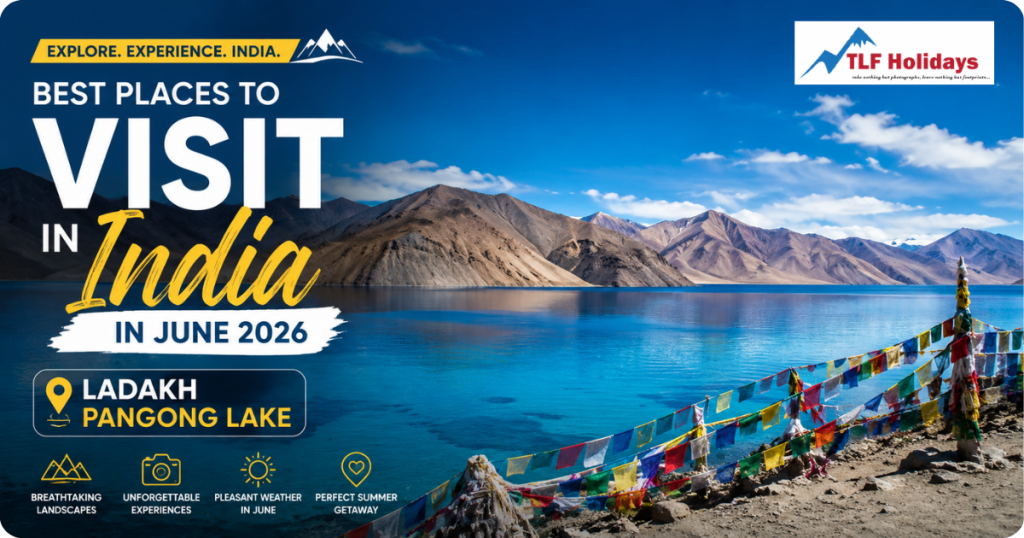
Ladakh stands as the crown jewel among top 5 places to visit in June in India, offering crystal-clear skies, comfortable daytime temperatures, and newly opened mountain passes. June weather in Leh ranges from 15°C to 20°C during the day, dropping to 5°C at night, creating ideal conditions for sightseeing without extreme cold.
The iconic Khardung La pass, one of the world’s highest motorable roads, typically opens by early June. Pangong Tso lake displays its famous color-changing waters under brilliant sunshine, while Nubra Valley’s sand dunes offer camel rides against snow-capped peaks. Monasteries like Hemis and Thiksey conduct vibrant cultural festivals during this period.
Travel requirements for Ladakh in 2026 remain straightforward for domestic tourists—no special permits needed for Indian citizens visiting Leh, Nubra Valley, and Pangong areas. However, restricted areas like Turtuk and Dha-Hanu require Inner Line Permits obtainable online or through tour operators.
Andaman and Nicobar Islands — Tropical Paradise Before Monsoon Peak

The Andaman Islands in June offer a compelling mix of sunny intervals and refreshing rain showers, with temperatures hovering between 24°C and 30°C. While monsoon officially begins, early June experiences lighter rainfall compared to July-August, allowing travelers to enjoy water activities on most days.
Havelock Island’s Radhanagar Beach remains accessible, and snorkeling at Elephant Beach continues with good underwater visibility. Neil Island’s natural rock formations and coral reefs attract fewer visitors, creating intimate beach experiences. Port Blair’s Cellular Jail and museums provide excellent rainy-day alternatives when weather turns.
Fewer crowds translate to better hotel availability and negotiable rates across resorts. Ferry services operate regularly, though advance booking ensures preferred departure times. June visitors should pack light rain gear and plan flexible itineraries accommodating weather variations.
Munnar — Kerala’s Emerald Hill Station

Munnar transforms into a lush paradise in June as monsoon rains drench the Western Ghats. Temperatures range from 16°C to 21°C, creating a pleasant, cool climate perfect for exploring tea plantations and spice gardens. The best places to visit in India in June 2026 with family include Munnar for its safe, scenic environment and child-friendly activities.
Eravikulam National Park, home to the endangered Nilgiri Tahr, showcases vibrant wildflowers during this season. Tea estates like Kolukkumalai and Lockhart offer guided tours explaining tea processing while mist rolls across hillsides. Attukal Waterfalls and Lakkam Waterfalls reach their majestic peak flow in June.
Accommodation options range from budget homestays to luxury resorts, with many properties offering monsoon packages including indoor activities and Ayurvedic spa treatments. Road conditions remain good in early June before heavy monsoon sets in by mid-month.
Coorg — Coffee Country in Full Bloom
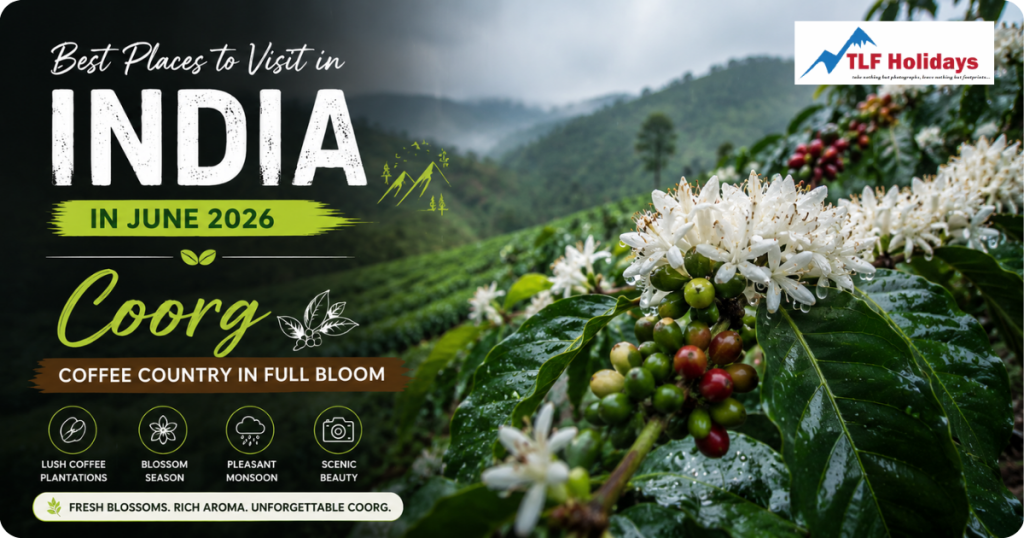
Coorg, Karnataka’s premier coffee-growing region, receives gentle monsoon showers in June that enhance its natural beauty without hampering travel. Temperatures stay comfortable at 18°C to 25°C, ideal for plantation walks and waterfall visits.
Abbey Falls cascades with renewed vigor, creating spectacular photo opportunities surrounded by coffee and spice plantations. Raja’s Seat viewpoint offers panoramic valley views enhanced by monsoon mist. The Namdroling Monastery in nearby Bylakuppe provides cultural immersion with its Tibetan Buddhist architecture and peaceful atmosphere.
June marks coffee blossom season, when white flowers blanket plantations with a jasmine-like fragrance. Many estate homestays offer plantation tours, coffee-tasting sessions, and authentic Kodava cuisine experiences. Wildlife enthusiasts can visit Nagarhole National Park, though heavy rains in late June may affect jeep safaris.
Darjeeling — Tea Capital with Monsoon Magic
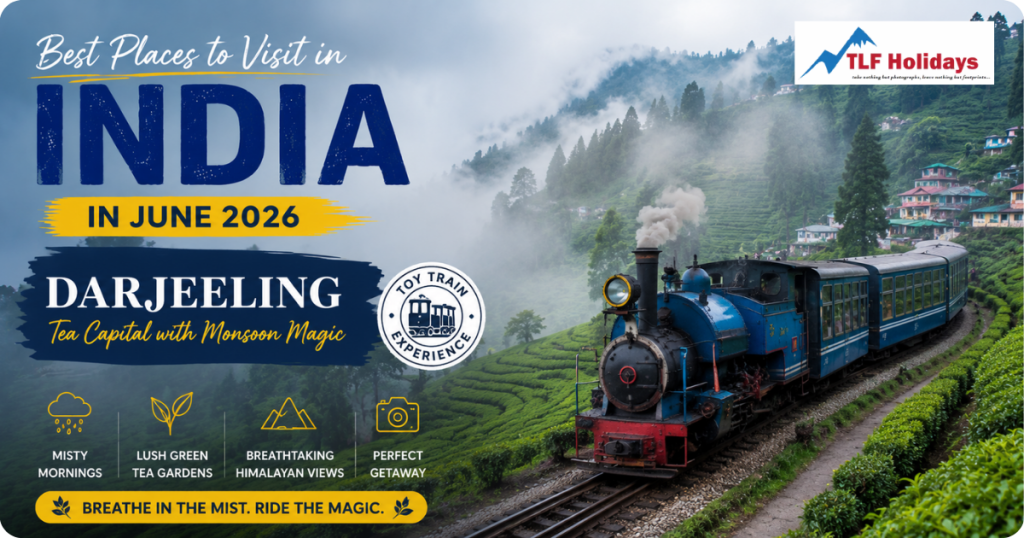
Darjeeling‘s famous tea gardens come alive in June as fresh tea leaves sprout after spring harvests. The hill station experiences early monsoon with temperatures between 12°C and 18°C, creating atmospheric mist that adds romance to mountain vistas.
The Darjeeling Himalayan Railway, a UNESCO World Heritage site, operates regular toy train rides offering nostalgic journeys through cloud-draped hills. Tiger Hill sunrise viewpoint occasionally clears to reveal Kanchenjunga’s snow-covered peaks, though cloud cover increases by mid-month. Monasteries like Ghoom and Bhutia Busty provide serene spiritual experiences.
Tea estate tours remain popular, with gardens like Happy Valley and Glenburn welcoming visitors for tastings and factory tours. June’s second flush tea harvest produces highly prized Darjeeling varieties known for muscatel flavors. Accommodation rates drop compared to peak season, making heritage hotels more affordable.
Shillong — Scotland of the East
Shillong receives moderate rainfall in June, transforming Meghalaya’s capital into a verdant wonderland. At 1,496 meters elevation, temperatures range from 15°C to 23°C, providing relief from plains’ humidity. Living root bridges in nearby Cherrapunji become accessible attractions before peak monsoon.
Ward’s Lake and Elephant Falls showcase enhanced beauty with increased water flow. Don Bosco Museum offers comprehensive Northeast Indian cultural education, perfect for rainy afternoons. Police Bazaar provides shopping opportunities for local handicrafts, honey, and traditional Khasi textiles.
The nearby village of Mawlynnong, Asia’s cleanest village, makes an excellent day trip with its unique living root bridges and tree house viewpoints. June visitors witness local Khasi festivals and enjoy authentic Meghalayan cuisine featuring smoked pork and bamboo shoot preparations.
Mahabaleshwar — Maharashtra’s Monsoon Queen

Mahabaleshwar earns its reputation as the top 10 best places to visit in June in India through spectacular monsoon transformations. Located in the Western Ghats, this hill station receives abundant June rainfall that activates dozens of waterfalls and fills valley viewpoints with dramatic cloud formations.
Arthur’s Seat viewpoint overlooks deep valleys often shrouded in swirling mist. Venna Lake offers boating when weather permits, while strawberry farms begin early cultivation cycles. Pratapgad Fort provides historical exploration with monsoon atmosphere enhancing its ancient stone walls.
The town’s numerous viewpoints—Kate’s Point, Wilson Point, Lodwick Point—offer different perspectives on monsoon-draped landscapes. Local markets sell fresh strawberries, mulberries, and Maharashtra’s famous chikki sweets. Heritage hotels and modern resorts provide cozy monsoon retreats with valley views.
You May Also Read – Places to Go in December in Bhutan: The Ultimate Winter Travel Guide
Kodaikanal — Tamil Nadu’s Gift to Nature
Kodaikanal, perched at 2,133 meters in the Palani Hills, experiences pleasant June weather with temperatures between 14°C and 20°C. Early monsoon brings light showers that refresh forests and fill the star-shaped Kodai Lake at the town’s heart.
Bryant Park showcases colorful flower beds and hybrid plant varieties. Coaker’s Walk, a pedestrian path along cliff edges, offers valley views enhanced by seasonal mist. Pillar Rocks, three massive granite formations, stand dramatically against monsoon skies. Silver Cascade waterfall flows vigorously after June rains.
Berijam Lake, located 21 kilometers away, requires forest permits but rewards visitors with pristine, crowd-free natural beauty. Homemade chocolates from local shops make popular souvenirs, while eucalyptus oil from surrounding forests offers therapeutic products.
Shimla and Manali — Himachal’s Twin Charms
Shimla and Manali, though popular year-round, offer unique June experiences as tourists thin out before July vacation rush. Shimla’s colonial architecture looks romantic under occasional rain showers, with temperatures ranging from 15°C to 25°C.
Manali serves as the gateway to high-altitude adventures, with Rohtang Pass typically opening by early June 2026. Solang Valley offers paragliding and zorbing against green mountain slopes. Old Manali’s cafes and Vashisht’s hot springs provide relaxation after mountain activities.
Both destinations offer accommodation across all budgets, from budget guesthouses to luxury resorts. June bookings come easier compared to peak summer months, and hotel rates remain moderate. Mall Road shopping in both towns continues without peak-season crowds.
Lonavala — Weekend Monsoon Escape
Lonavala, positioned between Mumbai and Pune, transforms into a monsoon paradise in June when waterfalls emerge from every hillside. At just 625 meters elevation, it’s easily accessible and ideal for weekend getaways with temperatures from 22°C to 28°C.
Bhushi Dam becomes a popular waterfall spot where water flows over steps creating natural jacuzzis. Tiger’s Leap viewpoint offers dramatic valley views shrouded in monsoon mist. Karla and Bhaja caves, ancient Buddhist rock-cut structures, provide historical exploration sheltered from rain.
Lonavala’s famous chikki shops line the main road, offering fresh cashew and peanut brittles. The nearby hill station of Khandala provides additional viewpoints and hiking trails. Hotels and resorts offer monsoon packages with indoor activities and spa treatments.
June Weather Patterns Across Indian Regions
Understanding regional weather variations helps select the best places to visit in India in June 2026 matching your preferences and tolerance levels.
| Region | Weather Type | Temperature Range | Rainfall | Best For |
| Ladakh | Dry, Clear | 5°C – 20°C | Minimal | Adventure, Road Trips |
| Hill Stations (South) | Monsoon Onset | 15°C – 25°C | Moderate to Heavy | Nature, Relaxation |
| Hill Stations (North) | Pre-Monsoon | 12°C – 25°C | Light to Moderate | Sightseeing, Trekking |
| Andaman Islands | Monsoon Beginning | 24°C – 30°C | Moderate | Beaches, Water Sports |
| Northeast India | Monsoon Active | 15°C – 28°C | Heavy | Culture, Living Root Bridges |
| Coastal Regions | Humid, Rainy | 25°C – 32°C | Heavy | Indoor Activities, Ayurveda |
Note: Weather patterns vary within regions; always check specific destination forecasts closer to travel dates.
Travel Budget and Cost Breakdown for June 2026
June travel in India offers excellent value due to off-peak pricing across most destinations. As of 2026, here’s a realistic budget breakdown for different travel styles.
Budget Traveler (₹8,000 – ₹12,000 per day)
Budget accommodations include guesthouses, homestays, and budget hotels ranging from ₹800 to ₹1,500 per night. Local transportation via buses and shared taxis keeps costs low at ₹500 to ₹800 daily. Meals at local restaurants and street food stalls average ₹300 to ₹500 per day. Entry fees for attractions and basic activities add ₹500 to ₹1,000 daily.
Ladakh requires higher budgets due to transportation costs, while hill stations like Shimla and Munnar accommodate budget travelers easily. Homestays in Coorg and Wayanad offer authentic experiences at affordable rates.
Mid-Range Traveler (₹15,000 – ₹25,000 per day)
Mid-range hotels and boutique properties charge ₹2,500 to ₹5,000 per night with comfortable amenities. Private cabs and domestic flights for longer distances cost ₹2,000 to ₹5,000 daily. Dining at mid-range restaurants and cafes averages ₹800 to ₹1,500 per day. Guided tours, adventure activities, and attraction entries total ₹1,500 to ₹3,000 daily.
This budget level allows comfortable travel across all mentioned destinations with flexibility for spontaneous activities. Andaman packages in this range include island hopping and water sports.
Luxury Traveler (₹30,000+ per day)
Luxury resorts and heritage hotels charge ₹8,000 to ₹25,000 per night, offering premium locations and services. Private vehicles with drivers, helicopter transfers in Ladakh, and domestic business class flights cost ₹5,000 to ₹15,000 daily. Fine dining and premium restaurant experiences average ₹2,000 to ₹4,000 per day. Private guided tours, spa treatments, and exclusive experiences add ₹5,000 to ₹10,000 daily.
Luxury properties in Ladakh, Andaman, and Kerala hill stations provide exceptional monsoon experiences with indoor amenities and panoramic views.
Essential Travel Tips for June Tourism in India
Packing for Variable Weather
June requires versatile packing accommodating both rain and sunshine. Lightweight rain jackets or ponchos prove essential for hill stations and Northeast destinations. Quick-dry clothing works better than cotton in humid, rainy conditions. Layered clothing suits Ladakh’s temperature fluctuations from morning cold to afternoon warmth.
Waterproof bags protect electronics and important documents during unexpected downpours. Comfortable walking shoes with good grip prevent slipping on wet surfaces. Sunscreen and sunglasses remain necessary in high-altitude destinations despite cooler temperatures.
Booking Strategies for Best Deals
As of 2026, advance booking for June travel yields significant savings on flights and hotels. Airlines release promotional fares for off-peak months 60 to 90 days in advance. Hotel comparison websites show June rates often 30% lower than peak season for identical properties.
Flexibility with travel dates by a few days can unlock better flight prices. Package deals combining accommodation and activities often provide better value than booking separately. Directly contacting hotels or homestays sometimes results in negotiable rates not visible on booking platforms.
Health and Safety Considerations
Monsoon travel requires attention to specific health precautions. Waterborne diseases increase during rainy seasons, so consuming only bottled or purified water becomes crucial. Mosquito repellents prevent dengue and malaria risks in humid regions. Travel insurance covering medical emergencies, trip cancellations, and weather disruptions provides peace of mind.
Checking weather forecasts regularly helps avoid severe weather situations, particularly in Ladakh where sudden weather changes can close passes. Carrying basic first aid supplies, altitude sickness medication for Ladakh, and any prescription drugs ensures preparedness.
Transportation Considerations
June road conditions vary dramatically across India. Himalayan roads in Ladakh become accessible but remain challenging with occasional snow patches and landslide risks. Hill station roads in Western Ghats experience increased traffic and potential landslides during heavy rainfall. Booking trains and flights early ensures better availability and prices.
Domestic airlines operate regular services to major tourist hubs, with flights to Leh opening in May-June 2026. Ferry services to Andaman Islands continue with potential weather-related delays. Renting vehicles requires checking provider policies about monsoon travel and insurance coverage.
Day-Wise Itinerary: 7-Day North India June Journey
This sample itinerary covers popular best places to visit in India in June across North India, balancing adventure and comfort.
| Day | Destination | Activities | Overnight |
| 1 | Delhi → Shimla | Drive to Shimla (350 km, 7-8 hours), check-in, Mall Road evening walk | Shimla |
| 2 | Shimla | Jakhu Temple, Kufri, The Ridge, colonial architecture tour | Shimla |
| 3 | Shimla → Manali | Scenic drive via Kullu Valley (250 km, 7 hours), Kullu shawl shopping | Manali |
| 4 | Manali | Solang Valley activities, Hadimba Temple, Old Manali cafes | Manali |
| 5 | Manali → Dharamshala | Drive through Mandi (235 km, 6-7 hours), check-in McLeodganj | Dharamshala |
| 6 | Dharamshala | Dalai Lama Temple, Bhagsu Waterfall, Tibetan markets | Dharamshala |
| 7 | Dharamshala → Delhi | Return journey (475 km, 10 hours) or fly from Dharamshala airport | Delhi |
This itinerary works best with private vehicle rental allowing flexible stops and comfortable pace despite monsoon conditions.
Practical Information for International and Domestic Travelers
Visa and Entry Requirements
As of 2026, international travelers to India require e-Visas or traditional visas obtained through Indian embassies. E-Tourist Visas allow stays up to 90 days and process within 3-5 business days when applied online. Entry points include major international airports in Delhi, Mumbai, Bangalore, and Kolkata.
Domestic travelers need valid government-issued photo identification for hotel check-ins and domestic flights. Aadhaar cards, driving licenses, or voter IDs suffice for Indian citizens. Certain restricted areas like parts of Ladakh and Northeast require additional permits obtainable through tour operators or online portals.
Connectivity and Mobile Networks
Major telecom providers—Jio, Airtel, and Vi—offer extensive coverage across popular tourist destinations. Prepaid SIM cards for international travelers require passport copies and local address proof, available at airports and authorized retailers. Data packages remain affordable, with 2GB daily plans costing ₹200-300 monthly.
Remote areas like Spiti Valley and certain Ladakh regions experience limited or no mobile connectivity. Informing family about potential communication gaps prevents unnecessary worry. Wi-Fi availability in hotels varies, with luxury properties offering reliable connections and budget accommodations showing spotty service.
Currency and Payment Methods
The Indian Rupee (INR) serves as the only legal tender. Currency exchange facilities operate at airports, banks, and authorized dealers in tourist areas. ATMs are widespread in cities and towns but sparse in remote mountain regions. Carrying sufficient cash for 2-3 days proves wise when traveling to Ladakh or Northeast destinations.
Digital payment platforms like UPI, Paytm, and Google Pay dominate transactions in urban areas and popular tourist spots. Credit and debit cards work at established hotels, restaurants, and shops. However, small vendors, homestays, and rural areas prefer cash transactions.
Conclusion
June 2026 presents diverse opportunities across India’s geography, from the stark beauty of Ladakh’s high deserts to the lush green embrace of Kerala’s hill stations. The best places to visit in India in June cater to every travel style—whether you seek adventure on mountain passes, tranquility in misty tea gardens, or cultural immersion in Northeast tribal regions. Understanding regional weather patterns, packing appropriately, and maintaining flexible itineraries transform potential monsoon challenges into memorable experiences. If June’s mountain destinations intrigue you, consider extending your Himalayan journey to Bhutan. Learn more: Complete Bhutan Travel Guide 2026
The combination of off-peak pricing, fewer crowds, and nature’s seasonal transformations makes June an intelligent choice for discerning travelers. From the pristine beaches of Andaman to the coffee-scented valleys of Coorg, each destination offers unique June advantages. As weather patterns become increasingly unpredictable globally, checking specific forecasts closer to travel dates and maintaining trip flexibility ensures successful journeys.
Whether planning a family vacation to Munnar’s tea estates, an adventure expedition to Ladakh’s high passes, or a romantic escape to Darjeeling’s colonial charm, June 2026 rewards those who embrace India’s monsoon magic and pre-monsoon mountain splendor.
Frequently Asked Questions
What are the best family-friendly destinations in India for June?
Munnar, Coorg, and Shimla rank among the best places to visit in India in June 2026 with family due to safe environments, scenic beauty, and activities suitable for all ages. These hill stations offer plantation tours, nature walks, and cultural experiences without extreme weather conditions. Andaman Islands also work well for families seeking beach experiences with controlled monsoon impact in early June.
Is Ladakh safe to visit in June 2026?
Yes, June represents one of the safest and most pleasant months for Ladakh travel. As of 2026, daytime temperatures reach comfortable 15°C to 20°C levels, and major roads including those to Nubra Valley and Pangong Lake remain open and accessible. However, travelers should monitor weather forecasts as sudden changes can occur, and altitude acclimatization remains necessary for first-time visitors.
How much does a June trip to Andaman Islands cost?
Budget travelers can visit Andaman in June 2026 for ₹25,000 to ₹35,000 per person for 5-6 days, including accommodation, inter-island ferries, and basic activities. Mid-range travelers should budget ₹50,000 to ₹75,000 for comfortable hotels and water sports. Luxury packages exceed ₹1,00,000 per person with premium resorts and private experiences. June’s off-peak status often includes discounted package deals compared to winter peak season.
Which places should be avoided in June in India?
Rajasthan, central India plains, and most of North India’s flat regions experience extreme heat and pre-monsoon humidity in June, making outdoor sightseeing uncomfortable. Kerala backwaters receive heavy monsoon rainfall by mid-June, affecting houseboat experiences. Goa’s beaches close many water sports operations during monsoon season. These destinations perform better during October to March travel windows.
What should I pack for a hill station trip in June?
Essential items include lightweight rain jackets, quick-dry clothing, comfortable walking shoes with grip, and layered garments for temperature variations. Waterproof bags protect electronics and documents. Sunscreen and sunglasses remain necessary despite cooler temperatures. For Ladakh specifically, add warm layers including fleece jackets and thermal wear for chilly mornings and evenings, even in June.
Are monsoon treks safe in June?
Light to moderate treks in established hill stations like Shimla, Manali, and Darjeeling remain relatively safe in June with proper rain gear and cautious footing on wet trails. However, challenging high-altitude treks should be avoided during active monsoon due to landslide risks and poor visibility. Always check local conditions, hire experienced guides familiar with monsoon terrain, and maintain flexible schedules allowing weather-related cancellations.





Comments (15)
Angie2763,
05 May, 2026https://shorturl.fm/xCaQ7
Michelle2422,
05 May, 2026https://shorturl.fm/aAb7J
Whitney4749,
05 May, 2026https://shorturl.fm/x8oph
Lewis1599,
05 May, 2026https://shorturl.fm/Q9a3D
Jillian4540,
05 May, 2026https://shorturl.fm/nWL2z
Brian1849,
05 May, 2026https://shorturl.fm/1i1q2
Elvira634,
05 May, 2026https://shorturl.fm/qLtxY
Andres1755,
05 May, 2026https://shorturl.fm/kaMya
Mariah4027,
05 May, 2026https://shorturl.fm/JMVb5
Dominique1494,
05 May, 2026https://shorturl.fm/UOLCw
Briana1484,
06 June, 2026https://shorturl.fm/KlES5
Beryl4914,
06 June, 2026https://shorturl.fm/QhQEH
Vivian564,
06 June, 2026https://shorturl.fm/inLmF
Gregory3507,
06 June, 2026https://shorturl.fm/1gKjk
Sylvia2867,
06 June, 2026https://shorturl.fm/h9QrC