



- 1.2k Views
- 13 Min Read
- (9) Comments
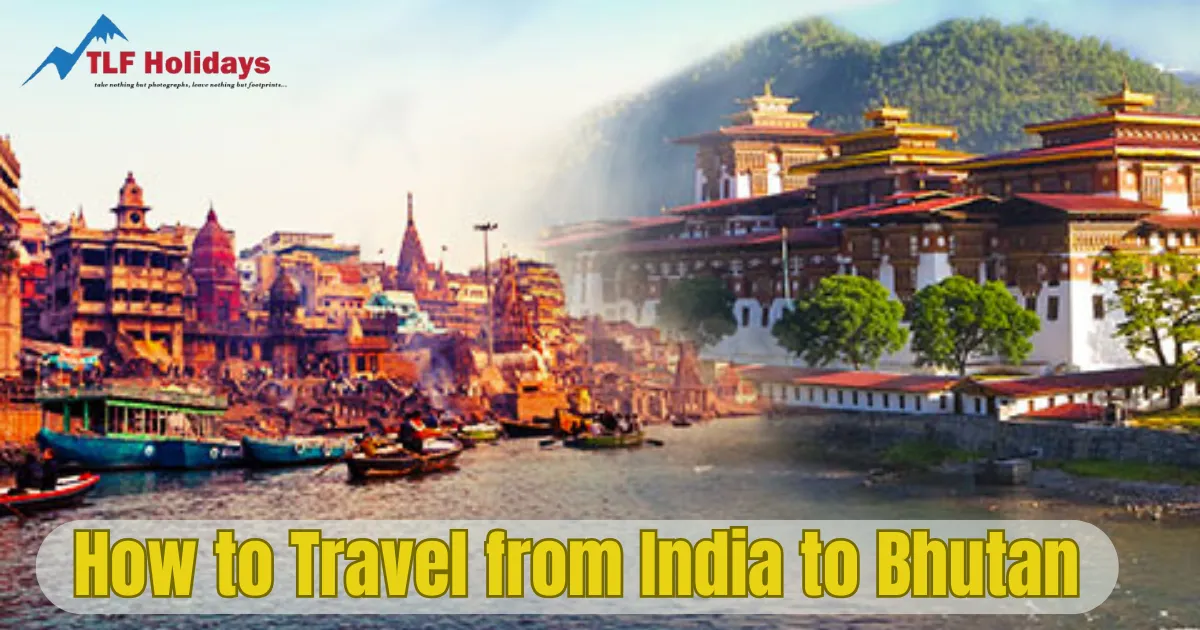
Nestled in the folds of the Eastern Himalayas, the Kingdom of Bhutan is a land that measures success not in GDP but in Gross National Happiness. Its monasteries cling to cliffsides, its valleys bloom with wildflowers, and its people greet travellers with a warmth as genuine as its mountain air. If you have been dreaming of making this journey, you are not alone — thousands of travellers from across India cross the border into Bhutan every year, drawn by the promise of spiritual serenity, pristine nature, and cultural richness unlike anything else in South Asia. But knowing how to travel from India to Bhutan is the first step. Do you need a visa? Which border do you cross? Can you go by road? This guide answers all of those questions and more, covering every route, every document, every tip you need to plan a seamless Bhutan journey from India. Whether you are planning a solo adventure, a romantic Bhutan Honeymoon Package for Couple, or a family holiday, this guide has you covered.
Why Travel to Bhutan? A Quick Overview
Before we dive into the logistics of how to go to Bhutan from India, let us briefly understand what makes this kingdom so special.
- Bhutan is the world’s only carbon-negative country.
- It is the last remaining Buddhist kingdom in the world.
- Tourism is regulated to protect its culture and environment meaning fewer crowds and more authenticity.
- Indian nationals enjoy privileged access no visa required!
- From the iconic Tiger’s Nest Monastery (Paro Taktsang) to the Punakha Dzong, Bhutan is a UNESCO-worthy destination at every turn.
Planning a trip here is a rewarding exercise and once you understand the routes and formalities, it is surprisingly accessible from most parts of India.
Do Indian Citizens Need a Visa for Bhutan?
One of the most asked questions when it comes to how to travel from India to Bhutan is about visas. The good news: Indian citizens do NOT need a visa to enter Bhutan. This is a unique bilateral privilege enjoyed only by Indian, Bangladeshi, and Maldivian nationals. However, all travellers including Indians must obtain an Inner Line Permit (ILP) or Bhutan Entry Permit. This is issued free of cost at the immigration checkpoints and is straightforward to obtain.
Entry Points & Documents Required
| Document | Indian Citizens | Foreign Nationals (via India) | Notes |
| Valid Passport | Optional (Voter ID / Aadhaar accepted at some borders) | Mandatory | Must be valid for 6+ months |
| Voter ID Card | Accepted at land border | Not applicable | Only for Indian nationals |
| Aadhaar Card | Accepted at Phuentsholing border | Not applicable | Carry original |
| Bhutan Permit (IPI) | Required (Free for Indians) | Required + Visa Fee | Obtained at border or online |
| Visa | Not required | Required – apply via Bhutan Tourism | Non-Indian nationals |
| Route Permit | Required for restricted areas | Required for restricted areas | Issued at checkpoints |
Note: Always carry original documents. Photocopies are generally not accepted at the border.
How to Travel from India to Bhutan: All Available Routes
There are three primary ways to make the journey: by road, by air, and by a combination of train and road. Let us explore each in detail.
1. By Road — The Most Popular Way to Travel to Bhutan from India
Travelling how to travel to Bhutan from India by road is the most popular and scenic option, especially for travellers from West Bengal, Assam, and the Northeast. There are several official land border crossings between India and Bhutan.
Major India–Bhutan Land Entry Points
| Entry Point (Indian City) | Bhutan Border Town | Mode of Travel | Distance (Approx) | Travel Time |
| New Jalpaiguri / Siliguri | Phuentsholing | Train + Road / Bus | ~170 km from NJP | 3–4 hours by road |
| Guwahati | Samdrup Jongkhar | Road / Bus | ~250 km | 5–6 hours |
| Kolkata | Phuentsholing | Train to NJP + Bus | ~700 km (Kolkata–NJP) | 12–14 hrs (total) |
| Delhi | Phuentsholing | Flight to Bagdogra + Road | ~1800 km | ~6 hrs (flight+road) |
| Assam (Kokrajhar) | Gelephu | Road | ~95 km | 2–3 hours |
A. Phuentsholing — The Most Common Land Border Entry
Located in the Chhukha District of Bhutan and bordering Jaigaon in West Bengal, Phuentsholing is the most-used land entry point. It is well-connected to:
- New Jalpaiguri (NJP) railway station (~170 km)
- Bagdogra Airport (~155 km)
- Siliguri town (~155 km)
- Kolkata (via overnight train or drive)
Once you cross into Phuentsholing, you need to visit the immigration office to collect your entry permit. From Phuentsholing, you can take a government or private bus to Thimphu (the capital, ~180 km away). The road winds through spectacular mountain terrain and is a journey in itself.
B. Samdrup Jongkhar — Gateway for Northeast India Travellers
If you are travelling from Assam or the Northeast states, the most convenient border crossing is Samdrup Jongkhar, which borders Darranga in Assam. It is approximately 250 km from Guwahati by road.
From Samdrup Jongkhar, you can reach Trashigang, Mongar, and eventually Thimphu but note that this route involves longer travel times due to the mountainous terrain of eastern Bhutan.
C. Gelephu — A Lesser-Known But Convenient Entry
Gelephu borders Assam’s Kokrajhar district and is ideal for travellers from Central Assam. It provides access to south-central Bhutan, including Sarpang District.
2. By Air — Fastest Way to Get to Bhutan from India
For those short on time, flying is the fastest option for how to go to Bhutan from India. Bhutan’s only international airport is Paro International Airport, nestled in the Paro Valley at 2,235 metres above sea level. It is considered one of the most challenging airports in the world for pilots, offering dramatic approaches between mountain peaks.
Druk Air (Royal Bhutan Airlines) and Bhutan Airlines are the two carriers operating flights from India to Paro. Direct flights are available from:
- Delhi (Indira Gandhi International Airport)
- Kolkata (Netaji Subhas Chandra Bose International Airport)
- Mumbai (Chhatrapati Shivaji Maharaj International Airport)
- Guwahati (Lokpriya Gopinath Bordoloi International Airport)
- Bagdogra (Bagdogra Airport, Siliguri)
Flight duration varies: Delhi to Paro is approximately 2 hours, while Kolkata to Paro is about 1 hour 15 minutes. Airfare can range from INR 10,000 to INR 30,000+ depending on the season and how early you book.
Pro Tip from TLF Holidays Bhutan: Always book Druk Air or Bhutan Airlines tickets well in advance, especially during peak season (March–May and September–November). Seats fill up fast!
3. By Train + Road — The Budget-Friendly Combo
For many travellers, the journey to Bhutan begins at New Jalpaiguri (NJP) station in West Bengal, one of the best-connected railway junctions in Northeast India.
Major trains from cities like Delhi, Mumbai, Chennai, and Hyderabad run to NJP. From NJP, you can hire a shared jeep, taxi, or take a bus to either Siliguri (hub for further onward travel) or directly to Jaigaon/Phuentsholing. This combination of train and road travel is the most budget-friendly way to explore Bhutan.
Bhutan Sustainable Development Fee (SDF) — Everything You Need to Know
Since September 2022, Bhutan introduced a revised Sustainable Development Fee (SDF) for all tourists. This was updated again in 2023–24 with a special rate for Indian, Bangladeshi, and Maldivian nationals.
Bhutan Sustainable Development Fee (SDF)
| Visitor Type | SDF Per Night | Applicable From | Includes |
| International Tourists (non-Indian) | USD 100/night | September 2022 (revised 2024) | Carbon levy, free Wi-Fi, guide assistance |
| Indian, Bangladeshi & Maldivian Nationals | INR 1,200/night | July 2023 | Reduced rate for regional neighbours |
| Children (below 5 years) | Exempt | All seasons | No SDF charged |
| Children (5–12 years) | 50% of applicable SDF | All seasons | Half rate |
| Pilgrims (Indian nationals) | Exempt on pilgrimage routes | Seasonal | Special religious tour conditions apply |
SDF rates are subject to revision by the Tourism Council of Bhutan. Always verify on the official Bhutan Tourism website or with your travel operator before booking.
Best Time to Visit Bhutan from India
Timing your trip is crucial. Bhutan experiences four distinct seasons, each offering a different kind of magic.
Bhutan Season Guide
| Season | Months | Weather | Recommended For |
| Spring (Best) | March – May | Mild, flowers in bloom, clear skies | Trekking, sightseeing, festivals |
| Summer / Monsoon | June – August | Heavy rain, lush greenery, some road closures | Budget travel, offbeat trips |
| Autumn (Best) | September – November | Cool, crystal-clear mountain views | Festivals (Thimphu Tshechu), photography |
| Winter | December – February | Cold, snowfall at high altitudes | Snow lovers, peaceful travel, Punakha |
For those planning a Bhutan Trekking Guide-inspired adventure — whether it is the Snowman Trek, Druk Path Trek, or the Jhomolhari Trek — the spring (March to May) and autumn (September to November) seasons are the absolute best times to lace up your boots.
How to Get the Bhutan Entry Permit — Step-by-Step
Now that you know how to reach the border, here is exactly how to get your entry permit at the immigration office:
- Step 1: Arrive at the designated immigration office (e.g., Phuentsholing Immigration Office).
- Step 2: Fill in the Bhutan Entry Permit form (available at the counter).
- Step 3: Submit your valid photo ID (Voter ID card, Aadhaar card, or Passport).
- Step 4: Submit 2 recent passport-sized photographs.
- Step 5: Wait for processing — typically 30 minutes to 2 hours depending on the queue.
- Step 6: Collect your permit and proceed into Bhutan. Keep it safe — you will need to show it at internal checkpoints.
Remember: For areas beyond Thimphu and Paro (like Haa, Wangdue Phodrang, etc.), you may need an additional Route Permit or Area Permit, which can be arranged through a licensed tour operator or at the district immigration office.
Travelling Within Bhutan After Entering from India
Once you have crossed the border and obtained your permit, getting around Bhutan is straightforward. Here are your main options:
By Road (Taxi / Private Car)
The most flexible way to travel within Bhutan. Hiring a private vehicle with a local driver is highly recommended, as the roads are mountainous and local knowledge is invaluable. Fuel costs and road conditions vary by season.
By Bus (Government Buses)
Bhutan’s state-run bus service connects major towns including Thimphu, Paro, Punakha, and Phuentsholing. Buses are affordable but can be infrequent and slow on mountain roads. Ideal for solo budget travellers.
By Domestic Flight
Bhutan operates limited domestic flights between Paro, Bumthang (Jakar), Yongphulla (Trashigang), and Gelephu. These are operated by Druk Air and are subject to weather conditions. Booking in advance is essential.
Popular Bhutan Itineraries from India
Here are some of the most popular trip structures when travelling from India to Bhutan:
5 Nights / 6 Days — Classic Bhutan
- Day 1: Arrive Phuentsholing / Paro — Acclimatise
- Day 2: Drive to Thimphu — Buddha Dordenma, Changangkha Lhakhang
- Day 3: Thimphu – Memorial Chorten, Folk Heritage Museum, Tashichho Dzong
- Day 4: Punakha – Punakha Dzong, Chimi Lhakhang (Fertility Temple)
- Day 5: Paro – Tiger’s Nest (Taktsang) Monastery hike
- Day 6: Departure from Paro Airport or road return to Phuentsholing
3 Nights / 4 Days — Weekend Bhutan Getaway
- Day 1: Arrive Phuentsholing, drive to Thimphu
- Day 2: Thimphu sightseeing
- Day 3: Paro – Tiger’s Nest Monastery
- Day 4: Return to India via Phuentsholing
Couples planning a Bhutan Honeymoon Package for Couple often prefer the 5–7 night itinerary, which includes luxury stays in Paro or Thimphu with spa treatments, private guided tours, and candle-lit dinners with Himalayan views. TLF Holidays Bhutan specialises in crafting personalised honeymoon journeys tailored to each couple’s preferences.
Bhutan Travel Tips You Absolutely Cannot Miss
Money & Currency
Bhutan’s currency is the Ngultrum (BTN), which is pegged 1:1 with the Indian Rupee. Indian Rupees (except INR 2000 notes, which are not accepted) are widely accepted across Bhutan. ATMs are available in Thimphu and Paro, but it is wise to carry sufficient cash for smaller towns.
Language
The official language is Dzongkha, but English is widely spoken, especially in tourist areas, hotels, and restaurants. Hindi is also understood in border towns.
Mobile Connectivity
Indian SIM cards typically do not work in Bhutan. Purchase a local Bhutanese SIM card (B-Mobile or TashiCell) at the border or in Thimphu for affordable data and calls.
Dress Code & Cultural Etiquette
Bhutanese culture is deeply rooted in Buddhist tradition. When visiting monasteries and Dzongs, dress modestly (no shorts or sleeveless tops). Remove shoes before entering religious spaces. Always walk clockwise around stupas and prayer wheels.
Altitude & Health
Thimphu sits at 2,320 metres above sea level, while Paro is at 2,235 metres. If you are coming from plains, take it easy on your first day to acclimatise. Drink plenty of water and avoid strenuous activity immediately after arrival.
Connecting Bhutan with Broader Himalayan Travel
Many travellers combine their Bhutan trip with a visit to the Darjeeling hills. The region’s world-famous tea gardens, the Toy Train experience, and the views of Kanchenjunga make it a perfect companion to a Bhutan visit. If you are looking to explore both destinations, a Darjeeling Tour Package From Bhutan allows you to experience the best of the Eastern Himalayas in a single trip.
For international travellers passing through Southeast Asia, combining Bhutan with a regional itinerary is increasingly popular. A Bhutan Tour from Singapore typically involves a flight connection through Bangkok, Kolkata, or Delhi before reaching Paro — and the dramatic approach into Paro Airport itself is an experience many travellers count as a highlight of their entire journey.
Planning Your Trip with TLF Holidays Bhutan
Navigating the permits, routes, accommodations, and cultural experiences of Bhutan can feel overwhelming — especially for first-time visitors. That is where TLF Holidays Bhutan steps in. As a specialist travel company with deep knowledge of the kingdom, TLF Holidays Bhutan designs every itinerary with care, ensuring that travellers experience the authentic heart of Bhutan — not just its tourist highlights.
Whether you need a customised honeymoon package, a family tour, a trekking expedition, or a budget group trip, the expert team at TLF Holidays Bhutan handles everything from permit applications and accommodation bookings to guided excursions and airport transfers. Their services are available for travellers from all over India and internationally making your dream Bhutan holiday a seamless reality.
Conclusion
Knowing how to travel from India to Bhutan transforms this dream destination from a distant wish into an achievable adventure. With no visa requirement for Indian nationals, multiple road and air entry points, and the warm hospitality of the Bhutanese people, the Kingdom of Happiness is more accessible than ever.
Whether you are crossing the land border at Phuentsholing with a backpack, flying into Paro with your partner for a Bhutan Honeymoon Package for Couple, or trekking high mountain passes with the help of a Bhutan Trekking Guide every journey to Bhutan is unique, every experience unforgettable. Start planning today. The monasteries are calling. The mountains are waiting. And Bhutan the Last Shangri-La is ready to welcome you.
FAQs
Q1. Do Indian citizens need a visa to enter Bhutan?
No, Indian citizens do not need a visa for Bhutan — only a free Entry Permit issued at the border immigration office.
Q2. What documents are needed to travel from India to Bhutan?
Indian nationals need a valid Voter ID card, Aadhaar card, or Passport along with 2 passport-sized photographs for the entry permit.
Q3. How do I travel from India to Bhutan by road?
The most popular road route is via Jaigaon (West Bengal) to Phuentsholing (Bhutan), accessible from NJP/Siliguri or Kolkata.
Q4. Which is the nearest airport to Bhutan from India?
Bagdogra Airport (Siliguri) is the nearest Indian airport; Paro International Airport in Bhutan handles direct flights from Delhi, Kolkata, Mumbai, and Guwahati.
Q5. How much does it cost to travel from India to Bhutan?
Budget travellers can do Bhutan for INR 3,000–5,000/day (land border entry); including the SDF (INR 1,200/night for Indians), it typically costs INR 20,000–60,000 for a 5–7 night trip excluding international flights.
Q6. Is Bhutan safe for solo travellers from India?
Yes, Bhutan is one of the safest countries in Asia — crime rates are extremely low and locals are welcoming towards tourists, including solo travellers.
Q7. Can I use Indian Rupees in Bhutan?
Yes, Indian Rupees are accepted across Bhutan (except INR 2,000 notes); the Bhutanese Ngultrum (BTN) is pegged 1:1 to INR.
Q8. What is the Bhutan Sustainable Development Fee (SDF)?
The SDF is a nightly tourism fee — currently INR 1,200/night for Indian nationals and USD 100/night for international tourists — used to fund Bhutan’s carbon-neutral development and conservation.
Q9. How long does it take to travel from Siliguri to Phuentsholing?
The drive from Siliguri to Phuentsholing is approximately 155 km and takes around 3–4 hours depending on traffic.
Q10. Can I book a Bhutan trip from India without a tour operator?
Indian nationals can enter Bhutan independently; however, a licensed operator like TLF Holidays Bhutan is recommended for hassle-free permit processing, accommodation, and guided tours.

Comments (9)
Lynda4205,
04 April, 2026https://shorturl.fm/nG1Gn
Alden4315,
04 April, 2026https://shorturl.fm/biAtC
Gary1175,
04 April, 2026https://shorturl.fm/xOtay
Edwin3084,
04 April, 2026https://shorturl.fm/ZhhTl
Darryl2477,
04 April, 2026https://shorturl.fm/yz1aN
Giovanni287,
04 April, 2026https://shorturl.fm/mt7Hw
Nellie2446,
05 May, 2026https://shorturl.fm/IKfQ5
kr7luckcasino,
09 September, 2026Feeling lucky today! Just won a big prize and the process to claim it was effortless. Big thanks to kr7luckcasino for the great service.
idcipung138,
09 September, 2026Super friendly community and a great selection of slots. I always have a blast whenever I log into idcipung138.