



- 9 Views
- 19 Min Read
- (0) Comment
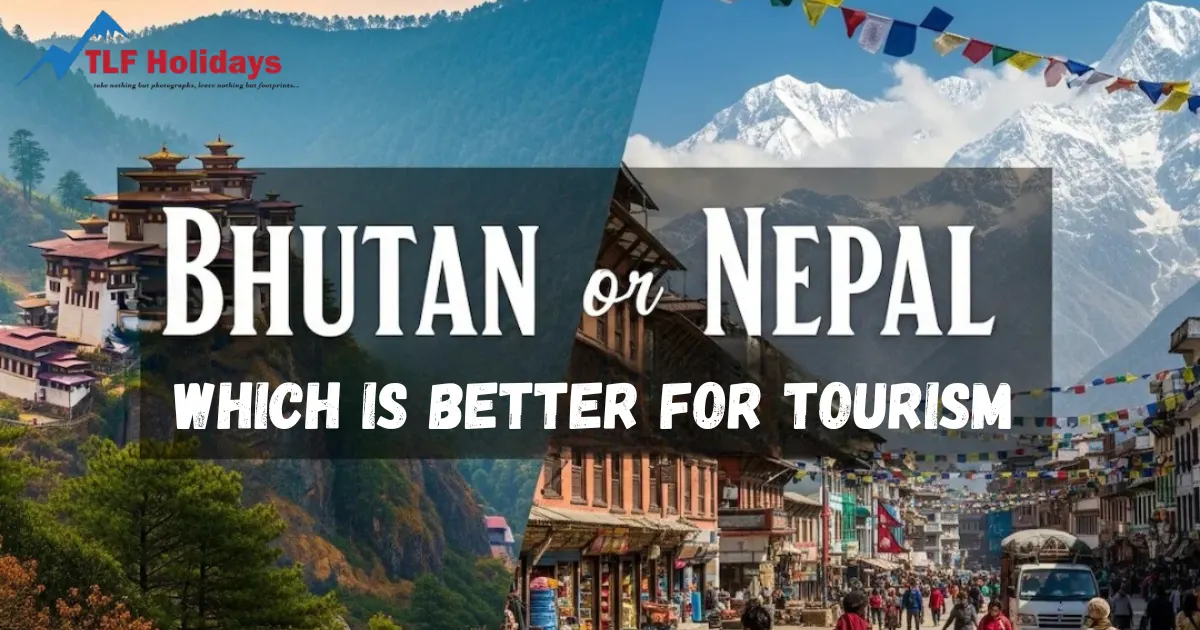
If you’ve been dreaming of a Himalayan escape and find yourself stuck between two of the world’s most breathtaking destinations, you’re not alone. The question “Nepal or Bhutan which is better for tourism” is one of the most searched travel dilemmas on the internet today and for good reason. Both countries sit on the southern slopes of the mighty Himalayas, both offer jaw-dropping mountain scenery, ancient Buddhist monasteries, and cultures that feel untouched by the modern world. Yet they are remarkably different in almost every way that matters to a traveler.
This comprehensive guide, brought to you by TLF Holidays Bhutan, will take you through every angle of the Nepal vs Bhutan debate — from costs and visa policies to trekking, culture, food, safety, and sustainability so you can make the best decision for your travel style, budget, and bucket list.
A Tale of Two Himalayan Kingdoms: An Overview
Nepal and Bhutan are both landlocked nations nestled between India and Tibet, yet the experience of visiting each could not be more different. When it comes to deciding Nepal Or Bhutan Which Is Better For Tourism, Nepal is widely regarded as the trekking capital of the world, a country that wears its diversity proudly from the jungle lowlands of Chitwan to the altitude-defying trails of Everest Base Camp. It is a destination that has welcomed budget backpackers since the 1970s and continues to attract over a million international tourists every year.
Bhutan, on the other hand, is often called the “Last Shangri-La” a kingdom that deliberately limits its number of visitors, charges a Sustainable Development Fee (SDF), and requires all tourists (except Indian, Bangladeshi, and Maldivian nationals) to travel through a licensed tour operator. Known as the Last Shangri-La, Bhutan has a closed environment that has preserved the most traditional aspects of the country. The result is a pristine, uncrowded, deeply spiritual destination where every valley feels like a secret and every monastery feels like a discovery. This contrast plays a big role when evaluating Nepal Or Bhutan Which Is Better For Tourism.
So when asking which is better, Nepal or Bhutan, the honest answer is: it depends entirely on who you are as a traveler. Let’s break it down.
Nepal vs Bhutan — At a Glance
| Feature | Nepal | Bhutan |
|---|---|---|
| Tourism Style | Open, budget-friendly, independent | Controlled, high-value, guided only |
| Visa Policy | Visa on arrival / e-visa | Must book through licensed operator |
| Daily Cost (approx.) | $50–$100 (budget–mid-range) | $250–$350 (SDF + package) |
| Best For | Adventure, trekking, backpacking | Culture, spirituality, exclusivity |
| Religion | Predominantly Hindu + Buddhist | Predominantly Buddhist |
| Trekking Altitude | Up to 5,644m (EBC) | Up to ~4,900m (Snowman Trek) |
| Crowds | High on popular trails | Very low — controlled tourism |
| Carbon Status | Kathmandu has air quality challenges | Carbon-negative country |
| Mountaineering | Permitted on most peaks | Banned above 6,000m |
| Ideal Duration | 10–21 days | 5–10 days |
Visa & Entry Requirements: Which Is Easier to Enter?
This is one of the most practical differences between the two destinations, and it has a significant impact on how you plan your trip when deciding Nepal or Bhutan which is better for tourism.
Nepal has one of the most tourist-friendly visa policies in Asia. Nepal has a simple policy on tourist visas and entry requirements. You just need to get a Nepal visa to visit, available at the embassy or border through Visa on Arrival. All you need are a valid passport, a photo, and the visa fee. Most nationalities can also apply for an e-visa online before travel. This ease of access is a huge draw for spontaneous travelers and budget explorers, making many travelers feel that in the debate of Nepal or Bhutan which is better for tourism, Nepal has a clear advantage in terms of flexibility.
Bhutan operates a far more structured system. All visitors, except those from India, Bangladesh and the Maldives, need to apply for a Bhutan visa in advance because Bhutan does not have a visa-on-arrival policy. Applying for a visa to Bhutan is neither done by the embassy nor online. The only way to get a visa to visit Bhutan is to book a tour package with a licensed tour operator, submit your passport color scan, and pay the deposit. After payment, the Tourism Council of Bhutan (TCB) processes your visa through the Department of Immigration.
Verdict: For ease of entry, Nepal wins. But Bhutan’s structured visa process, when handled by a trusted company like TLF Holidays Bhutan, is smooth and actually removes a lot of travel stress your itinerary, accommodation, and guides are all pre-arranged. So when considering Nepal or Bhutan which is better for tourism, it ultimately depends on whether you value flexibility or a fully organized travel experience.
The Cost Factor: Budget Travel vs. Premium Experience
Money is often the deciding factor in the Nepal vs Bhutan debate, and the difference here is stark.
Nepal: The Budget Traveler’s Paradise
Nepal has long been known for being a cheap place to visit, making it a strong contender in the debate of Nepal Or Bhutan Which Is Better For Tourism. With low-cost accommodation in the form of hostels with multi-bed dormitories, inexpensive food costs, low entry visa fees, and cheap basic public transport, Nepal offers incredible value. A budget traveler can comfortably get by on $50–$70 per day, while a mid-range traveler might spend $100–$150 per day including internal flights. Even a luxury experience in Nepal is relatively affordable by global standards, which is why in many Nepal vs Bhutan comparisons, Nepal clearly stands out for affordability.
For trekking, the costs are manageable: the Annapurna Conservation Area Permit (ACAP) costs around $30, while TIMS (Trekkers Information Management System) adds a modest fee. In Nepal, assuming you are staying in lodges, your cost for trekking with a guide and crew will be about $70 per day including all your food. This further strengthens Nepal’s position when travelers ask, Nepal Or Bhutan Which Is Better For Tourism, especially for adventure seekers.
Bhutan: Premium, Purposeful Travel
Bhutan operates on an entirely different financial model, which makes the Nepal vs Bhutan comparison particularly interesting. Effective from June 2023, Bhutan’s Sustainable Development Fee (SDF) was revised to USD 100 per person per night. This fee is mandatory for all international tourists (except Indians, who pay INR 1,200/night) and is locked in until August 2027.
But the SDF is not the only cost. A typical daily package cost (excluding the SDF) ranges from $150 to $250 per day, depending on the season, group size, and level of luxury. Therefore, your all-inclusive daily budget can be estimated as: SDF ($100) + Tour Package (~$150–$250) = Total Daily Cost of $250 to $350.
What does this cover? Your $100/night SDF directly funds: free entry to all temples, monasteries, and museums (no separate entrance fees), internal road taxes and infrastructure maintenance, free healthcare and education for Bhutanese citizens, environmental conservation, and cultural preservation of heritage sites and traditions. So while Bhutan is undeniably more expensive, travelers are paying for an exclusive, uncrowded, deeply curated experience and directly contributing to a model of sustainable tourism that is unmatched anywhere in the world. This is why, in the discussion of Nepal Or Bhutan Which Is Better For Tourism, Bhutan is often seen as a premium, high-value destination.
Verdict: Nepal is far more affordable and flexible on budget. Bhutan is a premium investment but one with measurable returns in exclusivity, pristine nature, and cultural authenticity. In any Nepal vs Bhutan comparison, the choice ultimately depends on whether you prioritize budget-friendly travel or a highly curated, luxury experience. At TLF Holidays Bhutan, we craft packages that maximise every dollar of your investment in this extraordinary kingdom.
Trekking & Adventure: Two Very Different Trails
For many travelers, the primary motivation for visiting either country is the trekking. This is where the Nepal or Bhutan which is better for tourism debate gets particularly interesting.
Nepal: The Trekking Capital of the World
Nepal is widely known as the trekking capital of the world. The country’s trekking infrastructure is unparalleled a well-developed “teahouse” system allows trekkers to walk the major routes and find warm accommodation, hot meals, and even Wi-Fi at regular intervals along the trail. You don’t need to carry a tent or cooking supplies on popular routes.
The most iconic treks include:
- Everest Base Camp Trek — ascending to 5,364m through the Khumbu region, passing through Sherpa villages and glacial landscapes
- Annapurna Circuit — a classic multi-week journey around the Annapurna massif, crossing the legendary Thorong La Pass at 5,416m
- Langtang Valley Trek — a shorter but spectacular trail north of Kathmandu
- Upper Mustang Trek — a restricted-area trek through a former Tibetan kingdom, with permits currently costing up to USD 500
Nepal also offers whitewater rafting on the Trishuli and Bhote Kosi rivers, mountain biking, paragliding in Pokhara, jungle safaris in Chitwan, and bungee jumping among its adventure offerings.
Bhutan: Trekking in Untouched Wilderness
Bhutan is a more exclusive destination, albeit with some of the best treks on the planet. Trekking in Bhutan is a more isolated experience. Unlike Nepal’s busy trails, Bhutan offers a true wilderness adventure you are unlikely to pass more than a handful of other trekkers on even the most popular routes.
Bhutan does not have a teahouse system for lodgings along the trails, mainly due to the eco-tourism policy. Lodgings along most treks are normally camping, and trekkers need to carry everything with them, making it a true wilderness adventure.
Top treks in Bhutan include:
- Tiger’s Nest Hike (Paro Taktsang) — the most iconic hike, accessible even to beginners, leading to a cliff-face monastery
- Druk Path Trek — a stunning 6-day route from Paro to Thimphu through alpine lakes and ancient temples
- Jomolhari Trek — a moderately challenging multi-day trek with views of Bhutan’s sacred peaks
- Snowman Trek — the 30-day Snowman Trek in Bhutan is among the world’s hardest and longest, considered one of the most challenging treks on earth
One important note on mountaineering: in Bhutan, summiting the peaks is considered disrespectful as each is believed to be the sacred home of gods or spirits, and climbing any peak over 6,000m is forbidden. Nepal, by contrast, allows climbing on virtually all peaks.
Verdict: Nepal is the clear winner for high-altitude mountaineering, long-distance trekking variety, and teahouse infrastructure. Bhutan wins for solitude, unspoiled wilderness, and a deeply spiritual trekking experience. For trekkers who want both, a combined Nepal–Bhutan trip is an unforgettable Himalayas journey.
Trekking Comparison — Nepal vs Bhutan
| Aspect | Nepal | Bhutan |
|---|---|---|
| Most Famous Trek | Everest Base Camp (5,364m) | Snowman Trek (30 days) |
| Beginner Option | Ghorepani Poon Hill | Tiger’s Nest Hike |
| Trail Infrastructure | Teahouse system (very developed) | Camping-based (wilderness) |
| Crowds on Trail | Can be very busy | Almost no crowds |
| Mountaineering | Permitted (most peaks) | Banned above 6,000m |
| Solo Trekking | Mandatory guide since April 2023 | Always guide required |
| Permit Complexity | Moderate | Handled by tour operator |
| Typical Daily Trekking Cost | $70 (with guide and meals) | $250–$350 (all-inclusive) |
Culture & Heritage: Ancient Traditions, Different Expressions
Both Nepal and Bhutan are treasure troves of living culture. The question is what kind of cultural experience you are seeking.
Nepal: A Mosaic of Civilisations
Nepal is a melting pot of different cultures, incorporating all of the many and varied cultures from its different “tribes” into one vast multi-cultural enigma that is both confusing and amazing at the same time. The Kathmandu Valley alone is a UNESCO-recognised cultural landscape containing seven World Heritage Sites, including Pashupatinath Temple, Boudhanath Stupa, Swayambhunath (Monkey Temple), and multiple ancient Durbar Squares.
Nepal is the birthplace of Siddhartha Gautama (the Buddha) in Lumbini, and the country hosts a vibrant calendar of Hindu and Buddhist festivals Dashain, Tihar, Holi, Indra Jatra that explode with colour, music, and ritual. The country is home to 125 officially recognised ethnic groups and 123 languages. Cultural experiences in Nepal are spontaneous, vibrant, and immersive.
Bhutan: The Last Buddhist Kingdom on Earth
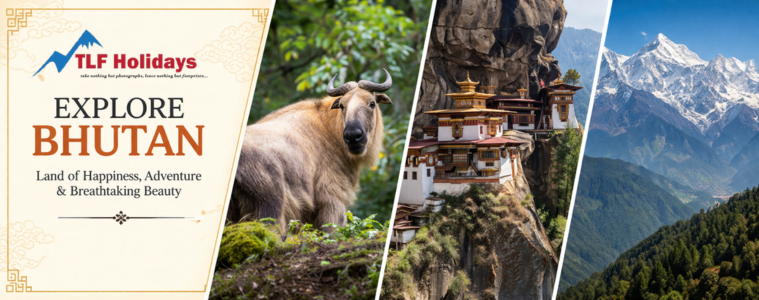
Long romanticized as the “Last Shangri-La,” Bhutan is the last Buddhist kingdom on Earth. The country’s culture is extraordinarily well-preserved precisely because of its controlled tourism policy. Dzongs fortress-monasteries that serve simultaneously as administrative centers, religious hubs, and community gathering places dominate every valley. The iconic Paro Taktsang (Tiger’s Nest Monastery), clinging to a sheer cliff face 900 meters above the valley floor, is one of the most photographed buildings on earth.
The Bhutanese culture is one of the most unique in the world, and still retains its Royal Family, its traditional costumes and work dress, and maintains the customs and traditions that have maintained this rich Himalayan kingdom’s culture throughout the ages. Attending a Tsechu (festival) a masked dance ceremony held at dzongs across the country is an experience that travelers describe as genuinely transformative.
Bhutan’s Gross National Happiness (GNH) philosophy the idea that national progress should be measured not just by GDP but by the well-being of citizens permeates every aspect of life and tourism in the country.
Sustainability & Environment: Bhutan’s Global Leadership
If sustainability matters to you as a traveler and it should this section deserves your attention.
Bhutan is carbon-negative, whilst Nepal’s Kathmandu grapples with terrible air quality. Bhutan has constitutionally mandated that at least 60% of its land must remain forested in perpetuity it currently stands at over 70%. The country is powered predominantly by hydroelectric energy, and its low-impact tourism model ensures that visitor numbers never overwhelm fragile ecosystems.
Bhutan recorded 209,376 tourist arrivals in 2025, a 44.33% year-on-year increase, while Sustainable Development Fee (SDF) collections rose to USD 43.31 million, marking a 49.1% rise from 2024. Despite this impressive growth, Bhutan’s tourism remains firmly within a “high-value, low-volume” framework that many global destinations are now trying to emulate.
Nepal has made significant progress on sustainable tourism, introducing mandatory guide requirements for trekkers in 2023 and improving conservation in national parks. However, Kathmandu’s air pollution remains a serious challenge, and popular trekking routes like Everest Base Camp continue to struggle with overcrowding and waste management.
Verdict: Bhutan is the global gold standard for sustainable, responsible tourism. For eco-conscious travelers, this is a compelling reason to prioritise the kingdom
Sustainability & Environment
| Factor | Nepal | Bhutan |
|---|---|---|
| Carbon Status | Carbon-positive (net emitter) | Carbon-negative |
| Forest Cover | ~45% | Over 70% |
| Tourism Policy | Open, high-volume | High-value, low-volume |
| Air Quality | Kathmandu has poor air quality | Pristine mountain air |
| Wildlife | Tigers, rhinos, elephants (Chitwan) | Snow leopards, black-necked cranes |
| Plastic Regulation | Moderate enforcement | Strict bans on plastic |
| Annual Tourist Arrivals (2025) | ~1 million+ | ~209,376 |
| Waste Management on Trails | Ongoing challenge | Tightly managed by operators |
Getting There: Connectivity & Accessibility
Neither Nepal nor Bhutan can be reached on direct flights from Europe, the Americas, or Australia a connection through a hub city is always required.
Nepal is the easier destination to reach. Kathmandu’s Tribhuvan International Airport is served by major carriers through hubs like Dubai (Emirates), Doha (Qatar Airways), Delhi (Air India, IndiGo), and Bangkok (Thai Airways). Multiple airlines compete on these routes, keeping prices relatively affordable.
Bhutan is significantly more challenging from a connectivity standpoint. For Bhutan, the only choices for the final leg of the flight are Drukair and Bhutan Airlines, and these only fly to short-haul destinations in surrounding countries. Good transit points include Kathmandu, Delhi, or Kolkata but don’t be surprised if you need to build an overnight stop or even a long layover into your flight plans.
Bhutan is home to the toughest airport landing. Nestled amid 5,500m peaks, only 24 pilots and two airlines have the skills to land safely at Paro International Airport. This makes the approach into Paro one of the most memorable and nerve-wracking arrivals in global aviation.
For travelers already visiting Nepal, adding Bhutan to the itinerary is actually quite convenient, as Kathmandu is one of the primary transit points for Bhutan-bound flights. TLF Holidays Bhutan specialises in helping international travelers create seamless Nepal–Bhutan combined itineraries.
Food & Cuisine: Flavours of the Himalayas
Both Nepal and Bhutan offer fascinating culinary experiences that reflect their geography, culture, and climate.
Nepalese cuisine is wonderfully varied. Dal bhat (lentil soup with rice and vegetable curry) is the national staple eaten twice a day by most Nepalis and remarkably satisfying on a long trek. Momos (steamed or fried dumplings filled with meat or vegetables) are ubiquitous and beloved. In Kathmandu, a thriving restaurant scene offers everything from traditional Newari cuisine to Italian, Thai, and Indian food.
Bhutanese cuisine is distinctive and not for the faint of heart literally. Bhutan is one of the few countries where chili is not a spice but a vegetable, eaten in large quantities as a main ingredient. The national dish, Ema Datshi (chili and cheese stew), is fiery, creamy, and deeply addictive. Red rice, buckwheat pancakes (Khurey), and roasted barley (Paa) round out the traditional diet. Because Bhutan tours are fully inclusive of meals, your culinary journey here is always guided and authentic.
Safety & Travel Experience
Both countries are widely regarded as very safe for tourists. Nepal has a dedicated Tourist Police force in major cities and trekking hubs, which is a reassuring presence. Bhutan’s guided-only model means you are never navigating alone your guide is responsible for your safety and comfort throughout your stay.
Nepal has a ‘Tourist Police’ to look after the safety and well-being of tourists visiting Nepal. Solo female travelers generally report feeling safe in both countries, though the fully guided model in Bhutan provides an additional layer of security.
The main safety concern in Nepal is altitude sickness, particularly on high-altitude treks, and the risk of natural disasters including landslides during monsoon season (June–September). In Bhutan, the strict regulatory environment and small group sizes ensure a controlled and attentive travel experience.
Best Time to Visit — Nepal vs Bhutan
The ideal time to visit both countries broadly overlaps, making them natural pairing destinations.
Nepal: The best time to visit Nepal is October and November. The rainy season in Nepal is from June to September each year. During this period, traveling may be difficult due to heavy rain, muddy roads, and the possibility of natural disasters such as landslides. Spring (March–May) is also excellent for trekking and rhododendron blooms.
Bhutan: The best seasons are spring (March–May) and autumn (September–November). Spring brings vibrant wildflowers and the spectacular Paro Tsechu festival. Autumn offers clear skies and crisp mountain views. Winter visits (December–February) are possible and can be magical with snow-dusted dzongs, while summer/monsoon brings lush green landscapes for those who don’t mind some rain.
| Season | Nepal | Bhutan |
|---|---|---|
| Spring (Mar–May) | Excellent — wildflowers, clear skies | Excellent — Paro Tsechu, rhododendrons |
| Summer (Jun–Aug) | Avoid — heavy monsoon, landslide risk | Possible — green, but some rain |
| Autumn (Sep–Nov) | Best — clear skies, peak trekking | Best — clear mountain views, festivals |
| Winter (Dec–Feb) | Good for lower altitudes, Chitwan | Good — snow views, fewer tourists |
| Festival Highlights | Dashain (Oct), Tihar (Oct/Nov) | Paro Tsechu (Spring), Thimphu Tsechu (Sep) |
| Peak Tourist Season | Oct–Nov | Mar–May, Sep–Nov |
| Shoulder Season Deals | June–August | December–February |
Which Type of Traveler Should Choose Which Destination?
The Nepal or Bhutan which is better for tourism question ultimately comes down to your travel personality:
Choose Nepal if you:
- Are traveling on a tight or moderate budget
- Want to trek to extreme high altitudes (Everest Base Camp, Annapurna)
- Prefer independent, self-directed travel
- Want a longer trip with maximum variety
- Are a first-time Himalayan visitor looking for the full range of experiences
- Enjoy the energy of diverse, multicultural cities and towns
Choose Bhutan if you:
- Want an exclusive, crowd-free, deeply authentic experience
- Are passionate about Buddhist culture, spirituality, and monastic architecture
- Prioritise sustainability and responsible travel
- Prefer a fully guided, stress-free itinerary
- Are willing to invest in a premium experience in exchange for extraordinary exclusivity
- Want to witness one of the most pristine and well-preserved cultures on earth
Consider both Nepal and Bhutan if you:
- Have two to three weeks available
- Want the best of both Himalayan worlds
- Are an experienced Himalayan traveler ready for the ultimate South Asia adventure
At TLF Holidays Bhutan, we believe the most rewarding journey is one that combines Nepal’s epic adventure landscape with Bhutan’s tranquil, spiritual depth. Our combined Nepal–Bhutan packages are designed to offer exactly this seamless logistics, expert guides, and unforgettable experiences in both kingdoms.
Why TLF Holidays Bhutan Is Your Ideal Partner
As a premier licensed Bhutan tour operator, TLF Holidays Bhutan brings years of expertise, local knowledge, and personalised service to every itinerary. We handle every detail of your Bhutan experience from visa processing and SDF payments to accommodation selection, cultural excursions, and trekking arrangements. Whether you are looking for a short 5-day cultural immersion or an extended 15-day Bhutan exploration, our team crafts journeys that reflect the true spirit of Gross National Happiness.
Our deep connections with local guides, dzong officials, and cultural experts mean our travelers gain access to experiences that go far beyond the standard tourist trail. We are also proud to help travelers combine Nepal and Bhutan into a single, cohesive Himalayan adventure making the most of every day in this extraordinary region.
Conclusion
The Nepal vs Bhutan debate is, in many ways, an impossible one because both countries are extraordinary in completely different ways. Nepal delivers the world’s most iconic trekking routes, a kaleidoscope of cultures and religions, and an energy that is unlike anywhere else on earth. Bhutan offers silence, sacredness, and a reminder that a country can prioritise happiness, culture, and nature over economic growth and thrive.
When asking which is better Nepal or Bhutan, the answer is: better for whom? For the adventurer on a shoestring budget, Nepal is a dream. For the mindful traveler seeking a rare, curated encounter with one of the world’s most carefully protected cultures, Bhutan is unrivalled. For those with the time and resources to experience both, the combination of Nepal or Bhutan creates the ultimate Himalayan journey. Whatever you decide, TLF Holidays Bhutan is here to make your journey seamless, meaningful, and unforgettable.
FAQs
Q1: Is Nepal or Bhutan better for first-time Himalayan travelers?
Nepal is better for first-time travelers due to its affordability, accessibility, and wider range of experiences.
Q2: Which is better, Nepal or Bhutan, for trekking?
Nepal is the top choice for trekking with iconic routes like Everest Base Camp and Annapurna Circuit.
Q3: How much does it cost to visit Bhutan vs Nepal?
Bhutan is significantly more expensive due to its daily tourist fee, while Nepal is budget-friendly.
Q4: Can I visit both Nepal and Bhutan in one trip?
Yes, you can visit both in one trip, but Bhutan requires advance visa arrangements and a guided tour.
Q5: Is Bhutan or Nepal safer for solo female travelers?
Bhutan is generally safer due to strict tourism policies, though Nepal is also safe with precautions.
Q6: What is the Sustainable Development Fee (SDF) in Bhutan?
The SDF is a daily fee (around $100 per person) charged by Bhutan to support sustainable tourism.
Q7: Which country has better cultural experiences — Bhutan or Nepal?
Bhutan offers more preserved and authentic culture, while Nepal provides diverse and vibrant traditions.
Q8: What is the best time to visit Nepal or Bhutan?
The best time to visit both countries is during spring (March–May) and autumn (September–November).


Leave a comment: