



- 13 Views
- 17 Min Read
- (0) Comment
Nestled between the towering peaks of the Himalayas, the Kingdom of Bhutan is one of the world’s most exclusive and enchanting travel destinations. This tiny Buddhist kingdom famous for measuring progress by Gross National Happiness rather than GDP offers travelers an extraordinary blend of ancient monasteries, pristine forests, dramatic dzongs (fortress-monasteries), warm hospitality, and a philosophy of life that will forever change your perspective.
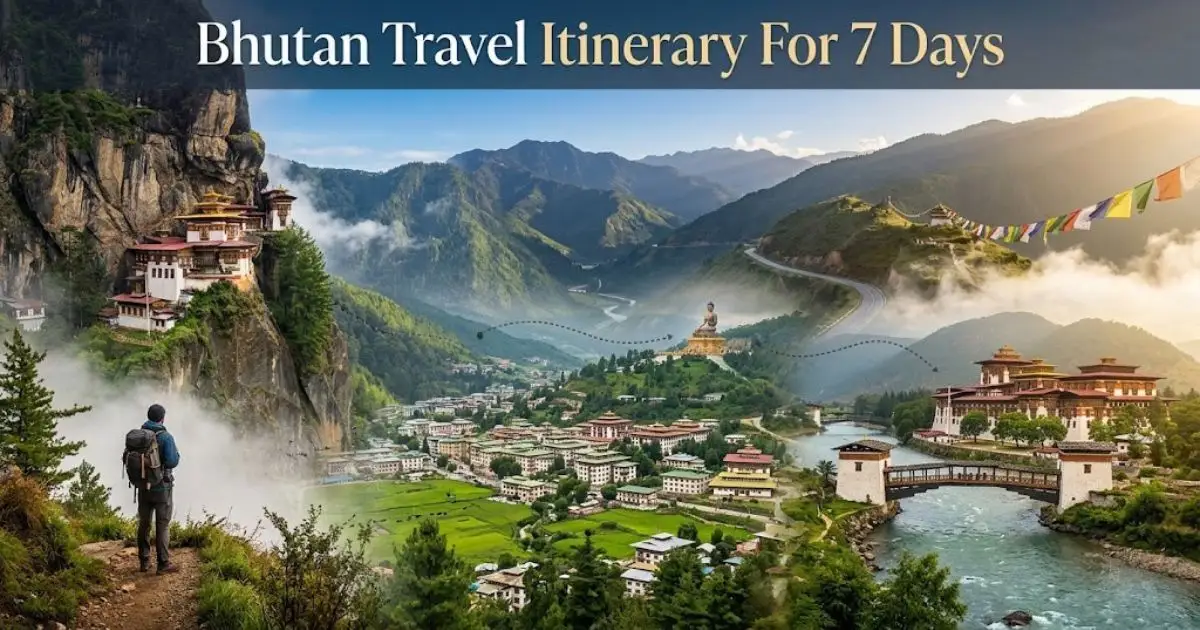
If you are planning a trip to Bhutan and wondering how to make the most of your limited time, this comprehensive Bhutan Travel Itinerary For 7 Days is exactly what you need. Seven days is widely regarded as the ideal minimum to experience the country’s top highlights without feeling rushed. From the cultural heartland of Thimphu and Punakha to the spiritually charged cliffs of Paro, a well-planned Bhutan 7 Day Itinerary will leave you with memories that last a lifetime.
At TLF Holidays Bhutan, we have crafted hundreds of tours for travelers from all around the world. In this detailed guide, we will walk you through each day of your Bhutan Tour Plan For 7 Days covering sightseeing, accommodation, food, tips, and practical travel information so you arrive prepared and leave inspired.
Bhutan 7-Day Itinerary: Quick Overview
Before diving into the daily breakdown, here is a bird’s-eye view of the 7 Days Bhutan Tour so you can plan with clarity:
| Day | Location | Key Highlights | Overnight |
| Day 1 | Paro (Arrival) | Paro Airport arrival, Rinpung Dzong, National Museum of Bhutan, Paro Town Walk | Paro |
| Day 2 | Paro | Tiger’s Nest Monastery (Taktsang) hike, Drukgyel Dzong ruins, Kyichu Lhakhang | Paro |
| Day 3 | Paro → Thimphu | Chele La Pass, Dochula Pass, transfer to Thimphu, Tashichho Dzong evening visit | Thimphu |
| Day 4 | Thimphu | Buddha Dordenma, Folk Heritage Museum, Takin Preserve, Thimphu Weekend Market | Thimphu |
| Day 5 | Thimphu → Punakha | Punakha Dzong, Chimi Lhakhang, Suspension Bridge, Mo Chhu riverside walk | Punakha |
| Day 6 | Punakha → Paro | Khamsum Yulley Namgyal Chorten, Wangdue Phodrang Dzong, scenic drive back to Paro | Paro |
| Day 7 | Paro (Departure) | Last-minute shopping, Zuri Dzong hike (optional), Paro Airport departure | Departure |
Why 7 Days Is the Ideal Duration for a Bhutan Tour Plan For 7 Days
Bhutan is not a destination you rush through. The country’s philosophy of ‘High Value, Low Volume‘ tourism means that every visit should be meaningful and immersive. While 4–5 day trips are possible, a Bhutan Travel Itinerary For 7 Days allows you to:
- Experience the three most important regions: Paro, Thimphu, and Punakha
- Hike to the iconic Tiger’s Nest Monastery without time pressure
- Explore both cultural and natural landscapes at a relaxed pace
- Engage with local communities, monasteries, and festivals
- Acclimatize properly to the altitude (Thimphu sits at 2,320 metres above sea level)
- Avoid the exhausting ‘checklist tourism’ trap
TLF Holidays Bhutan strongly recommends a minimum of 7 nights for first-time visitors. This itinerary is designed to maximize your experience while ensuring you return home refreshed rather than exhausted.
Day 1: Arrival in Paro – Gateway to the Himalayan Kingdom
Morning: Arrival at Paro International Airport
Your journey begins at Paro International Airport (PBH) — one of the world’s most spectacular and technically challenging airports to land at, surrounded by mountains on all sides. The airport is served by Druk Air and Bhutan Airlines from cities including Delhi, Mumbai, Kolkata, Bangkok, Singapore, Kathmandu, and Dhaka.
Upon landing, you will be greeted by your TLF Holidays Bhutan representative and local licensed guide, who will assist with formalities and escort you to your hotel. Paro’s clean mountain air and stunning valley views will immediately make you feel that you have entered another world.
Afternoon: Rinpung Dzong & National Museum
After lunch at a local restaurant featuring authentic Bhutanese cuisine (try ema datshi — chilli and cheese stew — the national dish), head out for your first sightseeing:
- Rinpung Dzong (Paro Dzong): This 15th-century fortress-monastery is the administrative and religious centre of Paro district. Built in 1646 by Zhabdrung Ngawang Namgyal, it houses temples, monks, and government offices. The bridge leading to it and the views from inside are extraordinary.
- National Museum of Bhutan (Ta Dzong): Perched above Rinpung Dzong, this circular watchtower-turned-museum houses over 3,000 artefacts ancient thangkas (scroll paintings), weapons, postal stamps, and natural history exhibits offering a rich introduction to Bhutanese history and culture.
Evening: Paro Town Walk
Stroll through Paro town a charming strip of traditional painted buildings, small cafes, handicraft shops, and friendly locals. Pick up your first Bhutanese souvenirs: hand-woven textiles, wooden bowls, prayer flags, or locally produced organic products. Dinner and overnight at your hotel in Paro.
Day 2: Tiger’s Nest Monastery — The Crown Jewel of Bhutan
Morning & Afternoon: Taktsang Palphug Monastery Hike
Today is perhaps the single most memorable day of your Bhutan 7 Day Itinerary: the hike to Taktsang Monastery, better known as Tiger’s Nest. This sacred Himalayan Buddhist temple complex clings impossibly to a sheer cliff face 900 metres above the Paro Valley floor, at an altitude of approximately 3,120 metres above sea level.
The round-trip hike takes 4–6 hours depending on your fitness level. The trail winds through beautiful blue pine and rhododendron forests, offering breathtaking views at every turn. The half-way cafeteria is an excellent resting point with panoramic views of the monastery and valley. On reaching the complex, you will visit four main temples, prayer halls, and sacred caves — including the cave where Guru Rinpoche (Padmasambhava) meditated for three months and ten days in the 8th century.
Tips from TLF Holidays Bhutan: Start the hike early (by 8 AM) to avoid afternoon crowds and heat. Wear layered clothing, good trekking shoes, and carry water and snacks. Horses are available for the lower portion for those who need them.
Late Afternoon: Kyichu Lhakhang & Drukgyel Dzong
- Kyichu Lhakhang: One of the oldest and most revered temples in Bhutan, dating to the 7th century AD. Built by the Tibetan Emperor Songtsen Gampo, this small but spiritually powerful temple is believed to pin down a demoness and protect Bhutan. The orange tree in its courtyard reportedly flowers year-round.
- Drukgyel Dzong: The atmospheric ruins of this 17th-century fortress — burned down in 1951 — sit at the head of the Paro Valley with views of Mount Jhomolhari (7,314 m) on clear days. A hauntingly beautiful spot at dusk.
Day 3: Paro to Thimphu via Chele La Pass & Dochula Pass
Morning: Chele La Pass — Bhutan’s Highest Motorable Road
Depart early for Chele La Pass (3,988 metres), the highest motorable mountain pass in Bhutan, located about 35 km from Paro. On a clear day, the panoramic views of the Himalayan range — including the sacred peak of Jhomolhari — are absolutely stunning. Prayer flags flutter in the mountain wind, and in spring (March–May), rhododendrons bloom brilliantly across the slopes.
Mid-Morning to Afternoon: Drive to Thimphu via Dochula Pass
Drive from Paro toward Thimphu. En route, stop at Dochula Pass (3,100 metres) — a scenic mountain pass adorned with 108 memorial chortens (stupas) built in honour of Bhutanese soldiers, and surrounded by colorful prayer flags. On clear days, you can see over 20 Himalayan peaks from here, including Gangkhar Puensum — the world’s highest unclimbed mountain.
Evening: Thimphu — Tashichho Dzong
Arrive in Thimphu — the capital city and one of the world’s smallest capitals — by early afternoon. Check in to your hotel, freshen up, and visit Tashichho Dzong in the late afternoon when the light is golden. This majestic white-and-gold dzong is the seat of the Bhutanese government and the summer residence of the Je Khenpo (Chief Abbot). The grounds are beautifully maintained with manicured lawns and flowering gardens.
Day 4: Full Day in Thimphu — Culture, Art & Local Life
Today is dedicated to exploring Thimphu — a unique capital city that has no traffic lights (a policeman directs traffic at the main intersection), where traditional architecture blends with modern development, and where the king is deeply loved by his people.
Morning: Buddha Dordenma & Memorial Chorten
- Buddha Dordenma: This colossal 51.5-metre bronze Buddha statue sits atop a hilltop overlooking the entire Thimphu Valley. Inside the statue are 125,000 smaller Buddha statues. The views from the base are spectacular — ideal for photography.
- National Memorial Chorten: Built in 1974 in memory of the Third King Jigme Dorji Wangchuck, this white chorten with its golden spires is one of the most important religious sites in Bhutan. Locals circumambulate it each morning in a deeply moving daily ritual.
Afternoon: Folk Heritage Museum, Takin Preserve & Craft Bazaar
- Folk Heritage Museum: An authentic replica of a traditional Bhutanese farmhouse showcasing rural life, farming implements, household items, and ancient customs. Excellent interactive exhibits and a small organic cafe on-site.
- Motithang Takin Preserve: Bhutan’s national animal — the Takin (a strange-looking bovid) — lives here. This unique animal features in Bhutanese mythology and is found nowhere else on Earth.
- Thimphu Weekend Market (Centenary Farmers Market): Open on weekends, this vibrant market is where farmers, crafters, and vendors from across Bhutan sell everything from organic vegetables and dried chillies to hand-woven fabric, butter lamps, and incense. A wonderful window into everyday Bhutanese life.
Evening: Textile Museum & Thimphu Nightlife
Visit the Royal Textile Academy for an in-depth look at Bhutanese weaving traditions — one of the most sophisticated textile cultures in Asia. In the evening, explore Thimphu’s cafe and bar scene (Cloud 9 and the Zone are popular) or enjoy a traditional Bhutanese cultural show at your hotel.
Essential Packing List for a 7 Days Bhutan Tour
| Category | Items | Notes |
| Clothing | Moisture-wicking base layers, fleece jacket, waterproof outer layer | Temperatures vary significantly between valley and mountain |
| Footwear | Sturdy hiking boots, comfortable walking shoes, sandals | Essential for Tiger’s Nest and monastery visits |
| Documents | Passport, Bhutan visa, travel insurance, SDF payment receipt | Keep originals and digital copies |
| Health & Safety | Personal medications, altitude sickness pills (Diamox), sunscreen SPF 50+ | Altitude in Thimphu is 2,320 m; Chele La is 3,988 m |
| Photography | Camera, extra batteries, memory cards, lens wipes | Cold air drains batteries quickly |
| Currency | Bhutanese Ngultrum (BTN) or Indian Rupees, USD for Sustainable Development Fee (SDF) | ATMs available in Thimphu and Paro |
| Misc | Reusable water bottle, trekking poles, daypack, hand sanitizer | Bhutan promotes zero-waste tourism |
| Respectful Attire | Modest clothing covering shoulders and knees for religious sites | Required at all monasteries and dzongs |
Day 5: Thimphu to Punakha — Valley of Fertility and Flowers
Morning: Drive to Punakha via Dochula Pass
After breakfast, drive from Thimphu to Punakha (approximately 77 km, 2.5–3 hours) via Dochula Pass. If the sky is clear, stop again at Dochula for stunning morning views of the Himalayan peaks before descending into the lush sub-tropical Punakha Valley.
The descent from Dochula to Punakha is one of the most scenic drives in Bhutan — from cold mountain pine forests to warm valleys filled with rice terraces, banana trees, and orange groves. Punakha sits at only 1,240 metres above sea level, making it significantly warmer than Paro or Thimphu.
Mid-Morning: Punakha Dzong — The Most Beautiful Dzong in Bhutan
Punakha Dzong (Pungthang Dechen Phodrang ‘Palace of Great Happiness’) is arguably the most beautiful fortress in the world. Built in 1637–38 by Zhabdrung Ngawang Namgyal, it sits dramatically at the confluence of the Mo Chhu (Female River) and Pho Chhu (Male River). The dzong served as Bhutan’s capital until 1955 and is still the winter residence of the Je Khenpo.
Inside, ornate carved wooden galleries, painted murals, golden statues, and sacred relics create an atmosphere of profound beauty. The jacaranda trees that line the approach to the dzong bloom in spectacular purple in late February–March.
Afternoon: Chimi Lhakhang & Punakha Suspension Bridge
- Chimi Lhakhang (Temple of the Divine Madman): A 30-minute walk through beautiful rice fields leads to this temple dedicated to Drukpa Kunley the eccentric, unconventional Buddhist saint known as the ‘Divine Madman’ who used humour and transgression to achieve enlightenment. The temple is famous as a fertility shrine, and couples wishing for children make pilgrimages here.
- Punakha Suspension Bridge: One of the longest suspension bridges in Bhutan, stretching over the Mo Chhu river. Walking across it with views of the dzong and the river below is a quintessential Bhutan experience.
Evening: Mo Chhu Riverside & Local Dinner
Stroll along the banks of the Mo Chhu as the golden light fades over the Punakha Valley. Enjoy a farm-to-table dinner featuring local Punakha specialties the valley is famous for its red rice, dried fish, and locally grown vegetables. Overnight in Punakha.
Day 6: Punakha to Paro — Hidden Temples and Scenic Valleys
Morning: Khamsum Yulley Namgyal Chorten
Begin your final full day with a hike to Khamsum Yulley Namgyal Chorten — a beautiful four-storey golden chorten built in 1999 by the Royal Queen Mother. Accessible via a 45-minute uphill walk through forest and rice terraces, this temple is dedicated to neutralizing evil forces and promoting peace. The views from the top over the Punakha and Wangdue valleys are breathtaking.
Mid-Morning: Wangdue Phodrang
Drive toward Paro stopping at Wangdue Phodrang, a historic town perched on a narrow ridge above the confluence of the Punakha/Mo Chhu and Tang Chhu rivers. While the original 17th-century Wangdue Dzong burned down in 2012, it is currently being meticulously restored and is expected to be completed in the late 2020s. The site and surrounding valley offer excellent views and historical context.
Afternoon: Scenic Drive Back to Paro
The drive from Wangdue Phodrang back to Paro (approximately 3 hours) is a scenic journey through pine forests, traditional villages, and mountain valleys. En route, stop at Lampelri Botanical Garden (if open) or simply enjoy the roadside views of Bhutan’s immaculate natural landscape.
Arrive in Paro by late afternoon. Spend the evening revisiting the Paro town market for last-minute shopping — quality Bhutanese crafts, organic teas, hand-spun yathra cloth, and thankas make excellent gifts. Dinner at a local Paro restaurant and overnight at your hotel.
Day 7: Departure from Paro — Carrying Bhutan in Your Heart
Morning: Optional Zuri Dzong Hike or Leisure Time
On your final morning, if you have energy and an early-afternoon flight, consider a short hike to Zuri Dzong a small monastery visible above Paro town, reachable in about 45 minutes of uphill walking. The views over Paro Valley from here are outstanding and make for wonderful final photographs.
Alternatively, enjoy a leisurely breakfast, take a final walk through Paro town, or simply sit and absorb the mountain air and peaceful energy of this extraordinary kingdom.
Late Morning: Transfer to Paro International Airport
Your TLF Holidays Bhutan representative will transfer you to Paro International Airport in time for your departure. As your plane climbs away from the valley and the snow-capped Himalayas fill your window, you will understand why Bhutan is called the Last Shangri-La — and why so many visitors immediately begin planning their return.
Bhutan Travel Cost Breakdown for a 7-Day Tour
As of 2024–2025, Bhutan charges all international visitors (except Indian, Bangladeshi, and Maldivian nationals) a Sustainable Development Fee (SDF) of USD 100 per person per night. This fee covers contributions to Bhutan’s free healthcare, education, and environmental conservation programs. Here is an approximate cost breakdown for the 7 Days Bhutan Tour:
| Expense Category | Approx. Cost (USD per person) | Notes |
| Sustainable Development Fee (SDF) | $100 per night x 7 = $700 | Mandatory for all international tourists (non-SAARC) |
| Hotel (3-star package) | $80–$120 per night | Included in most TLF Holidays Bhutan packages |
| Hotel (4–5 star/luxury) | $200–$500+ per night | Aman Bhutan, Uma Paro, Six Senses — premium options |
| Licensed Guide (mandatory) | $30–$35 per day | Required by law; included in TLF Holidays Bhutan packages |
| Private Vehicle & Driver | $50–$80 per day | Included in most packages |
| Meals (mid-range) | $20–$40 per day | Bhutanese, Indian, Continental, and Asian options available |
| Entry Fees (dzongs, museums) | $5–$15 per site | Tiger’s Nest entry: ~$15; most dzongs are free |
| Souvenirs & Shopping | $50–$200 total (variable) | Textiles, woodwork, thangkas, organic products |
| International Flights | $300–$800+ round trip | Druk Air & Bhutan Airlines from major Asian hubs |
| Total Estimated Budget (7 days) | $1,500–$3,500 per person | Excluding luxury hotels and premium experiences |
Note: Indian, Bangladeshi, and Maldivian nationals are exempt from the SDF and pay an entry fee of INR 1,200 per night instead. TLF Holidays Bhutan offers customized packages for all budgets — contact us for the most current pricing.
Best Time to Visit Bhutan: Planning Your Bhutan Tour Plan For 7 Days
Bhutan is a year-round destination, though certain seasons offer distinctly different experiences. Here is what to expect:
| Season | Months | Weather | Highlights | Suitability |
| Spring | March–May | Mild, 10–20°C | Rhododendron blooms, Paro Tsechu festival (March/April) | Excellent — most popular season |
| Summer / Monsoon | June–August | Warm, humid, heavy rain | Lush green landscapes, fewer crowds, lower rates | Moderate — best for budget travelers |
| Autumn | September–November | Cool, clear, 8–18°C | Crystal-clear Himalayan views, Thimphu Tsechu (Sept/Oct) | Excellent — second most popular |
| Winter | December–February | Cold, 0–10°C | Snow-capped peaks, Punakha Drubchen festival (Feb/Mar) | Good — for clear skies and festivals |
TLF Holidays Bhutan recommends March–May and September–November as the ideal months for your 7 Days Bhutan Tour. If you visit during a major tsechu (festival), you will witness traditional mask dances, archery competitions, and spiritual rituals that few travelers elsewhere in the world ever get to see.
Bhutan Visa and Entry Requirements
Bhutan does not issue visas on arrival. All international tourists (except Indian, Bangladeshi, and Maldivian nationals, who need only a valid passport or voter ID) must obtain a Bhutan Tourist Visa in advance through a licensed Bhutanese tour operator like TLF Holidays Bhutan. Here is how the process works:
- Contact TLF Holidays Bhutan and confirm your tour package, dates, and SDF payment.
- Pay the visa fee (USD 40 per person, one-time) and the SDF through your tour operator.
- The Tourism Council of Bhutan issues your visa clearance letter, which is sent to you electronically.
- Your actual visa stamp is issued upon arrival at Paro International Airport.
- Indian nationals require only a valid Indian passport or voter ID — no visa needed.
Important: As of 2023, Bhutan reopened its borders to international tourism following the COVID-19 closure. The new SDF structure (USD 100/night replacing the old USD 250/day minimum package requirement) makes independent travel slightly more accessible while still ensuring quality and sustainability.
Essential Travel Tips for Your Bhutan 7 Day Itinerary
- Dress modestly at all religious sites — shoulders and knees must be covered when entering dzongs, temples, and monasteries.
- Always walk clockwise around stupas, mani wheels, and religious monuments.
- Remove shoes before entering temples and dzongs.
- Ask permission before photographing monks, locals, or interiors of religious buildings.
- Bhutan uses a 230V/50Hz electrical system with Type D, F, and G outlets — bring a universal adapter.
- Mobile connectivity has improved greatly — Bhutan Telecom and TashiCell SIM cards are available at Paro Airport and offer 4G in most major areas.
- Bhutan is not a budget destination, but it is exceptional value for what you receive — pristine environment, safety, cultural richness, and genuine hospitality.
- Alcohol is available in Bhutan (local Ara rice wine, Red Panda beer, and whisky are popular), though it is not sold near dzongs and religious sites on certain sacred days.
- Bhutan follows a strict no-plastic bag policy and is one of the world’s most environmentally conscious nations — respect this by bringing reusable bags.
Why Choose TLF Holidays Bhutan for Your 7 Days Bhutan Tour?
Planning a trip to Bhutan requires local expertise, cultural sensitivity, and logistical precision. At TLF Holidays Bhutan, we bring years of experience and deep local knowledge to ensure your Bhutan Travel Itinerary For 7 Days is flawless from the moment you land to the moment you depart.
- Licensed by the Tourism Council of Bhutan — ensuring full compliance with national regulations.
- Expert licensed guides fluent in English, Hindi, and other languages who bring Bhutanese history and culture to life.
- Handpicked accommodation across all budget ranges — from comfortable 3-star valley hotels to luxury five-star retreats.
- Fully customized itineraries — your Bhutan Tour Plan For 7 Days can be tailored around festivals, trekking, photography, wellness, or family travel.
- Seamless visa and SDF processing — we handle all paperwork so you can focus on the experience.
- 24/7 in-country support throughout your journey.
- Sustainable, responsible tourism practices that respect Bhutan’s environment, culture, and communities.
Whether you are a solo traveler, honeymooning couple, family group, or corporate retreat seeking an unforgettable experience, TLF Holidays Bhutan has the expertise to make your dream trip a reality. Reach out to us today to begin crafting your perfect Bhutan 7 Day Itinerary.
Conclusion
This Bhutan 7 Day Itinerary covers the essential highlights of Paro, Thimphu, and Punakha while leaving room for spontaneous discoveries, cultural exchanges, and moments of pure wonder. It strikes the perfect balance between structured sightseeing and the kind of unplanned magic that only happens when you truly open yourself to a destination.
Your Bhutan Tour Plan For 7 Days, crafted and guided by TLF Holidays Bhutan, promises not just a holiday but a transformative journey. The Kingdom of Happiness awaits you and trust us, once you go, a part of you will never really leave.
FAQ’s
Q1. Is 7 days enough to visit Bhutan?
Yes, 7 days is enough to explore Bhutan’s main highlights like Paro, Thimphu, and Punakha.
Q2. How much does a 7-day Bhutan trip cost?
A 7-day Bhutan trip typically costs around $1,200–$2,500 per person depending on travel style and season.
Q3. Do I need a visa to visit Bhutan?
Yes, all international travelers (except Indians, Bangladeshis, and Maldivians) need a visa arranged through a licensed tour operator.
Q4. What is the best time for a 7 Days Bhutan Tour?
The best time is during spring (March–May) and autumn (September–November) for clear weather and festivals.
Q5. Can I do the Tiger’s Nest hike in my Bhutan 7 Day Itinerary?
Yes, the Tiger’s Nest hike can easily be included and is a must-do experience in a 7-day itinerary.
Q6. Is Bhutan safe for solo travelers and women?
Yes, Bhutan is one of the safest countries in the world, ideal for solo travelers and women.
Q7. How do I book a Bhutan trip with TLF Holidays Bhutan?
You can book by visiting their website, choosing a package, and contacting their team for customization and confirmation.

Leave a comment: