



- 14 Views
- 17 Min Read
- (0) Comment
Introduction: The Kingdom That Chose Happiness Over Wealth
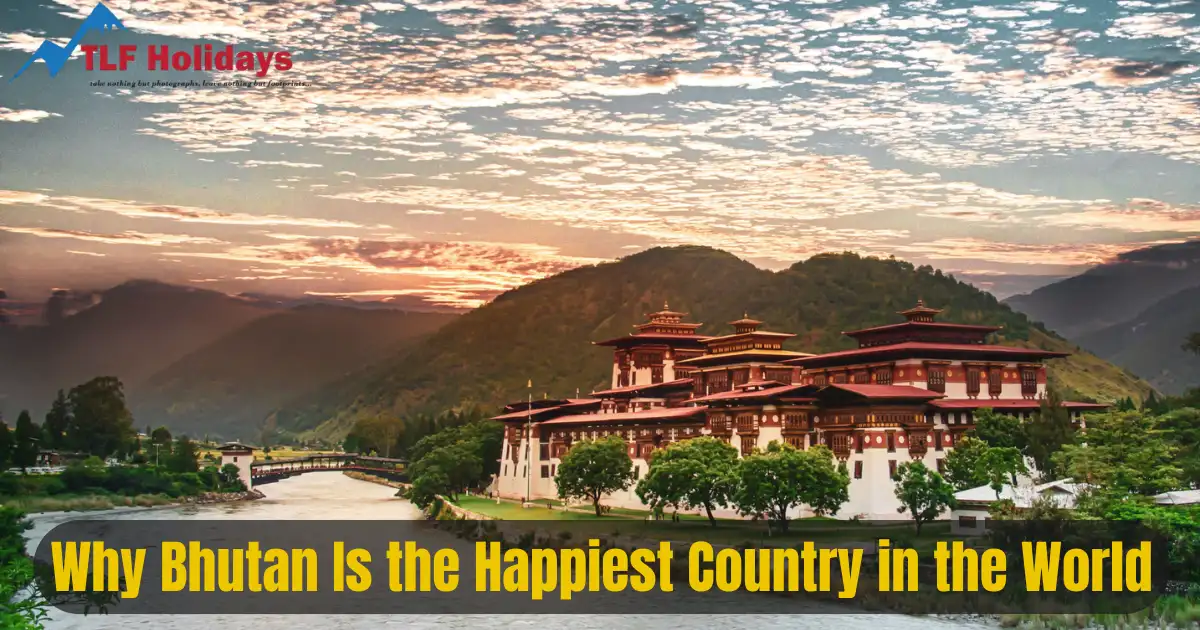
In a world obsessed with economic growth, stock markets, and GDP figures, one tiny Himalayan kingdom made a revolutionary choice, it chose happiness as its national goal. Bhutan Is the Happiest Country in the World, and this is not just a romantic claim. It is a deeply researched, policy-driven, and culturally embedded truth that the entire world has come to acknowledge. Nestled between two of the world’s most powerful nations India and China the Kingdom of Bhutan is a land like no other. Its mist-covered mountains, ancient monasteries, and warm-hearted people create an atmosphere that visitors describe as magical, peaceful, and deeply fulfilling. But what makes Bhutan stand apart from every other nation on Earth is its bold, visionary governance philosophy: Gross National Happiness (GNH).
While countries around the world race to increase their Gross Domestic Product, Bhutan asks a deeper question: Are our people truly happy? This single question has shaped every policy, every law, every development project, and every cultural initiative in the country for over five decades. In this article, TLF Holidays Bhutan takes you on a thorough, fact-filled journey to understand why Bhutan Is the Happiest Country in the World and why Bhutan World’s Happiest Country status is not just a title, but a lived reality for its people.
“Gross National Happiness is more important than Gross National Product.” — His Majesty King Jigme Singye Wangchuck, 4th King of Bhutan (1972)
1. The Philosophy of Gross National Happiness (GNH): The Foundation of Bhutan’s Joy
To understand why Bhutan Is the Happiest Country in the Earth, one must first understand Gross National Happiness the concept that has redefined what it means for a nation to be successful.
In 1972, the visionary 4th King of Bhutan, His Majesty Jigme Singye Wangchuck, coined the term Gross National Happiness. He believed that genuine progress for a society comes not merely from material wealth but from a balanced and holistic combination of sustainable development, environmental protection, cultural preservation, and good governance. This was not merely a philosophical idea — it was translated into law and constitutional mandate. In 2008, Bhutan’s Constitution formally established GNH as the guiding principle of national development. This made Bhutan the world’s only country to enshrine happiness in its constitution as a national goal.
The Nine Domains of Gross National Happiness
GNH is not a vague concept. It is a rigorous measurement framework built on nine interconnected domains. Every five years, the Centre for Bhutan Studies and GNH Research conducts a comprehensive national survey assessing the happiness of Bhutanese citizens across all nine domains:
| Domain | Description | Key Indicators |
| Living Standards | Material well-being of citizens | Income, assets, housing quality |
| Health | Physical & mental wellness | Life expectancy, disability, mental health |
| Education | Access & quality of learning | Literacy, schooling, values education |
| Governance | Transparency & participation | Freedom, corruption levels, rights |
| Ecological Diversity | Environmental sustainability | Forest cover, wildlife, pollution |
| Time Use | Work-life balance | Sleep, leisure, working hours |
| Psychological Wellbeing | Happiness & life satisfaction | Positive emotions, spirituality |
| Cultural Resilience | Preservation of traditions | Language, festivals, artisan skills |
| Community Vitality | Social bonds & safety | Volunteering, trust, safety perception |
The GNH Index scores citizens as ‘deeply happy,’ ‘extensively happy,’ ‘narrowly happy,’ or ‘unhappy’ and policy is designed to bring more people into higher happiness categories. This holistic, data-driven approach to governance is what makes Bhutan World’s Happiest Country and sets it apart from any other nation on Earth.
2. GNH vs GDP: Why Bhutan Chose a Different Path
To truly appreciate why Bhutan Is the Happiest Country in the World, it is essential to contrast the GNH philosophy with the GDP-focused development model that dominates the rest of the world. GDP measures the total monetary value of goods and services produced. It counts arms manufacturing, pollution cleanup, and hospital bills as ‘growth’ even if these arise from harm. It ignores inequality, environmental degradation, mental health crises, and cultural erosion. A country can have a high GDP and deeply unhappy people. Bhutan rejected this model. Instead, it chose to measure success by the happiness, health, cultural vitality, and environmental well-being of its citizens. The comparison below shows just how different these two frameworks are:
| Indicator | GDP-Based Countries | Bhutan (GNH-Based) |
| Primary Goal | Economic Growth | Holistic Well-being & Happiness |
| Measurement Tool | Gross Domestic Product (GDP) | Gross National Happiness (GNH) Index |
| Policy Focus | Industrial Output & Exports | Culture, Environment, Governance |
| Success Metric | Per Capita Income | Citizen Happiness & Life Satisfaction |
| Environmental Value | Resource for Exploitation | Sacred Asset to be Preserved |
| Cultural Heritage | Secondary to Economy | Core Pillar of National Identity |
| Mental Health Priority | Often Overlooked | Integrated into National Policy |
| Carbon Footprint Goal | Reduce over Time | Carbon Negative — Already Achieved |
This alternative vision of development has attracted worldwide attention. Economists, sociologists, and policymakers from over 100 countries have visited Bhutan to study its model. The United Nations has even adopted a resolution encouraging all member states to pursue happiness as a development goal directly inspired by Bhutan Is the Happiest Country in the Earth philosophy.
3. Environmental Harmony: Why Nature Keeps Bhutan Happy
One of the most powerful reasons Bhutan Is the Happiest Country in the World is its extraordinary relationship with nature. While industrial nations struggle with climate crises, deforestation, and pollution, Bhutan has achieved something remarkable: it is the world’s only carbon-negative country.
Carbon Negative Status:- Bhutan’s forests absorb approximately 9.4 million tonnes of carbon dioxide per year, while its economy emits just around 3.8 million tonnes. This means Bhutan actively removes carbon from the atmosphere a feat no other nation has achieved on a sustained, constitutional basis.
Constitutional Forest Protection:- Bhutan’s Constitution mandates that at least 60% of the country must remain under forest cover at all times. As of 2024, over 72% of Bhutan is forested a number that has actually increased over recent decades, even as the population has grown. This is extraordinary by global standards, where most countries continue to lose forest land to development.
Plastic Bans and Environmental Firsts: Bhutan was one of the first countries in the world to ban plastic bags, doing so in 1999. It also banned tobacco sales publicly in 2004 and has been phasing out the use of pesticides in agriculture, pushing toward 100% organic farming — a truly ambitious and world-leading environmental goal.
Hydropower and Clean Energy:- Nearly 100% of Bhutan’s domestic electricity comes from hydropower one of the cleanest energy sources available. Bhutan even exports electricity to neighboring India, generating significant revenue while maintaining its clean energy credentials. This energy self-sufficiency contributes enormously to the well-being and security of its citizens.
Living in harmony with nature is not a policy in Bhutan it is a cultural and spiritual obligation passed down through generations of Buddhist teaching. For visitors traveling with TLF Holidays Bhutan, this environmental commitment is tangible. From pristine river valleys to ancient forests teeming with wildlife including snow leopards, Bengal tigers, and rare black-necked cranes Bhutan’s natural beauty is itself a source of happiness for both its people and its visitors.
4. Cultural Richness and Spiritual Heritage: The Soul of Bhutanese Happiness
Bhutan Is the Happiest Country in the World not only because of its environmental policies but because it has successfully preserved a living, breathing, deeply spiritual culture that is rare in the modern age. In a globalized world where cultures are rapidly homogenizing, Bhutan stands as a proud guardian of its unique Himalayan Buddhist heritage.
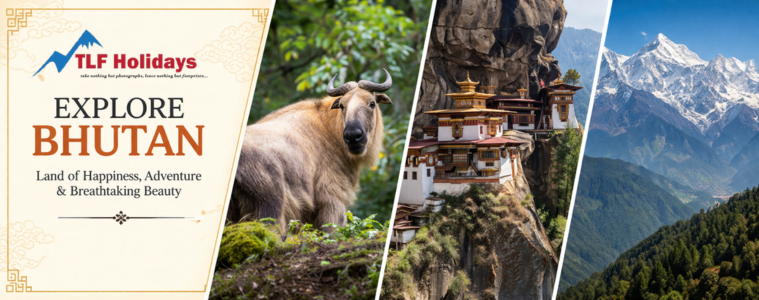
The Role of Buddhism:- Vajrayana Buddhism is the state religion and the moral compass of Bhutanese society. Buddhist teachings of compassion, mindfulness, detachment from material desires, and the acceptance of impermanence permeate everyday life. The concept of karma the belief that one’s actions have consequence promotes ethical behavior, community service, and non-violence. Monasteries (called Dzongs) are not just religious buildings; they are administrative centers, community gathering places, and living symbols of Bhutan’s identity. The most famous the Paro Taktsang or Tiger’s Nest Monastery clings dramatically to a cliff 3,000 meters above the Paro Valley and is one of the most awe-inspiring sights on Earth.
Driglam Namzha: The National Code of Etiquette:- Bhutan has a formal national dress code called Driglam Namzha that governs behavior, dress, and conduct — especially in formal or sacred settings. Men wear the Gho (a knee-length robe) and women wear the Kira (an ankle-length dress). This is not mere tradition; it is a unifying cultural practice that fosters pride, identity, and belonging.
Festivals — The Tsechus:- Bhutan’s festivals, known as Tsechus, are among the most colorful, sacred, and community-bonding events in the world. Held at Dzongs across the country throughout the year, they feature masked dances (Cham dances) that are believed to dispel evil and bring good fortune. The Paro Tsechu and Thimphu Tsechu are the most famous, drawing both Bhutanese citizens and international visitors together in joy and devotion.
For anyone traveling with TLF Holidays Bhutan, witnessing a Tsechu is a transformational experience that reveals the soul of why Bhutan World’s Happiest Country status endures across generations.
Arts, Crafts, and the Thirteen Traditional Arts:- Bhutan officially recognizes thirteen traditional arts and crafts known as Zorig Chusum — including painting, sculpture, wood carving, weaving, pottery, and papermaking. The government actively supports artisans and ensures that these ancient skills are taught in schools, thus preserving them for future generations.
5. Bhutan’s Governance: Transparent, Compassionate, and Citizen-Centric
Good governance is one of the nine domains of GNH, and for good reason. Bhutan’s political system is a Constitutional Monarchy, with the beloved Royal Family playing an active, deeply personal role in the lives of its citizens. The King frequently walks among the people, visits remote villages, and remains genuinely accessible in a way that is rare among world leaders.
The Fourth and Fifth Kings:- His Majesty Jigme Khesar Namgyel Wangchuck, the 5th and current King of Bhutan, inherited a nation deeply committed to happiness and has continued to deepen that commitment. His marriage to Jetsun Pema in 2011 was celebrated across the country and the world as an event full of joy, humility, and national pride.
Democratic Parliamentary System:- In 2008, Bhutan peacefully transitioned to a democratic constitutional monarchy, introducing a Parliament with a National Assembly and a National Council. This transition was carefully managed to ensure political stability while expanding citizen participation. Corruption levels remain among the lowest in Asia, and Bhutan consistently ranks highly on transparency indices.
Free Education and Healthcare:- All Bhutanese citizens receive free education and healthcare from birth. This is a cornerstone of the GNH philosophy ensuring that all citizens, regardless of economic background, have access to the fundamental conditions needed for a happy life. The government has invested heavily in rural healthcare and school infrastructure, dramatically improving literacy rates and life expectancy over the past three decades.
6. Tourism Policy: Why ‘High Value, Low Volume’ Preserves Happiness
One of the most unique aspects of why Bhutan Is the Happiest Country in the Earth is its revolutionary approach to tourism. While most countries chase mass tourism and its economic benefits regardless of consequences, Bhutan has deliberately chosen a ‘High Value, Low Volume’ tourism model that protects its environment, culture, and citizens’ way of life.
The Sustainable Development Fee (SDF):- Since September 2022, Bhutan charges an SDF (Sustainable Development Fee) of USD 100 per night per adult tourist (revised from the earlier tariff structure). This fee is used to fund free education, free healthcare, and environmental conservation ensuring that tourism directly contributes to GNH. This model prevents overtourism, maintains the quality of the visitor experience, and protects Bhutan’s pristine environment.
Guided Tourism Requirement:- All international tourists (except citizens of India, Bangladesh, and Maldives) are required to travel with a licensed Bhutanese tour operator. This ensures that tourism dollars flow into the local economy, that visitors are properly oriented to Bhutanese culture and customs, and that environmental standards are maintained. Companies like TLF Holidays Bhutan serve as essential partners in making this system work connecting the world to Bhutan’s happiness while protecting it.
Why Choose TLF Holidays Bhutan for Your Happiness Journey
| Feature | Details | Benefit to Travelers |
| High-Value, Low-Impact Tourism | Controlled tourist numbers via SDF | Less crowded, authentic experiences |
| Expert Local Guides | Certified, culturally trained | Deep cultural immersion |
| Dzong & Monastery Tours | Access to Tiger’s Nest (Paro Taktsang) | Spiritual & historical insights |
| Festival Calendar Tours | Paro Tsechu, Thimphu Tsechu | Witness living cultural traditions |
| Eco-Trekking Packages | Snowman Trek, Druk Path Trek | World-class Himalayan adventure |
| Wellness Retreats | Hot stone baths, traditional medicine | Authentic Bhutanese healing |
| Custom Itineraries | Tailored to interest & budget | Personalized happiness journey |
| Bhutan Visa Assistance | Full support for visa & entry permit | Hassle-free travel planning |
7. Key Facts and Statistics: The Numbers Behind Bhutan’s Happiness
The claim that Bhutan Is the Happiest Country in the World is backed by compelling data across environmental, social, and economic indicators. Here is a fact-sheet of the most important statistics:
| Category | Statistic / Fact | Source / Year |
| Forest Cover | 72% of land is forest (legally required ≥60%) | Royal Government of Bhutan, 2024 |
| Carbon Status | Carbon Negative — absorbs 3x more CO₂ than it emits | UNDP Bhutan, 2023 |
| Tourist Levy | USD 100/night Sustainable Development Fee (SDF) | Tourism Council of Bhutan, 2023 |
| Happiness Rank | Consistently ranked happiest in Asia | World Happiness Report, 2024 |
| GNH Adoption | World’s only country with GNH as official development goal | Constitution of Bhutan, 2008 |
| Life Expectancy | ~71.8 years (significant rise in 20 years) | World Bank, 2023 |
| Literacy Rate | ~66.6% overall; rising rapidly among youth | UNESCO / Bhutan NSB, 2023 |
| Unemployment Rate | ~2.5% (one of Asia’s lowest) | Bhutan NSB, 2024 |
| Plastic Bags | Banned since 1999 — pioneering environmental move | Ministry of Environment, Bhutan |
| Tobacco Sales | Banned publicly since 2004 | Royal Government of Bhutan |
These numbers tell a story of a country that has made deliberate choices often at the cost of faster economic growth to ensure the long-term happiness, health, and dignity of its people. This is precisely what makes Bhutan World’s Happiest Country not just by reputation, but by measurable evidence.
8. Happiness in Daily Life: What Makes Bhutanese People Genuinely Happy?
Beyond policies and statistics, happiness in Bhutan is a lived, daily experience. Understanding this helps explain, on a human level, why Bhutan Is the Happiest Country in the World.
Strong Community Bonds:- Bhutanese society is deeply communal. People help each other during harvests, construction of homes (a practice called ‘Leg So’), and family celebrations. This sense of community and belonging is one of the greatest predictors of happiness and it is alive and well in Bhutan.
Mindfulness and Spirituality:- Buddhism teaches mindfulness the art of being fully present in the moment. Bhutanese people integrate meditation, prayer, and spiritual reflection into their daily lives. Prayer flags fluttering in mountain breezes, prayer wheels spinning at monastery gates, and the sound of monks chanting at dawn are not tourist attractions they are the fabric of everyday life.
Work-Life Balance:– Bhutan’s GNH framework explicitly measures time use ensuring that citizens have adequate time for sleep, family, community activities, and leisure. The country has not succumbed to the ‘996’ work culture that drives burnout in many Asian economies. This balance is a crucial contributor to why Bhutan Is the Happiest Country in the Earth.
Safety and Low Crime:- Bhutan has one of the lowest crime rates in Asia. Citizens feel safe in their communities, at night, and in public spaces. This sense of security often taken for granted in discussion of happiness is foundational to genuine well-being.
Traditional Diet and Wellness:- The Bhutanese diet is simple, nutritious, and locally sourced featuring red rice (a uniquely Bhutanese staple), buckwheat, chilies (the national dish Ema Datshi is a chili and cheese stew), and fresh vegetables. Traditional medicine (Sowa Rigpa) is practiced alongside modern healthcare, providing citizens with holistic health options. TLF Holidays Bhutan includes traditional wellness experiences including the famous hot stone bath (Dotsho) in many of its tour packages.
9. Bhutan’s Global Influence: Teaching the World a New Meaning of Success
The idea that Bhutan Is the Happiest Country in the World has had a profound global impact far beyond its small borders (approximately 38,000 square kilometers and a population of about 780,000 people).
United Nations GNH Resolution:- In 2011, the United Nations General Assembly passed Resolution 65/309 ‘Happiness: Towards a Holistic Approach to Development’ co-sponsored by Bhutan. This resolution encouraged member states to pursue happiness as a development goal, leading eventually to the creation of the World Happiness Report (first published in 2012) and the establishment of March 20 as the International Day of Happiness.
Inspiring Nations Worldwide:- Dozens of countries and cities including the United Kingdom, France, New Zealand, and various Canadian provinces have begun incorporating well-being and happiness measures into their national planning. The UAE established a Ministry of Happiness. These global developments trace their intellectual lineage directly to Bhutan’s pioneering work.
Academic and Policy Research:- The Centre for Bhutan Studies and GNH Research is a world-renowned institution that publishes research, hosts international conferences, and advises governments on happiness-based policy. Researchers and policymakers from Harvard, Oxford, and the London School of Economics have studied and written about Bhutan’s model extensively.
10. Challenges and Honest Realities: Bhutan’s Ongoing Journey
No honest article about why Bhutan Is the Happiest Country in the World would be complete without acknowledging the genuine challenges the country faces. Bhutan’s happiness model is aspirational and evolving not perfect.
- Youth Unemployment and Urban Migration:- Young Bhutanese increasingly move to Thimphu and other urban centers in search of modern opportunities, creating demographic and cultural challenges.
- Digital Age Pressures:- The internet and social media, introduced relatively recently in Bhutan, have brought new pressures on identity, mental health, and social comparison challenges the government is actively studying through GNH surveys.
- Economic Dependency:- Bhutan remains heavily dependent on hydropower revenue and Indian economic support, making economic diversification a key national priority.
- Rural Development Gaps:- Despite free education and healthcare, disparities between urban and remote rural areas persist, and the government continues to work to close these gaps.
Acknowledging these challenges does not diminish Bhutan’s achievement it actually reinforces it. Bhutan’s GNH framework is designed to identify and address unhappiness rather than ignore it. The surveys, the research, and the policy responsiveness are part of what makes the system genuinely admirable and makes Bhutan World’s Happiest Country not a myth, but a work in earnest and determined progress.
11. Visiting Bhutan with TLF Holidays Bhutan: Experience Happiness Firsthand
Reading about Bhutan’s happiness is one thing. Experiencing it is transformational. TLF Holidays Bhutan is a premier travel company dedicated to helping travelers discover the authentic spirit of the Kingdom of Happiness. Whether you wish to trek through ancient forests to the iconic Tiger’s Nest Monastery, witness the sacred dances of a Tsechu festival, rejuvenate in a traditional hot stone bath by a rushing mountain stream, or simply sit with a cup of butter tea in a centuries-old farmhous TLF Holidays Bhutan crafts itineraries that connect you deeply and authentically with the soul of this extraordinary country. Our team of experienced, certified, and culturally passionate guides ensures that every moment of your Bhutan journey is meaningful, safe, and aligned with the principles of GNH tourism benefiting both you as a traveler and the Bhutanese communities you visit. Bhutan Is the Happiest Country in the World and with TLF Holidays Bhutan, you can live that happiness for yourself.
Conclusion
Bhutan Is the Happiest Country in the World not by accident, not by propaganda, and not by ignoring its challenges. It is the happiest country because it made a conscious, courageous, and sustained decision to measure success differently to put people, nature, culture, and community before profit and production. From the philosophy of Gross National Happiness to its constitutional forest protections, from its transparent and compassionate governance to its mindful and community-centered daily life, Bhutan has built a model of development that the rest of the world is slowly, belatedly recognizing as the true path to human flourishing.
Bhutan World’s Happiest Country status is a gift to the world a reminder that happiness is not a luxury. It is a choice. If Bhutan’s story has inspired you to see this extraordinary kingdom for yourself, TLF Holidays Bhutan is your trusted partner for a transformative, authentic, and deeply joyful journey into the Land of the Thunder Dragon. Plan your happiness journey today with TLF Holidays Bhutan your gateway to the world’s happiest country.
FAQs
Q1. Why is Bhutan considered the happiest country in the world?
Ans. Because it prioritizes Gross National Happiness over economic growth, focusing on well-being and sustainability.
Q2. What is Gross National Happiness (GNH) and who created it?
Ans. GNH is a development philosophy introduced by King Jigme Singye Wangchuck to measure citizens’ happiness and well-being.
Q3. Is Bhutan truly carbon negative?
Ans. Yes, Bhutan absorbs more carbon than it produces due to its vast forests and strong environmental policies.
Q4. How is Bhutan’s tourism different from other countries?
Ans. Bhutan follows a “High Value, Low Impact” tourism policy to protect its culture and environment.
Q5. When is the best time to visit Bhutan?
Ans. Spring (March–May) and autumn (September–November) are the best times for pleasant weather and festivals.
Q6. How can I book a trip to Bhutan with TLF Holidays Bhutan?
Ans. You can book directly through their official website or contact their team for customized tour packages.
Q7. Is Bhutan safe for solo travelers and families?
Ans. Yes, Bhutan is one of the safest countries in the world for both solo travelers and families.



Leave a comment: