



- 837 Views
- 18 Min Read
- (7) Comments
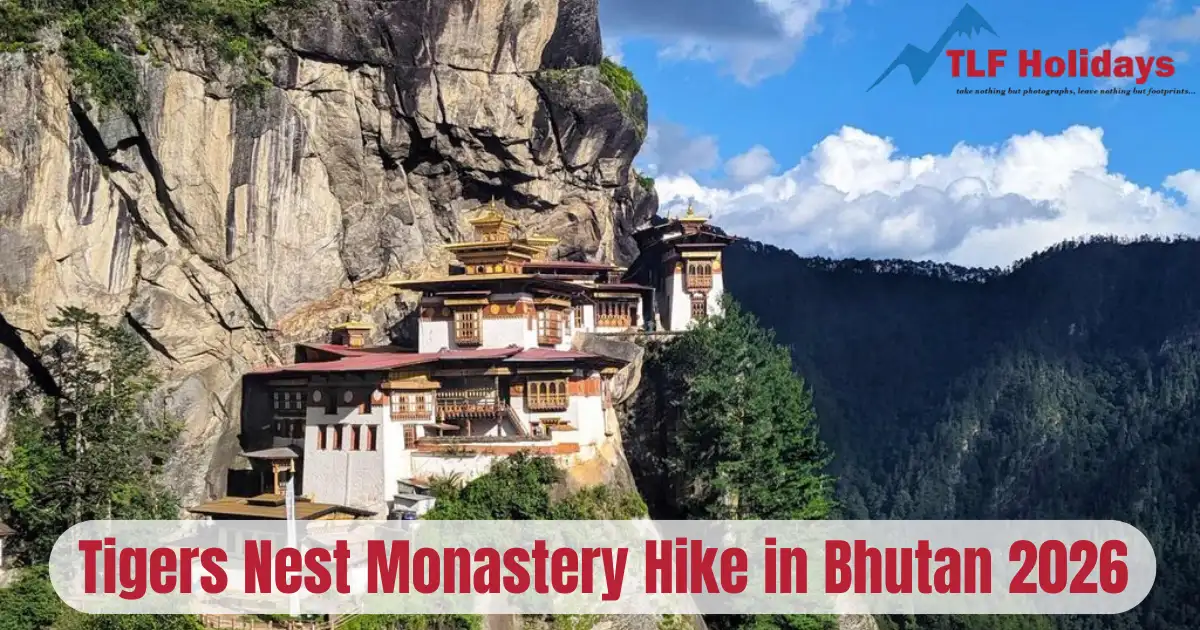
Few experiences in the world can match the sheer spiritual and physical grandeur of the Tigers Nest Monastery Hike in Bhutan. Perched dramatically on a sheer cliff face 3,120 metres above sea level in the Paro Valley, Paro Taktsang more famously known as the Tiger’s Nest Monastery is without question the crown jewel of Himalayan pilgrimage sites. Whether you are a seasoned trekker, a curious traveller, or a devout Buddhist, the Tigers Nest Monastery Hike is one of those life-defining journeys that stays with you long after you have descended from its sacred heights.
In 2026, Bhutan continues to welcome the world to its treasured landscapes under a refined tourism model focused on quality and sustainability. This comprehensive guide will walk you through everything you need to know about the Tigers Nest Monastery Hike from the trail stages and best time to visit, to cultural etiquette, packing essentials, and booking tips. Whether you are planning to visit Bhutan independently (through a licensed operator) or as part of a curated tour, this article will serve as your most thorough resource.
What Is Tigers Nest Monastery? A Brief Introduction
Paro Taktsang, or Tigers Nest Monastery in Bhutan, is one of the most revered sacred sites in Vajrayana Buddhism. The monastery complex clings impossibly to a 900-metre cliff face above the Paro Valley and consists of four main temples and numerous residential buildings, all connected by staircases carved into the sheer rock.
According to Bhutanese legend, the great Indian Buddhist master Guru Rinpoche (Padmasambhava) flew to this very cliff on the back of a tigress who was actually his consort Yeshe Tsogyal in transformed form in the 8th century CE. He meditated in a cave here for three months to subdue local demons and bless Bhutan with Buddhism. This cave, known as Taktsang Senge Samdup, is now enshrined within the monastery complex and is considered one of the holiest spots in all of Bhutan.
The monastery was first built in 1692 by Gyalse Tenzin Rabgye, the 4th Druk Desi (secular ruler of Bhutan). It suffered a devastating fire in 1998 but was meticulously restored and reopened in 2005, and has since become an even more powerful symbol of Bhutanese resilience and faith.
Tigers Nest Monastery Hike: Quick Facts at a Glance
Before setting out on the Tigers Nest Monastery Hike, it helps to have a clear snapshot of what the trek involves. The table below summarises the key details:
| Detail | Information |
| Trail Name | Tigers Nest Monastery Hike (Taktsang Trail) |
| Location | Paro Valley, Bhutan |
| Distance (One Way) | Approx. 4.5 km (8–9 km round trip) |
| Elevation Gain | ~900 meters (from 2,440 m to 3,120 m) |
| Difficulty Level | Moderate to Strenuous |
| Average Duration | 4–6 hours round trip |
| Best Season | March–May & September–November |
| Entry Fee (2025–26) | Included in Bhutan SDF (Sustainable Development Fee) |
| Horse Ride Available | Yes, up to the cafeteria viewpoint (~halfway) |
| Starting Point | Paro Trailhead Parking Lot |
| Guide Required | Recommended (mandatory for tourists via licensed operator) |
The Trail Stages: A Stage-by-Stage Breakdown
Understanding the trail in stages helps you mentally prepare, manage energy, and appreciate each transition on the Tigers Nest Monastery Hike. The trail can be broadly divided into five stages on the way up, with the return following the same path.
| Stage | Section | Distance | What to Expect |
| Stage 1 | Trailhead to Cafeteria | ~2.0 km | Steady uphill through pine forest; horse ride option available |
| Stage 2 | Cafeteria to First Viewpoint | ~0.5 km | Best photo stop — panoramic view of Taktsang cliffs |
| Stage 3 | Viewpoint to Waterfall Descent | ~1.0 km | Steep 700+ steps down to waterfall; most challenging section |
| Stage 4 | Waterfall to Monastery Entrance | ~0.5 km | Final steep climb; pass through cave shrine |
| Stage 5 | Inside Monastery Complex | ~0.5 km | Explore 8 temples; no photography allowed inside |
| Return | Same trail back to trailhead | ~4.5 km | Easier going downhill but knees take impact |
Stage 1: Trailhead to the Cafeteria (The Forest Ascent)
The hike begins at the Paro Trailhead, located about 10 kilometres north of Paro town. The parking area is busy, especially during the peak season, and local vendors sell water, snacks, and walking sticks (highly recommended for the return descent). You can also hire horses for this first section they take you roughly halfway up to the cafeteria level.
The path climbs steadily through fragrant blue pine and rhododendron forests. This section takes around 60–90 minutes at a comfortable pace. You will pass prayer flags, mani walls, and small shrines along the way. The gradient is consistent but manageable, and the forested shade makes it pleasant even in warmer months. Altitude begins to tell here take it slow, breathe deeply, and resist the temptation to rush.
Stage 2: The Cafeteria and First Viewpoint (The Money Shot)
About halfway up, you reach the cafeteria — a rest stop with drinks, snacks, and clean toilets. From just above the cafeteria is the famous first viewpoint, where Taktsang Monastery comes fully into view for the first time, nestled impossibly into the cliff across the valley. This is the most photographed viewpoint in Bhutan. Sunrise and mid-morning light are best here for photography.
Many visitors choose to stop here and turn back, particularly those on shorter tours, children, or elderly travellers. But if you are continuing, this is the point of commitment the harder section lies ahead.
Stage 3: The Descent to the Waterfall (The Toughest Section)
After the viewpoint, the trail drops steeply via over 700 stone steps carved into the hillside a descent of roughly 200 metres before rising again at the waterfall. This section is the most physically demanding part of the Tigers Nest Monastery Hike in Bhutan. The steps are uneven and can be slippery during the monsoon season. Trekking poles are invaluable here, and taking your time prevents both falls and knee strain.
At the bottom of the descent is a beautiful sacred waterfall that cascades down the cliff face. This is a natural pause point to catch your breath, refill water, and soak in the raw power of the Himalayan landscape around you.
Stage 4 & 5: Final Climb and the Monastery Complex
From the waterfall, the path climbs sharply one final time, passing through a cave adorned with butter lamps and prayer wheels before emerging at the monastery entrance. You will need to leave your bags, cameras, and any large items at the designated storage area outside the gate. Photography is strictly prohibited inside the monastery grounds.
Inside, guides will take you through the eight temples of the complex, including the sacred Taktsang Senge Samdup cave where Guru Rinpoche meditated. Each temple is filled with ancient thangkas (painted scrolls), statues, butter lamps, and the deep smell of incense. The spiritual energy within these walls is palpable. Allow at least 60–90 minutes to explore the complex properly.
Best Time to Visit: Month-by-Month Weather Guide
The timing of your Tigers Nest Monastery Hike can make an enormous difference to your experience. Bhutan has four distinct seasons, each offering a different kind of beauty. Here is a detailed month-by-month breakdown to help you plan:
| Month | Season | Temperature (°C) | Trail Condition |
| January | Winter | -2 to 10 | Cold, possible snow — challenging |
| February | Late Winter | 0 to 12 | Cool, clear days — good for hardy hikers |
| March | Spring | 5 to 18 | Excellent — rhododendrons in bloom |
| April | Spring | 10 to 22 | Peak season — warm, clear skies |
| May | Spring/Pre-Monsoon | 13 to 25 | Good, occasional showers late in month |
| June | Monsoon | 16 to 27 | Wet, slippery — moderate difficulty |
| July | Monsoon | 17 to 28 | Heavy rains — trail can be difficult |
| August | Monsoon | 16 to 27 | Wet — lush views but slippery paths |
| September | Post-Monsoon | 14 to 24 | Excellent — fresh greenery, clear skies |
| October | Autumn | 8 to 20 | Peak season — best visibility |
| November | Autumn | 3 to 15 | Great — crisp air, mountain views |
| December | Winter | -1 to 10 | Cold, quiet, possible snow near top |
Peak Seasons: Spring (March–May) and Autumn (September–November)
The most popular and recommended times for the Tigers Nest Monastery Hike are spring and autumn. In March and April, the hillsides are ablaze with rhododendron blooms in red, pink, and white turning the forest trail into a natural cathedral of colour. October and November offer the clearest skies, the best mountain visibility, and ideal trekking temperatures.
These seasons also coincide with Bhutan’s major festivals the Paro Tsechu in spring and the Thimphu Tsechu in autumn making it an ideal time to combine the hike with authentic cultural experiences. If you are booking through TLF Holidays Bhutan, these festival windows fill up quickly, so advance booking is strongly recommended.
Monsoon Season (June–August): A Hidden Opportunity
While the monsoon season brings daily rains and slippery trails, it also transforms Bhutan into a stunning emerald landscape. The Tiger’s Nest hike is still possible in these months with proper rain gear, and tourist numbers are significantly lower, meaning a more intimate, less crowded experience. The leeches on lower sections of the trail are the main downside gaiters and insect repellent are essential.
Winter (December–February): Cold but Magical
Fewer tourists visit in winter, and the crisp air offers dramatically clear views. Snow near the summit adds an ethereal quality to the already magical landscape. The trail is fully accessible in most winters, though January nights can be very cold. If solitude and striking photography are your goals, winter is an underrated season for this hike.
Difficulty Level: Is the Hike Suitable for You?
The Tigers Nest Monastery Hike is often described as moderate to strenuous. The altitude, elevation gain, and steep stone steps make it demanding, but the well-maintained trail, rest points, and horse ride option for the lower section mean it is accessible to most reasonably fit adults. Here is a breakdown by traveller type:
- Fit adults and experienced hikers: Will find the round trip comfortable in 4–5 hours
- Families with children (10+): Generally manageable with proper pacing and breaks
- Senior travellers: Possible with a horse to the cafeteria and a slow pace — many complete it in their 60s and 70s
- Those with heart conditions or severe knee problems: Consult your doctor before attempting
- Altitude sensitivity: Start with a day in Paro to acclimatise before the hike
One of the most important pieces of advice from experienced guides is: do not rush. The Tigers Nest Monastery Hike is not a race. Pacing yourself, staying hydrated, and enjoying the journey is both physically wiser and spiritually more aligned with the purpose of the place.
Cultural Etiquette: Respecting a Sacred Site
Paro Taktsang is not just a tourist attraction it is a living, functioning monastery and one of the holiest Buddhist sites in the Himalayan world. As a visitor, it is your responsibility to honour its sanctity. Key rules to observe include:
- Dress modestly: Cover your shoulders and legs. Wraps and shawls are available at the entrance for those who are not dressed appropriately
- Remove shoes before entering temples: Always follow the signage and your guide’s instructions
- No photography inside the monastery: This is strictly enforced. Outside viewpoints are fine
- Walk clockwise around stupas and prayer wheels: This is standard Buddhist practice
- Speak softly and be respectful: Monks may be in meditation or prayer within the complex
- Do not touch religious objects unless invited to: This is a sign of respect
- Do not carry large bags inside: Leave them at the storage area at the entrance
Bhutan’s “High Value, Low Impact” tourism policy exists precisely to protect places like Taktsang from over-tourism and cultural dilution. Visitors who approach the site with genuine respect and curiosity enrich the experience for everyone.
2026 Bhutan Entry Requirements and Tourism Fees
Bhutan has maintained its unique tourism model in 2026. All international tourists (except citizens of India, Bangladesh, and Maldives) must book their Bhutan tour through a licensed Bhutanese tour operator. The country operates a Sustainable Development Fee (SDF) system, which helps fund Bhutan’s free healthcare, education, and environmental conservation programmes.
In 2026, the SDF is set at USD 100 per person per night for international tourists (reduced from the previous USD 200 in 2022–23, following a government revision). This fee covers the cost of visiting Tigers Nest Monastery as part of your Paro itinerary. Indian, Bangladeshi, and Maldivian tourists pay a lower SDF rate but must still travel via a licensed tour operator if booking a package. If you are planning your journey and wondering How to Travel from India to Bhutan, it is worth knowing that Indian nationals can enter Bhutan via road through Phuentsholing or by air to Paro International Airport using their Indian passport or voter ID no separate visa is required.
How to Reach the Tiger’s Nest Trailhead in 2026
By Air
Paro International Airport (PBH) is the only international airport in Bhutan, and the Tiger’s Nest trailhead is just 10 km from the airport, making it extremely convenient. Druk Air and Bhutan Airlines operate international flights connecting Paro to Delhi, Mumbai, Kolkata, Kathmandu, Bangkok, Singapore, and other hubs. If you are joining a Bhutan Tour from Singapore, direct flight connections via Bhutan Airlines are available and take around 4.5 hours.
By Road from India
The most popular overland entry point is Phuentsholing on the India-Bhutan border in West Bengal, followed by a road journey to Paro (approximately 5–6 hours). Some travellers combine this route with a broader Himalayan itinerary, pairing it with the Darjeeling Tour Package from Bhutan before or after their visit, exploring the Darjeeling hills just a few hours from the border.
Getting to the Trailhead
From Paro town, the trailhead is a short 15–20 minute drive by taxi or your tour vehicle. The road winds through the Paro Valley with stunning views of rice terraces and farmhouses. Your guide will arrange transportation as part of your tour package.
What to Pack: The Essential Checklist
Being well-prepared makes a significant difference to your comfort and safety on the Tigers Nest Monastery Hike in Bhutan. Here is a comprehensive packing table:
| Clothing & Gear | Health & Safety | Documents & Fees |
| Sturdy trekking shoes (ankle support) | Water (min. 2 litres) | Bhutan Tourist Visa |
| Layered clothing (temperature varies) | High-SPF sunscreen | Bhutan SDF receipt |
| Waterproof jacket / poncho | Altitude sickness tablets | Tour permit (from licensed guide) |
| Trekking poles (optional but helpful) | Energy bars / snacks | Passport / ID |
| Sun hat & UV sunglasses | First aid kit | Travel insurance documents |
| Warm gloves (Oct–Feb) | Personal medications | Emergency contacts list |
| Comfortable backpack (20–25L) | Insect repellent (monsoon season) | Camera (no tripods inside monastery) |
Footwear: The Single Most Important Item
Your footwear can make or break the experience. Proper trekking shoes or trail runners with ankle support and grippy soles are essential. Avoid sandals, flip-flops, or flat-soled trainers the terrain at Taktsang demands a shoe that can handle uneven stone steps, muddy paths, and steep descents. Many inexperienced hikers have had to turn back or suffered ankle injuries due to inappropriate footwear.
The Spiritual Significance of Taktsang for 2026 Pilgrims
For Buddhist pilgrims and spiritually curious travellers alike, the Tigers Nest Monastery Hike carries profound meaning. The trail itself is considered a form of spiritual practice with every step upward symbolising a step toward enlightenment and away from worldly attachment. The physical challenge mirrors the internal journey of purification.
The eight temples within the Taktsang complex each hold different deities and aspects of the Buddhist path. Highlights include the temple housing the meditation cave of Guru Rinpoche, the Guru Lhakhang with its magnificent 8-foot statue of Guru Rinpoche in the wrathful Dorje Drolo form, and the Guru Tshengye Lhakhang housing representations of all eight manifestations of Padmasambhava.
During auspicious dates in the Bhutanese lunar calendar, monks perform ritual dances and fire ceremonies at the monastery. If you are fortunate to visit on such a day, the atmosphere is profoundly moving. Your guide from TLF Holidays Bhutan will be able to advise on upcoming auspicious dates that align with your travel window.
Bhutan Honeymoon Package: Combining Romance with the Hike
The Tigers Nest Monastery Hike is not just for adventurers and pilgrims — it is arguably the most romantic hike in Asia. Couples who undertake the trek together speak of a shared sense of achievement and wonder that deepens their connection. The misty forests, cascading waterfalls, and the jaw-dropping view of the monastery across the cliff are the stuff of fairy tales. If you are considering a Bhutan Honeymoon Package for Couple, most curated packages include a sunrise hike to Tiger’s Nest as a centrepiece experience, often paired with luxury lodge stays in the Paro Valley, private candlelit dinners, and spa sessions at boutique Bhutanese retreats.
Hiring a Guide: Why It Is Non-Negotiable in 2026
Bhutan’s tourism regulations require all international visitors to be accompanied by a licensed guide. Far from being a restriction, this is one of the best aspects of visiting Bhutan. A knowledgeable guide enriches the Tigers Nest Monastery Hike exponentially explaining the history and legends of the monastery, translating inscriptions, navigating the trail safely, and facilitating your access inside the temple complex. They also handle all your permits, payments, and logistics.
When choosing a tour operator, look for companies with experienced English-speaking guides and strong guest reviews. TLF Holidays Bhutan is a reputable Bhutan-based tour operator known for its expert local guides, personalised service, and comprehensive packages that include the Tiger’s Nest hike as a signature experience.
Tips for a Successful and Safe Hike
- Start early aim to be at the trailhead by 7:00–8:00 AM to avoid midday heat and tourist crowds
- Acclimatise for at least one full day in Paro before the hike altitude can affect even fit travellers
- Stay hydrated throughout the hike the dry mountain air causes dehydration faster than you expect
- Fuel well at breakfast the hike burns significant calories and hunger sets in quickly at altitude
- Take the horse ride up to the cafeteria if your knees are sensitive it saves energy for the hardest section
- Book the hike on a weekday if possible weekends and festival seasons see the highest crowd levels
- Carry local currency (Bhutanese Ngultrum or Indian Rupees) for snacks, tips, and donations
- Bring a power bank the long day outdoors will drain your phone battery if you are using it for photos
- Respect photography restrictions violations can result in being asked to leave the complex
- Inform your guide of any medical conditions before you begin they carry first aid and know the terrain well
Nearby Attractions in Paro to Combine with the Hike
Paro is Bhutan’s most visited district for good reason — the Tiger’s Nest may be the headline act, but the supporting cast is equally impressive. After completing the Tigers Nest Monastery Hike, consider exploring these nearby highlights:
- Rinpung Dzong: A stunning 15th-century fortress-monastery overlooking Paro town, a 30-minute walk from the main bridge
- National Museum of Bhutan (Ta Dzong): Housed in an ancient watchtower above Rinpung Dzong, this museum provides deep insight into Bhutanese art, history, and culture
- Kyichu Lhakhang: One of Bhutan’s oldest and most sacred temples, dating to the 7th century a deeply peaceful spot for reflection
- Drukgyel Dzong: A ruined fortress with views towards Tibet and, on clear days, the peak of Mount Jomolhari
- Chele La Pass: At 3,988 metres, this is one of the highest motorable passes in Bhutan, offering stunning views and easy day hikes
- Paro Town Bazaar: Explore local shops selling handicrafts, textiles, wooden masks, and Bhutanese spirits perfect for souvenir shopping
Conclusion
The Tigers Nest Monastery Hike in Bhutan is more than a hike it is a pilgrimage of the senses, spirit, and soul. Few places on Earth combine such dramatic natural beauty with such profound cultural and spiritual weight. To stand before Paro Taktsang after hours of climbing through sacred forests, to enter its ancient temples and breathe the incense-laden air of centuries of prayer this is an experience that transcends the ordinary and touches something essential in the human spirit.
In 2026, with Bhutan’s refined tourism model ensuring sustainable access while preserving the monastery’s integrity, there has never been a better time to undertake this extraordinary journey. Whether you are a solo traveller, a couple on a honeymoon, a family on an adventure, or a group of friends seeking something truly different, the Tigers Nest Monastery Hike belongs on your bucket list and at the very top of it. For a seamless, memorable, and expertly guided experience, consider booking your Bhutan visit through a trusted operator like TLF Holidays Bhutan, which offers tailored packages that put the Tiger’s Nest hike at the heart of an unforgettable Bhutanese adventure.
FAQs
1. How long does the Tigers Nest Monastery Hike take?
The round trip typically takes 4 to 6 hours depending on your pace, fitness level, and time spent inside the monastery.
2. Is the Tigers Nest Monastery Hike difficult?
It is rated moderate to strenuous manageable for most healthy adults but demanding due to altitude, steep stone steps, and sustained elevation gain.
3. What is the best time of year for the Tigers Nest Monastery Hike in Bhutan?
Spring (March–May) and Autumn (September–November) are the best seasons, offering ideal temperatures, clear skies, and the most scenic trail conditions.
4. Can senior citizens or children do the hike?
Yes horses are available for the lower section, and with proper pacing, many seniors and children above 10 years complete the hike successfully.
5. Is photography allowed inside Tigers Nest Monastery?
No photography is strictly prohibited inside the monastery complex, though you can photograph freely along the trail and from external viewpoints.
6. Do I need a guide for the Tigers Nest Monastery Hike?
Yes Bhutan requires all international tourists to be accompanied by a licensed guide arranged through a registered tour operator.
7. Is there food and water available on the trail?
Yes the cafeteria midway offers drinks and snacks, but it is advisable to carry at least 2 litres of water and energy bars from the trailhead.
8. What is the entry fee for Tigers Nest Monastery in 2026?
The monastery entry is covered within Bhutan’s Sustainable Development Fee (SDF) of USD 100 per person per night for international tourists no separate entry ticket is required.
9. Can I do the hike independently without a tour package?
International tourists cannot visit Bhutan independently all visits must be booked through a licensed Bhutanese tour operator, which includes guide services.




Comments (7)
Cale2053,
04 April, 2026https://shorturl.fm/mfCra
June3145,
04 April, 2026https://shorturl.fm/jwGGq
Corinne1979,
04 April, 2026https://shorturl.fm/Bfcn6
Kelsey2274,
05 May, 2026https://shorturl.fm/2NHRK
Percy977,
05 May, 2026https://shorturl.fm/aWHst
nustargameonlinecasino,
08 August, 2026This is basically a luxury casino experience from the comfort of my home. The game selection is massive and everything is high quality. nustargameonlinecasino is simply the best.
jilijdb,
09 September, 2026If you like Jili games, this is the absolute best place to play them. The win rates feel much fairer here. Check out jilijdb for the best action.