



- 770 Views
- 7 Min Read
- (4) Comments
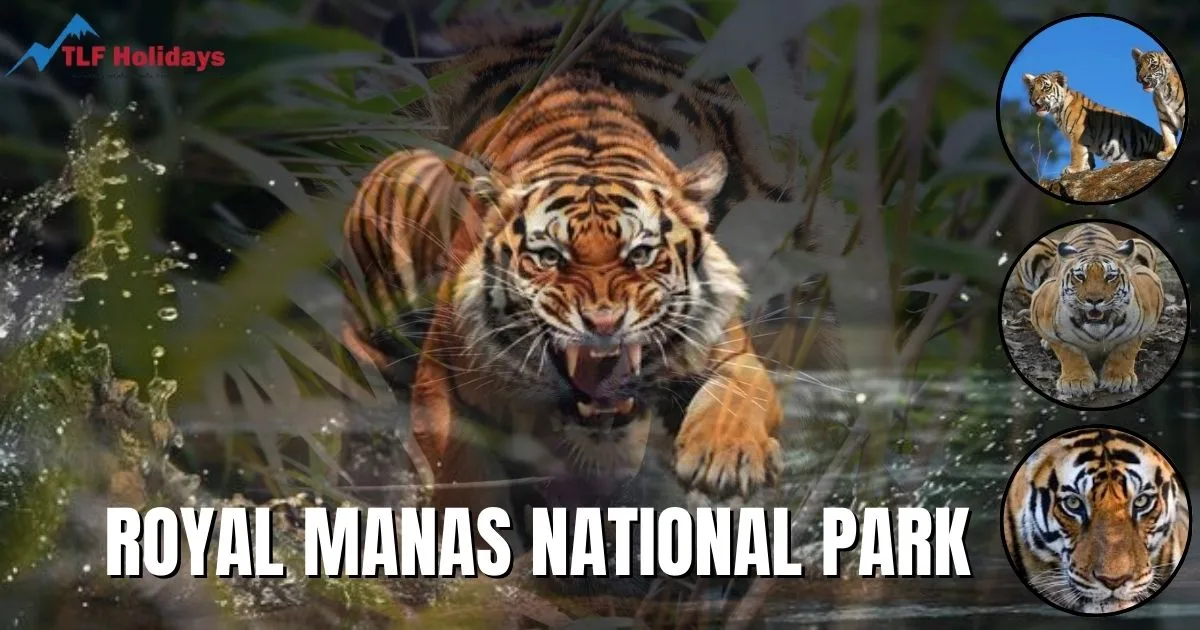
Quick Answer: Royal Manas National Park is Bhutan’s oldest national park (est. 1966), covering 1,057 sq. km in southern Bhutan. It is home to Bengal Tigers, Asian Elephants, One-horned Rhinoceros, Clouded Leopards, and 365+ bird species. The best time to visit is October to April. Entry requires a Bhutan visa + park permit arranged through a registered tour operator like TLF Holidays Bhutan.
When travelers think of Bhutan, monasteries and mountains often come first. But if you truly want to understand Bhutan’s soul, you must explore Royal Manas National Park Bhutan. This legendary protected area is not just a forest it is the birthplace of wildlife conservation in Bhutan and one of South Asia’s richest biodiversity zones. At TLF Holidays Bhutan, we see Royal Manas as a destination for curious travelers who want real depth: wildlife, ecology, culture, and responsible travel all in one place.
What Is Royal Manas National Park Bhutan?
Royal Manas National Park Bhutan is the country’s oldest national park, established in 1966. Covering over 1,057 square kilometers, it forms the ecological backbone of southern Bhutan and connects seamlessly with India’s Manas Tiger Reserve.
Unlike many protected areas that feel isolated, Royal Manas is alive with interaction between forests, rivers, wildlife, and local communities. This is why conservationists often compare its long-term preservation value with globally protected heritage landscapes, where heritage is protected through balance, not restriction. For travelers guided by TLF Holidays Bhutan, this park offers raw, untouched wilderness that still feels welcoming and meaningful.
Royal Manas National Park In Bhutan: Location & Geography
Royal Manas National Park In Bhutan lies in the southern foothills of the Himalayas and spreads across:
- Zhemgang
- Sarpang
- Pemagatshel districts
Geographical Overview
| Feature | Details |
| Total Area | 1,057 sq. km |
| Elevation Range | 200 m – 3,000 m |
| Border | Assam, India |
| Climate | Subtropical to temperate |
| Nearest Airport | Gelephu Airport (closest) / Paro International Airport |
This dramatic elevation range allows tropical jungles to exist alongside cool mountain forests, making Bhutan Manas National Park one of the most diverse ecosystems in the Himalayas.
History of Royal Manas National Park Bhutan
Historically, Royal Manas National Park Bhutan served as a royal hunting reserve for Bhutanese kings. Over time, Bhutan’s leadership recognized the importance of conservation and transformed it into a protected sanctuary.
This transition mirrors how cultural preservation works at places once centers of activity, now protected for future generations. Today, Royal Manas stands as a symbol of Bhutan’s environmental foresight.
Why Bhutan Manas National Park Is Ecologically Critical
Bhutan Manas National Park is considered the core zone of Bhutan’s national park network. It connects with:
- Jigme Singye Wangchuck National Park
- Pibsoo Wildlife Sanctuary
- Indian Manas Tiger Reserve
Why This Matters
- Enables wildlife migration
- Reduces inbreeding
- Protects endangered species
Without Royal Manas National Park Bhutan, Bhutan’s conservation corridors would collapse.
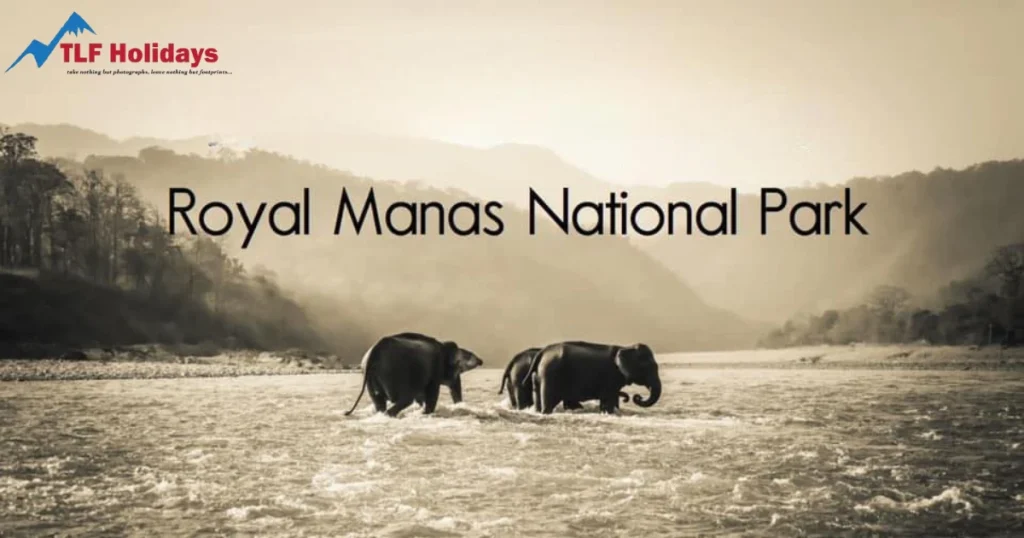
Biodiversity of Manas National Park Bhutan
Manas National Park Bhutan is one of the most species-rich areas in South Asia.
Biodiversity Statistics
| Category | Count |
| Mammals | 65+ species |
| Birds | 365+ species |
| Plants | 900+ species |
| Fish | 50+ species |
This biodiversity rivals many UNESCO-protected areas, in terms of global conservation value.
Wildlife Species Found in Royal Manas National Park Bhutan
Royal Manas is widely considered Bhutan’s most biodiverse wildlife sanctuary. Here is a complete overview of the key species you may encounter:
| Animal | Status | Sighting Chance |
| Bengal Tiger | Endangered | Rare — possible in dense forest zones |
| Asian Elephant | Endangered | Moderate — seen near rivers & forests |
| One-horned Rhinoceros | Vulnerable | Moderate — grassland & floodplains |
| Clouded Leopard | Vulnerable | Rare — mostly nocturnal |
Other Notable Mammals
- Gaur (Indian Bison) — frequently spotted in open grasslands
- Hispid Hare — rare, found in tall grass areas
- Golden Langur — a primate found only in this Himalayan region
- Wild Boar, Sambar Deer, Barking Deer
- Smooth-coated Otter — along Manas and Mangde rivers
Birds (365+ Species)
- Rufous-necked Hornbill
- Great Hornbill
- White-bellied Heron (Critically Endangered — one of rarest birds in Asia)
- Pallas’s Fish Eagle, Grey-headed Fish Eagle
- Wreathed Hornbill, Oriental Pied Hornbill
| Category | Count |
| Mammals | 65+ species |
| Birds | 365+ species |
| Plants | 900+ species |
| Fish | 50+ species |
| Reptiles | Multiple rare species incl. King Cobra |
Best Time to Visit Royal Manas National Park Bhutan
The ideal time to visit Royal Manas National Park is October to April, when weather is dry, wildlife is most visible, and travel is most comfortable.
| Season | Months | Experience | Recommended? |
| Autumn | Oct – Nov | Best wildlife sightings, clear skies, lush post-monsoon forests | BEST |
| Winter | Dec – Feb | Clear skies, excellent birdwatching, comfortable daytime temperatures | Excellent |
| Spring | Mar – May | Blooming orchids, breeding birds, warm weather | Good |
| Monsoon | Jun – Sep | Lush greenery but heavy rain, limited access, leeches | Not Recommended |
TLF Holidays Bhutan strongly recommends autumn for first-time visitors.
Things to Do Inside Royal Manas National Park In Bhutan
Visitors to Royal Manas National Park Bhutan can enjoy:
- Guided jungle safaris
- Birdwatching tours
- River rafting
- Village homestays
- Nature photography
For travelers combining regions, Royal Manas pairs well with longer Himalayan itineraries like Best of Bhutan Darjeeling Sikkim Tour, offering both nature and culture in one journey.
Local Communities and Cultural Importance
Villages around Royal Manas National Park Bhutan depend on the forest for sustainable livelihoods. Many believe the forest is protected by guardian spirits—an idea deeply rooted in Bhutanese culture and comparable to spiritual respect.
Conservation Efforts & Sustainable Tourism
Bhutan follows a strict High Value, Low Impact tourism policy. In Royal Manas National Park Bhutan, active conservation includes:
| Initiative | Outcome |
| Anti-poaching patrols | Reduced wildlife crime, stable tiger population |
| Wildlife monitoring corridors | Reduced human-wildlife conflict |
| Community forest programs | Local ownership of conservation |
| Eco-tourism & local guides | Employment + forest protection incentive |
How to Reach Royal Manas National Park Bhutan
Getting to Royal Manas is straightforward with proper planning. TLF Holidays Bhutan handles all logistics, permits, and transfers.
Option 1: Via Gelephu (Recommended — Nearest Airport)
- Fly into Gelephu Domestic Airport from Paro International Airport (short domestic flight)
- Drive from Gelephu to Panbang (park entry point) — approximately 2–3 hours by road
- Gelephu is the nearest and most convenient gateway to Royal Manas
Option 2: Via Paro + Road (Scenic Route)
- Fly into Paro International Airport (main international entry into Bhutan)
- Drive from Thimphu/Paro to Gelephu — approximately 7–8 hours by road
- Continue from Gelephu to Panbang (park entry) — 2–3 more hours
TLF Holidays Bhutan handles all logistics, permits, and planning.
Royal Manas National Park: Entry Fee & Permit Information
To visit Royal Manas National Park in Bhutan, you need the following:
| Requirement | Details |
| Bhutan Tourist Visa | Mandatory for all foreign nationals (arranged via registered operator) |
| Sustainable Development Fee (SDF) | USD 100 per person per night (as of 2023 policy — verify current rate) |
| National Park Entry Permit | Issued through your registered tour operator |
| Registered Tour Operator | Mandatory — independent travel not permitted in Bhutan |
| Tour Package | Includes accommodation, guide, transport, and permit fees |
Royal Manas vs Other National Parks in Bhutan
| Park | Specialty |
| Royal Manas | Lowland biodiversity |
| Jigme Dorji | Snow leopards |
| Bumdeling | Migratory birds |
Royal Manas remains unmatched for ecosystem diversity.
Travel Tips for Royal Manas National Park
- Wear neutral or earthy colors (green, brown, khaki) — avoid bright colors
- Carry binoculars — essential for birdwatching and wildlife spotting
- Maintain a minimum 50-meter distance from all wildlife
- Do not use flash photography near animals
- Carry insect repellent, especially in monsoon shoulder months
- All visitors must be accompanied by a licensed guide at all times
- Book with a registered Bhutan tour operator like TLF Holidays Bhutan for smooth permit processing
Conclusion
Royal Manas National Park Bhutan is not just a travel destination it is Bhutan’s ecological foundation. From endangered wildlife to vibrant local cultures, the park offers an experience as meaningful as globally respected heritage sites. With expert planning from TLF Holidays Bhutan, your journey becomes responsible, enriching, and unforgettable. If you want to experience Bhutan beyond postcards, Royal Manas is where your story should begin.
FAQs
Is Royal Manas National Park worth visiting?
Yes, it’s one of Bhutan’s richest biodiversity spots and offers a raw, less-crowded jungle experience.
Which National Park is best in Bhutan?
Royal Manas National Park is often considered the best for wildlife; Jigme Dorji National Park is great for trekking.
What is the best time to visit Royal Manas National Park?
October to April for pleasant weather and better wildlife sightings.
What are Royal Manas National Park ticket prices and entry fees?
Approx. $10–$20 per day for tourists, plus guide and permit charges.
Is there an official website for Royal Manas National Park?
Yes, managed via Bhutan’s forestry department under Department of Forests and Park Services.
Why is Royal Manas National Park Bhutan important?
It’s Bhutan’s oldest park and a UNESCO-listed site with rare species and crucial conservation value.
Can tourists see tigers?
Yes, but sightings are rare; the park is a known habitat for Bengal tigers.
Is it familie-friendly?
Yes, but better for families who enjoy nature, light adventure, and guided tours.




Comments (4)
rpvip4apk,
08 August, 2026The app installation was a breeze and the performance is rock solid. It is so much better than playing in a browser. Get the rpvip4apk now!
phokjili,
09 September, 2026I’ve tried a few platforms recently, but this one is definitely my favorite. The games load fast and the payouts are fair. Highly recommend phokjili for anyone looking for some real excitement!
phacejili,
09 September, 2026Everything is just perfect from the registration to the withdrawal. The most user friendly site I have used. Try out phacejili if you are unsure.
ph16jili,
09 September, 2026I really enjoy the variety of slots available here. The jackpots feel reachable and the vibe is just right. Big shoutout to ph16jili!